Random Animal Facts: Weird Adaptations Explained
Random animal facts are easiest to remember when they close a real gap: not just "this animal is weird," but "this weirdness solves a problem." A polar bear's white-looking coat, a salmon's upstream sprint, an anteater's noodle-thin tongue, a skunk's chemical warning system, and a honeybee's dance all look like trivia until you ask the better question: what job is this adaptation doing?
TL;DR
Good animal facts are tiny survival explanations. Polar bears look white because hollow, colorless hairs scatter light and help camouflage them; salmon use odor memories to find natal streams; giant anteaters use a two-foot tongue to reach insects; skunks spray only after warnings because the chemical supply is costly; honeybees use waggle dances to share food direction and distance. The closure is the pattern: the "weird" part is usually a tool, tradeoff, or signal.
Short answer: random animal facts stick when they explain a mechanism. The most satisfying examples show an animal solving one narrow problem with a body part, behavior, chemical, or social rule. That is why the same fact can feel like a throwaway listicle or a tiny learning moment, depending on whether it answers the hidden "why."

1. Polar bears are not simply "white"
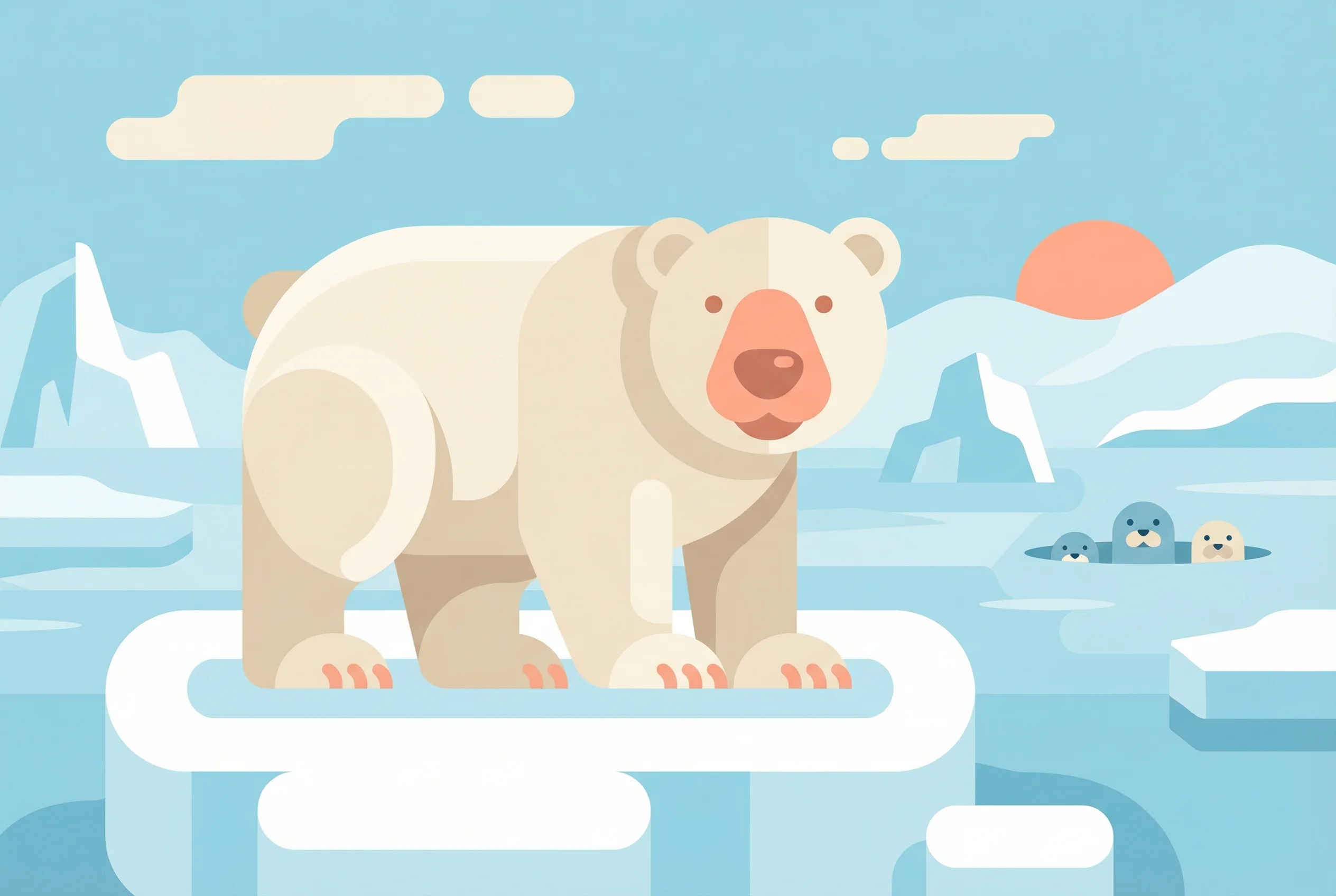
The better fact is this: polar bear fur has no white pigment in the simple paint-bucket sense. The Library of Congress explains that the long guard hairs are generally hollow and transparent, while the white appearance comes from light scattering back from the air spaces in the hairs (Library of Congress). The payoff is not the color trivia. It is the two-job solution: the coat helps the bear blend into snow and ice while the fur and fat layers help insulation.
This is a useful correction because "white fur" sounds like a color choice. It is closer to optical engineering. The bear is not carrying a white flag around the Arctic; it is wearing a light-scattering coat that makes the animal hard to see against ice. The same fact also shows why curiosity peaks at half-knowing. You already know polar bears look white. The gap is why white is not really the right explanation.
2. Salmon navigate home with smell memories
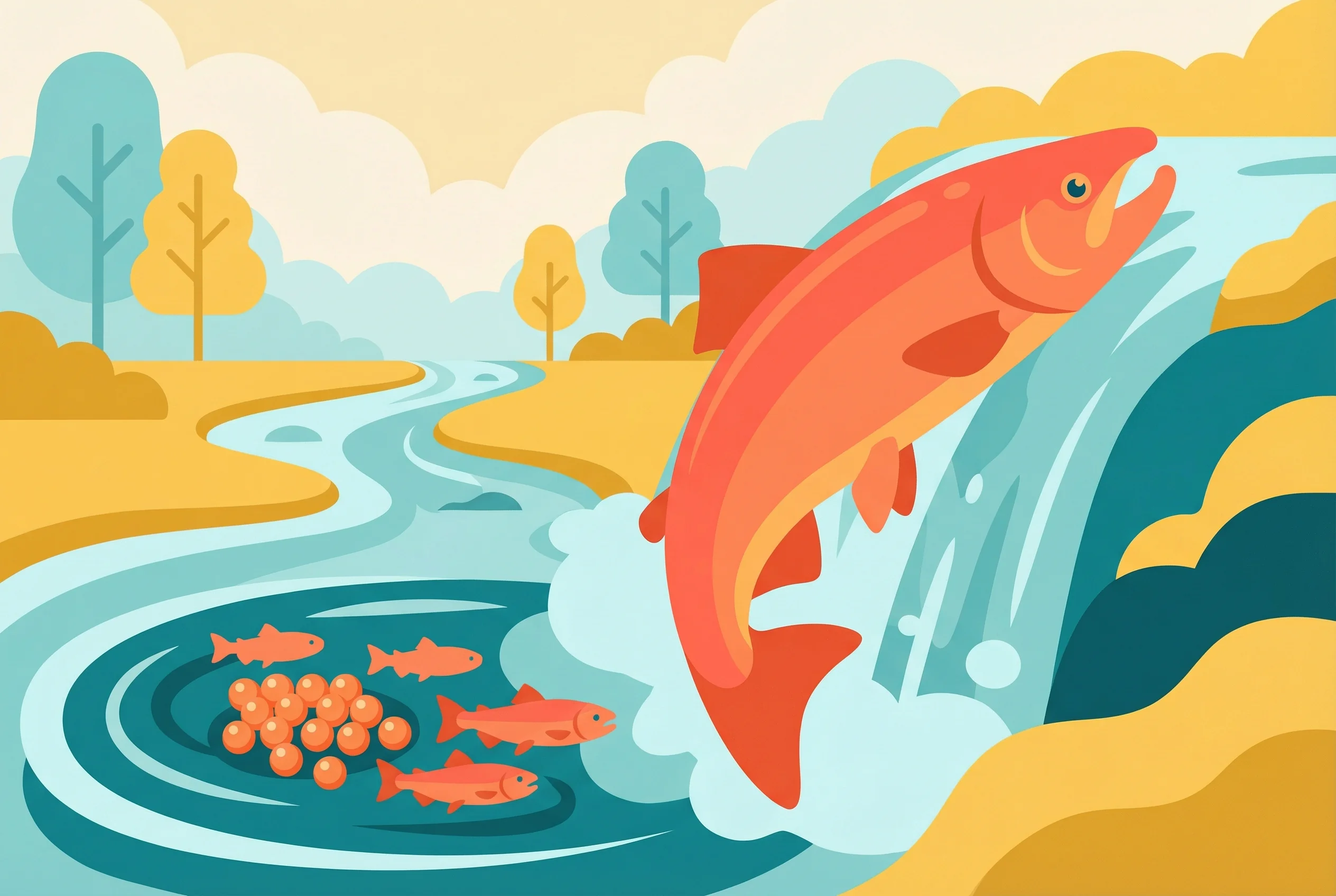
Salmon migration sounds mythical because the distance is so large and the target is so specific. NOAA Fisheries describes Pacific salmon as famous for homing migrations from ocean feeding grounds back to the river of origin. The key mechanism is olfactory imprinting: before young salmon migrate to sea, they learn odors associated with their natal stream, and maturing adults later use retained odor memories during the return migration (NOAA Fisheries).
That does not mean every salmon returns perfectly, and it does not mean smell is the only cue over the entire ocean. The satisfying part is more precise: when the fish gets close enough for river chemistry to matter, the old odor map becomes actionable. A fact that starts as "salmon swim upstream" turns into a memory story. The animal is not just fighting the current; it is closing a loop that began when it was young.
3. Anteaters turn a tiny mouth into a reach tool
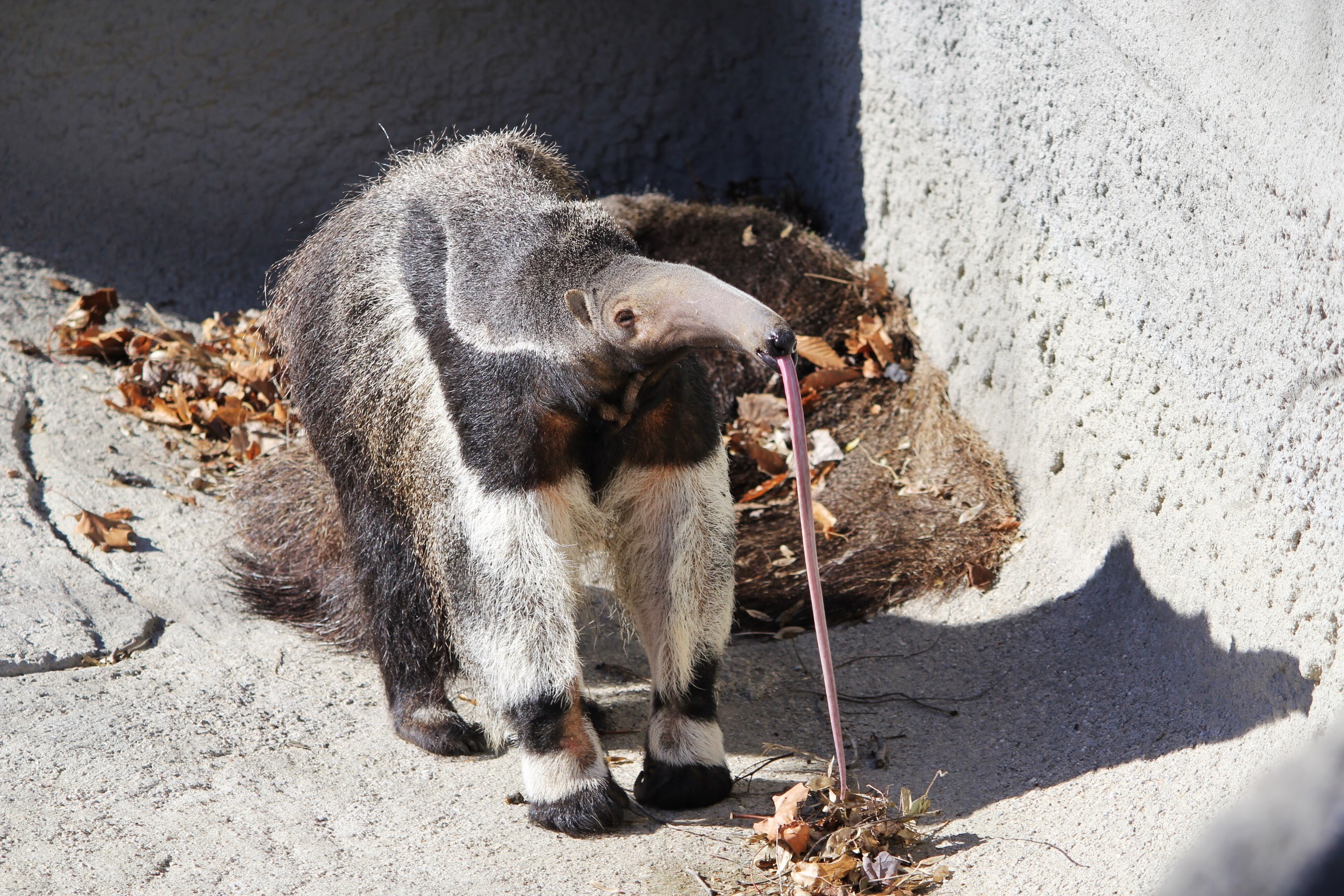
A giant anteater looks almost incorrectly assembled until you understand the feeding problem. Its food is hidden in narrow ant and termite passages. San Diego Zoo notes that the tongue is about two feet long and can dart into insect nests up to roughly 150 times per minute, collecting prey with sticky saliva (San Diego Zoo Wildlife Alliance). Smithsonian's National Zoo gives the same broad mechanism: a two-foot tongue, rapid flicking, and an insect diet built around ants and termites (Smithsonian National Zoo).
The non-obvious part is the restraint. Anteaters do not simply destroy one colony and feast. Many accounts describe brief visits because ants and termites bite back. The long tongue is not a luxury; it is a way to sample a dangerous pantry quickly, then move before the defenders make the meal too expensive.
4. Skunk spray is powerful because it is not used casually
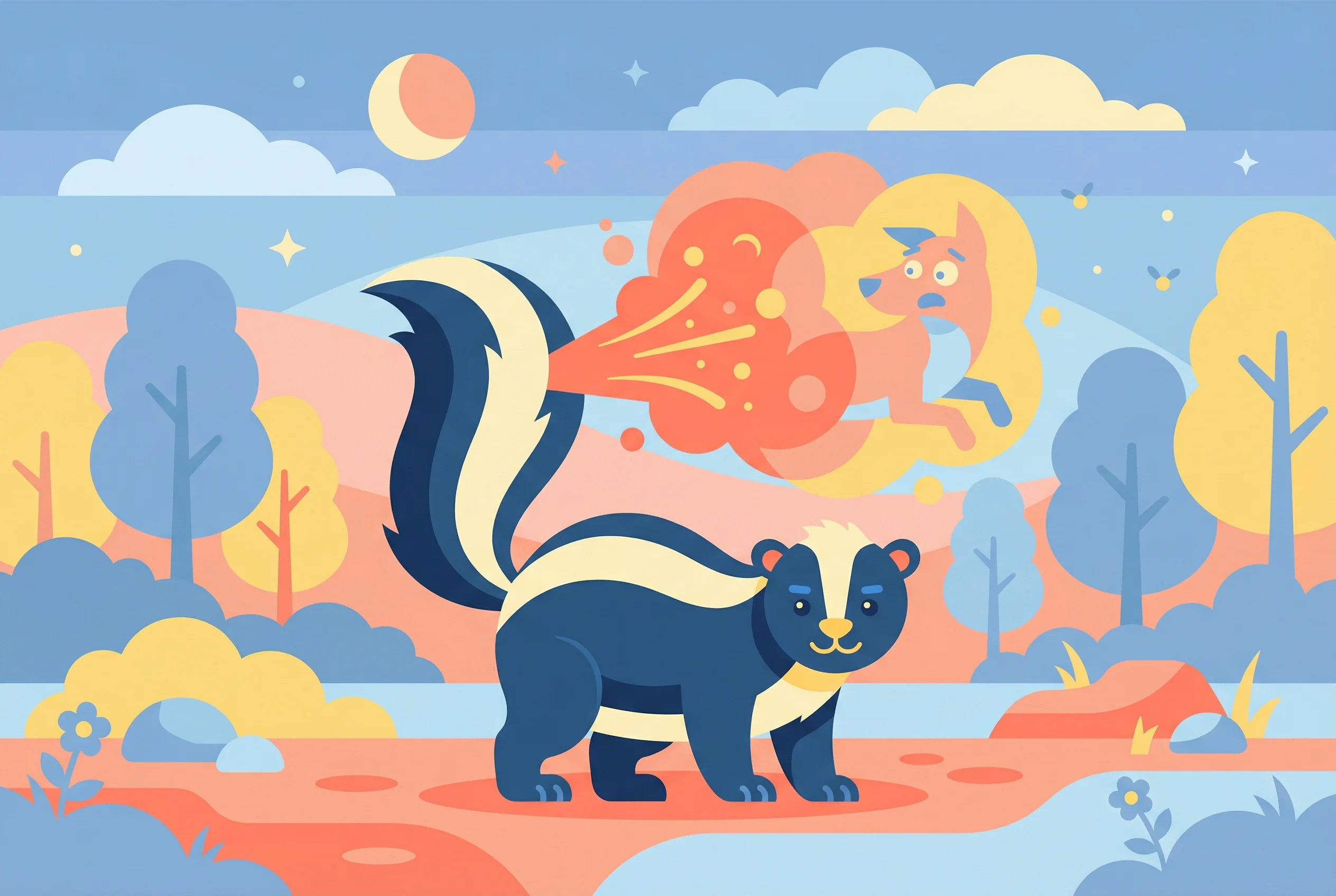
The lazy version is "skunks smell bad." The better version is that skunk spray is a costly, last-resort defense. Smithsonian Magazine, quoting a National Zoo biologist, describes the spray as sulfur-based thiol chemistry and notes that a serious spray can nearly deplete the gland supply, with replenishment taking up to about 10 days (Smithsonian Magazine). The behavior usually comes after warning displays such as stomping, hissing, tail raising, or turning the body into position. A defense system is more than the weapon; it is also the decision rule for when to spend it.
This is the reason skunks are good curiosity material. They invert the usual predator-prey story. The skunk is not fast enough to outrun every threat or armored enough to ignore every bite. Instead, it makes predators learn a rule: this small black-and-white animal is not worth the next few days of regret. The lesson compounds because one painful encounter changes future behavior.
5. Honeybees put geography into motion
Karl von Frisch's bee-language work was important enough to share the 1973 Nobel Prize in Physiology or Medicine. The Nobel press release describes the difference between nearby food and farther food: when a source is more than about 50 meters from the hive, the returning bee performs a waggle dance rather than only a round dance, communicating information to nestmates (NobelPrize.org).
The everyday translation is strange and beautiful. A bee does not come home with a little map. It turns direction, distance, and value into a physical performance on the comb. The direction of the waggle run encodes the food direction relative to the sun; the duration relates to distance; the liveliness of the dance helps recruit attention. A fact that sounds cute becomes a miniature navigation system.

6. Elephant trunks are not hoses
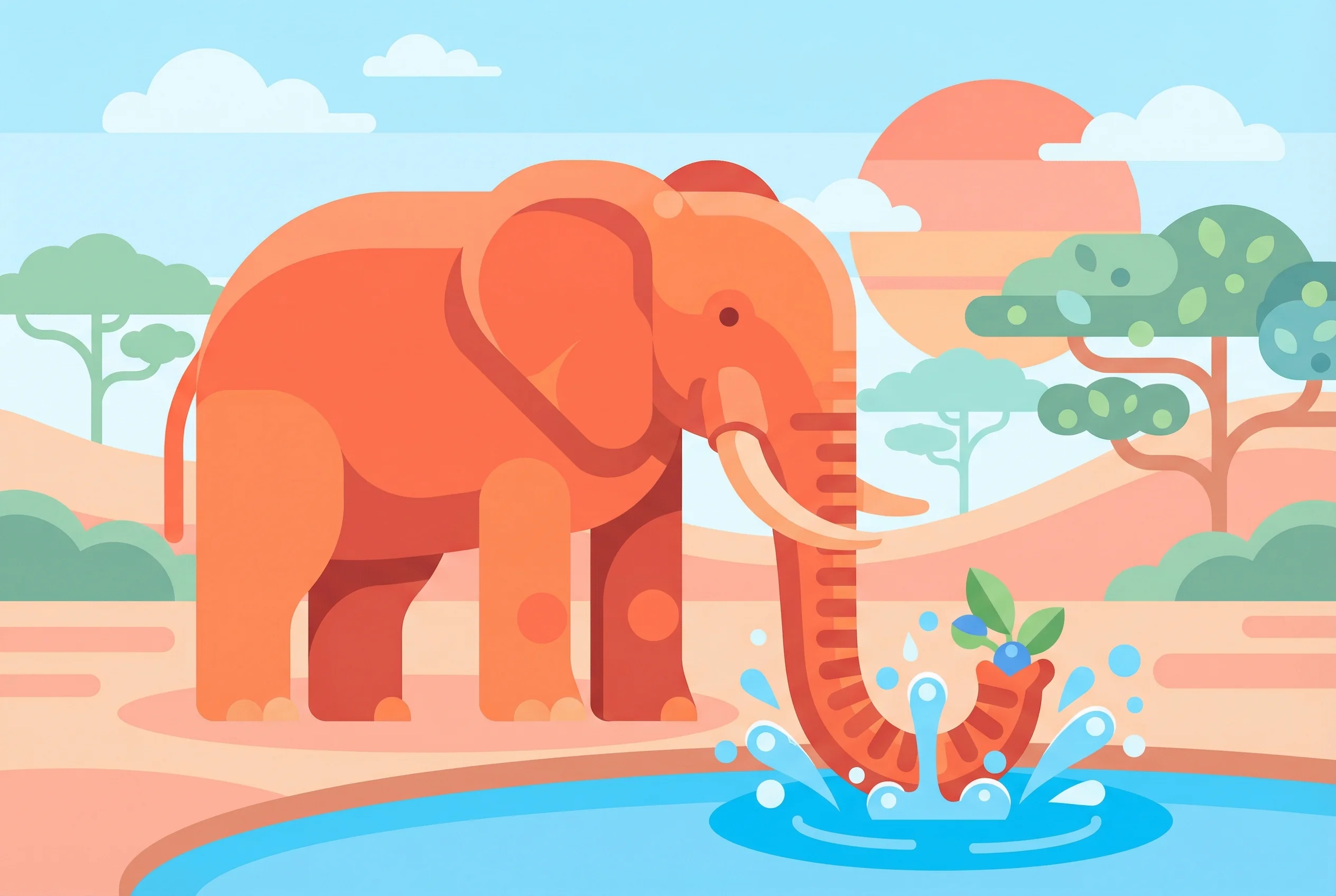
An elephant trunk is often described as a nose, but that undersells it. Smithsonian's National Zoo notes that Asian elephants use the trunk for breathing, smelling, drinking, feeding, social touch, sound, and object handling, with the trunk functioning as a fusion of nose and upper lip (Smithsonian National Zoo). The MillionWhys bank version puts the same point in a quiz frame: the trunk is not a water-storage tank; it draws water and transfers it to the mouth.
The useful pattern is multi-use anatomy. Some adaptations solve one problem beautifully. The trunk solves many. It is a hand, straw, snorkel, trumpet, sensor, and social instrument, depending on the moment. That is why the fact feels satisfying: the animal does not have a separate tool for each job. Evolution bundled several jobs into one flexible structure.
What people usually miss
Most animal-fact pages treat surprise as the whole meal. Surprise is only the opening. The deeper payoff is closure: the moment when the odd detail becomes necessary. White-looking fur is camouflage and optics. Upstream migration is a smell-memory loop. A long tongue is a fast-access tool for a dangerous food source. Spray is chemical defense with a cost. A dance is a navigation interface.
That is also why a ten-second question can be real learning instead of trivia confetti. A good question creates a small information gap, gives you just enough half-knowledge to care, then closes the gap with a mechanism. One answered "why" does not make you an expert in zoology. It does something more durable: it changes how the next animal fact lands.
Related videos
The Waggle Dance of the Honeybee — Georgia Tech College of Computing.
FAQ
What are the best random animal facts to remember?
The best ones explain a mechanism: polar bear fur scatters light, salmon remember stream odors, anteater tongues reach into insect nests, skunk spray deters predators, and honeybee dances encode food locations.
Are these animal facts verified?
The explainer above uses institutional sources where possible, including NOAA Fisheries, NobelPrize.org, the Library of Congress, San Diego Zoo, and Smithsonian's National Zoo. The embedded quiz examples come from the MillionWhys active question bank.
Why do animal adaptations often look strange?
They look strange because we usually see the body part before we see the constraint. Once you know the problem, the weird shape or behavior often becomes the shortest available solution.
Can a random fact actually help you learn?
Yes, if it gives you real closure. A disconnected fact fades quickly; a fact that explains a cause, tradeoff, or mechanism can attach to the next thing you learn.
What does this have to do with AIgneous Million Whys?
MillionWhys is built around exactly this loop: one small question, one real answer, one satisfying explanation. It is not exam prep; it is a curiosity engine for turning idle moments into knowledge that quietly compounds.
Sources
Library of Congress: Is a polar bear's fur transparent?
NOAA Fisheries: Fish Olfaction and Homing Research
San Diego Zoo Wildlife Alliance: Giant Anteater
Smithsonian National Zoo: Giant Anteater
NobelPrize.org: 1973 Physiology or Medicine press release
Smithsonian National Zoo: Asian Elephant
Smithsonian Magazine: What Makes Skunk Spray Smell So Terrible?
Keep Exploring
Related Posts
Animal Trivia Questions With Answers
Animal trivia questions with answers about skunks, bees, owls, salmon, elephants, polar bears, frogs, and the little whys behind animal behavior.
Fun Facts About Penguins: Adaptations Explained
Fun facts about penguins: how feathers, feet, flippers, salt glands, countershading, huddles, and deep dives make impossible adaptations work.
Fun Facts About Human Body: Everyday Biology
Fun facts about human body biology: why blinking, heart rate, gut rumbles, body clocks, and sneezing work as tiny automatic survival systems inside you.