
Interesting Facts About Platypus: Nature's Puzzle
Interesting facts about platypus biology sound fake at first: a mammal that lays eggs, hunts with electricity, makes venom, sweats milk through its skin, and can glow blue-green under ultraviolet light. The better question is not "why is the platypus so weird?" It is "what problem is each weird trait solving?" Once you look at the animal that way, the joke turns into a compact lesson in how evolution keeps useful answers, even when the answers look like they came from different drawers.
TL;DR
The platypus is strange because it sits on an old mammal branch called monotremes, not because it is a mash-up of modern animals. Its egg-laying, milk-secreting skin, venomous male ankle spurs, waterproof fur, and electroreceptive bill are all working adaptations. The satisfying part is that the platypus is not half-duck or half-beaver; it is fully mammal, just from a lineage that kept a different set of ancient tools.
Short answer: the platypus is one of the living monotremes, a small mammal group that lays eggs instead of giving live birth. It hunts underwater with eyes, ears, and nostrils closed, using a sensitive bill to detect prey. Males have venomous ankle spurs, females feed young with milk secreted through skin pores, and genome studies show how mammal, reptile-like, and bird-like features can coexist in one animal without breaking the definition of mammal.

Curious? Try one 👇
Curious? Try one 👇
Why is the sky blue?
Jump into the daily quiz →The egg is not a reptile mistake
Platypuses belong to monotremes, the only living mammals that lay eggs. The Australian Museum explains the key monotreme package plainly: they lay eggs and lack teats, but they still feed young with milk, which is secreted through many pores on the mother's belly (Australian Museum). That one sentence fixes a lot of bad shorthand. The platypus is not "almost a mammal." It is a mammal whose branch split early enough to keep a reproductive route that most later mammals left behind.
The payoff is that "mammal" is not defined by giving live birth. Mammals have traits such as hair, milk production, and specialized ear bones. Monotremes keep those mammal traits while laying eggs. If the usual schoolroom model says mammals have live babies, the platypus is the closure moment: categories are useful, but nature is older than our tidy definitions.

The bill is not a duck bill; it is a sensor array
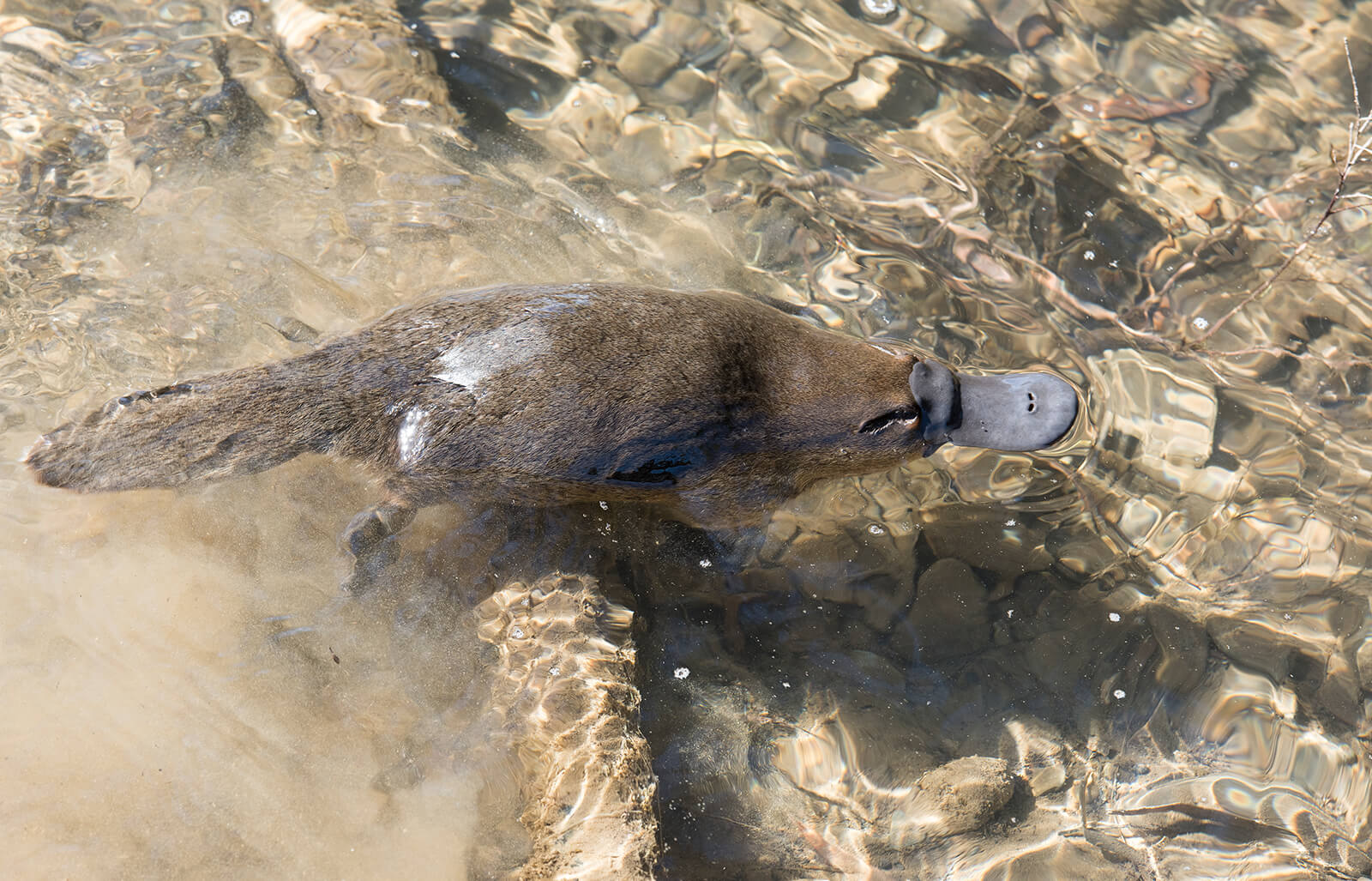
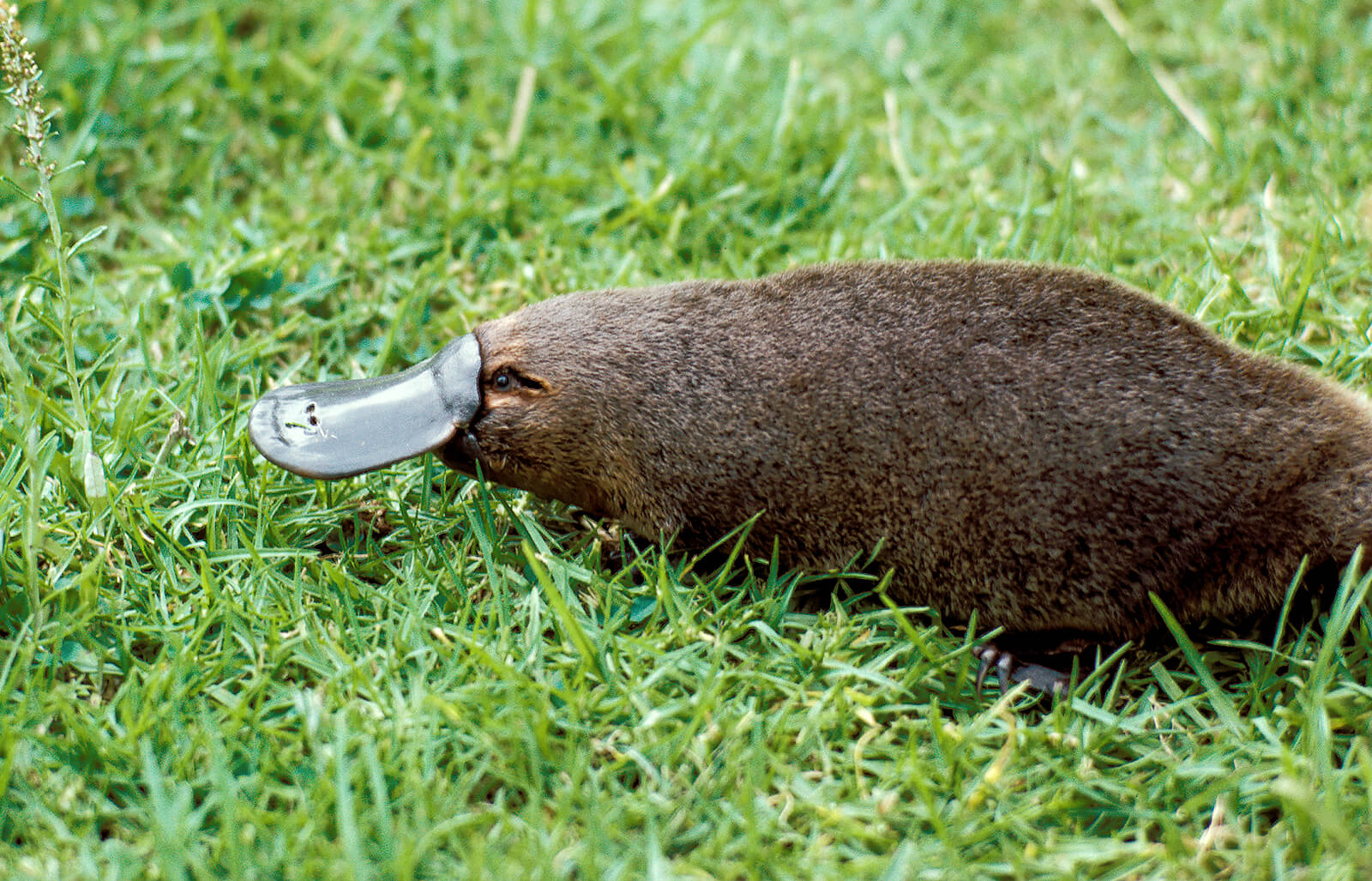
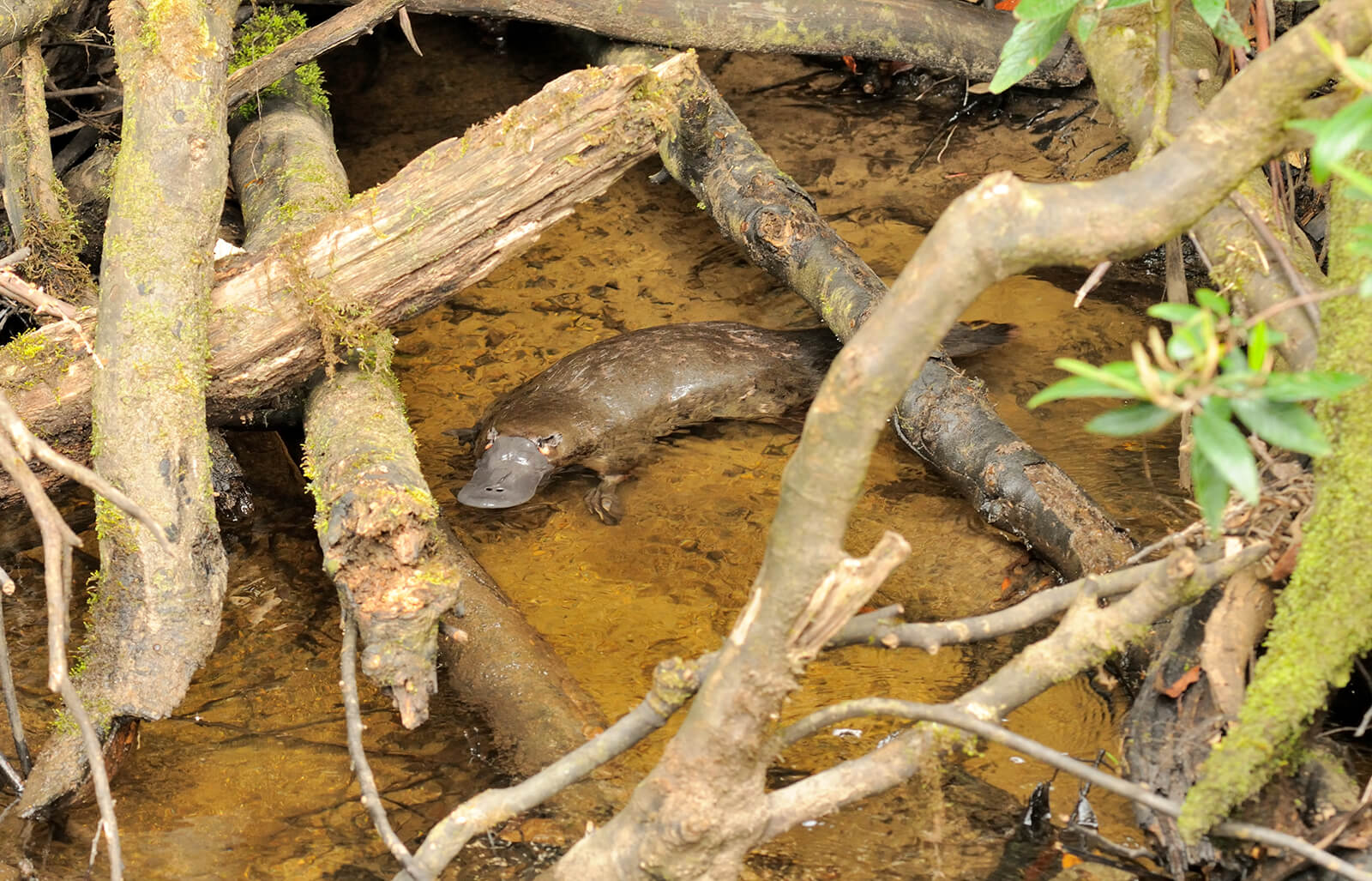
The platypus bill is soft, sensitive, and built for underwater hunting. San Diego Zoo describes the animal as semi-aquatic, egg-laying, endemic to eastern Australia including Tasmania, with dense fur, webbed feet, and a broad bill (San Diego Zoo). The bill is the trait that turns the animal from cute oddity into engineering puzzle. A platypus forages underwater with its eyes, ears, and nostrils closed, so it needs another way to know where prey is.
That other way is electroreception. Small muscle movements from aquatic invertebrates produce weak electrical signals, and the platypus can detect them through receptors in the bill. Genome work on platypus biology explicitly tracks genes and pathways tied to electroreception, venom, and milk production (Nature). The animal is not staring through muddy water. It is feeling the electrical outline of dinner.
This is where curiosity peaks: you half-know that platypuses have funny bills, but the real answer is better. The bill is not decorative. It closes a sensory gap created by hunting underwater with ordinary senses shut down.
The venom is seasonal, male, and not there for dinner
Another interesting fact about platypus biology is that adult males carry venomous spurs on the hind ankles. The Australian Museum describes a sharp spur about 12 millimetres long on each male ankle, connected by a duct to a venom gland that is especially active during the breeding season (Australian Museum). The venom can cause severe pain in humans, though the museum notes it is not considered lethal to humans.
That seasonality matters. The venom is not mainly a prey-capture tool like a snake's strike. It is more plausibly tied to competition between males during the breeding season. The 2008 platypus genome paper found that platypus venom proteins and reptile venom proteins were independently co-opted from some of the same gene families (Nature). That is a clean evolutionary surprise: similar biochemical tools can be recruited in very different lineages without one animal being a half-version of the other.
The easy version says, "Platypuses are poisonous." The more useful version says, "Male platypuses use venom in a seasonal reproductive context, and the genome shows how evolution can reuse gene families for new jobs." One is trivia. The other actually closes the gap.

The milk comes through skin, not nipples
Female platypuses produce milk, but they do not have nipples. The milk is secreted through skin pores and collected by the young from the belly area, a monotreme trait summarized by the Australian Museum's monotreme guide (Australian Museum). That sounds awkward until you remember the egg. The young hatch tiny and underdeveloped, then feed from the mother in a protected burrow.
Genome studies make this stranger in a good way. The platypus genome analysis found conserved milk protein genes even though the animal lays eggs (Nature). A later genome comparison of platypus and echidna also connects monotreme traits to the broader story of mammalian biology (PMC / Nature). The animal is not missing the mammal memo. It is preserving a version of mammal life where egg-laying and milk feeding coexist.
That is the quiet beauty of the platypus: the answer does not flatten the weirdness. It makes the weirdness more precise.
The glow is real, but the purpose is still open
In 2020, researchers reported biofluorescence in museum specimens of platypus: under ultraviolet light, the fur fluoresced green or cyan, with emitted wavelengths peaking near 500 nanometres (Mammalia). This does not mean platypuses glow like lamps in a river. Biofluorescence means the fur absorbs shorter-wavelength light and emits longer-wavelength visible light under the right illumination.
The purpose is not settled. It may have no strong current function, or it may connect to signaling or camouflage in low-light conditions. The honest phrasing is important because a curiosity brand loses trust fastest when it turns "observed" into "explained." The fact is verified: platypus fur can fluoresce under UV. The function remains a question. That unresolved edge is part of the fun, because a good answer can also show you exactly where knowledge runs out.
What people usually miss
The mistake is treating the platypus as a pile of exceptions. Egg-laying is not an exception to mammalhood. Electroreception is not a novelty sense. Venom is not a random party trick. Milk without nipples is not a defect. Each trait is a working answer to a real pressure: reproduce, hunt, compete, feed, and survive in water and burrows. The platypus feels funny because our mental category is too small. The animal itself is coherent.
That is why interesting facts about platypus biology are more satisfying than a list of oddities. The closure is not "wow, nature is random." The closure is "nature keeps solving problems, and sometimes the solution looks impossible until you know the job."
The next question is even better: if one living mammal can preserve this many old and specialized solutions, what else are our clean textbook categories hiding in plain sight?
Related videos
Platypus Genome: by Nature Video
Platypus Hunts with "Sixth Sense" | Nat Geo Animals
FAQ
Is a platypus really a mammal?
Yes. Platypuses are monotreme mammals. They have hair and produce milk, even though they lay eggs instead of giving live birth.
Are platypuses poisonous or venomous?
They are venomous, not poisonous. Adult males have ankle spurs connected to venom glands, especially active during the breeding season.
How does a platypus find food underwater?
It closes its eyes, ears, and nostrils while swimming and uses electroreception in its bill to detect weak electrical signals from prey.
Do platypuses really glow?
Under ultraviolet light, platypus fur has been observed fluorescing blue-green. The biological purpose is still uncertain, so it should be treated as a verified observation, not a fully explained adaptation.
Why does AIgneous Million Whys care about platypus facts?
Because a platypus is a perfect 10-second curiosity loop: first it feels absurd, then one mechanism clicks, and suddenly you leave with a sharper question about mammals, evolution, and how categories work. That is the kind of closure Million Whys is built for.
Sources
Australian Museum: What is a monotreme?
Nature: Genome analysis of the platypus reveals unique signatures of evolution
Platypus and echidna genomes reveal mammalian biology and evolution
Curious? Try one 👇
Why is the sky blue?
Jump into the daily quiz →Keep Exploring
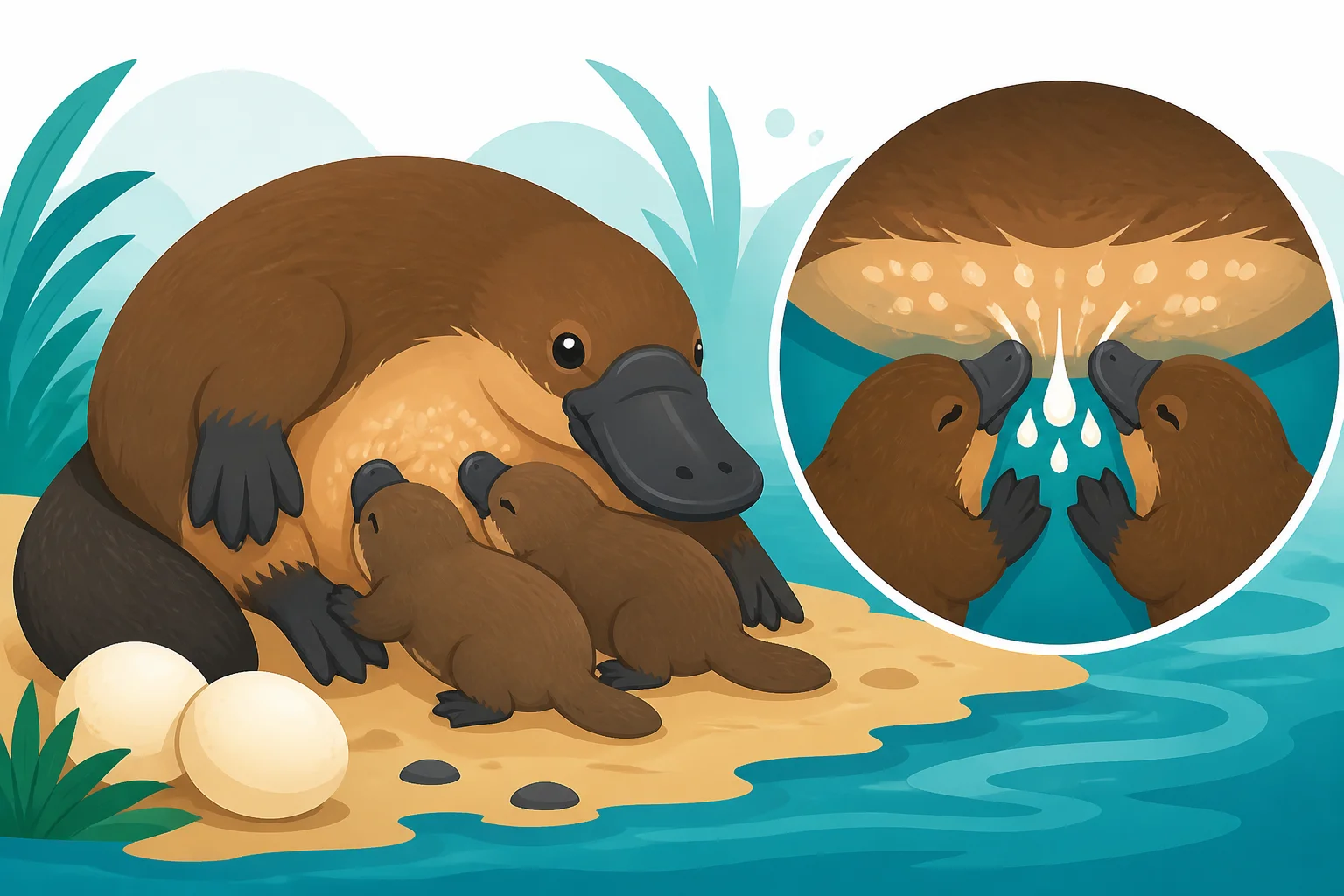
A platypus lays eggs but feeds hatchlings milk without nipples. What makes that less contradictory?
Animal Behavior
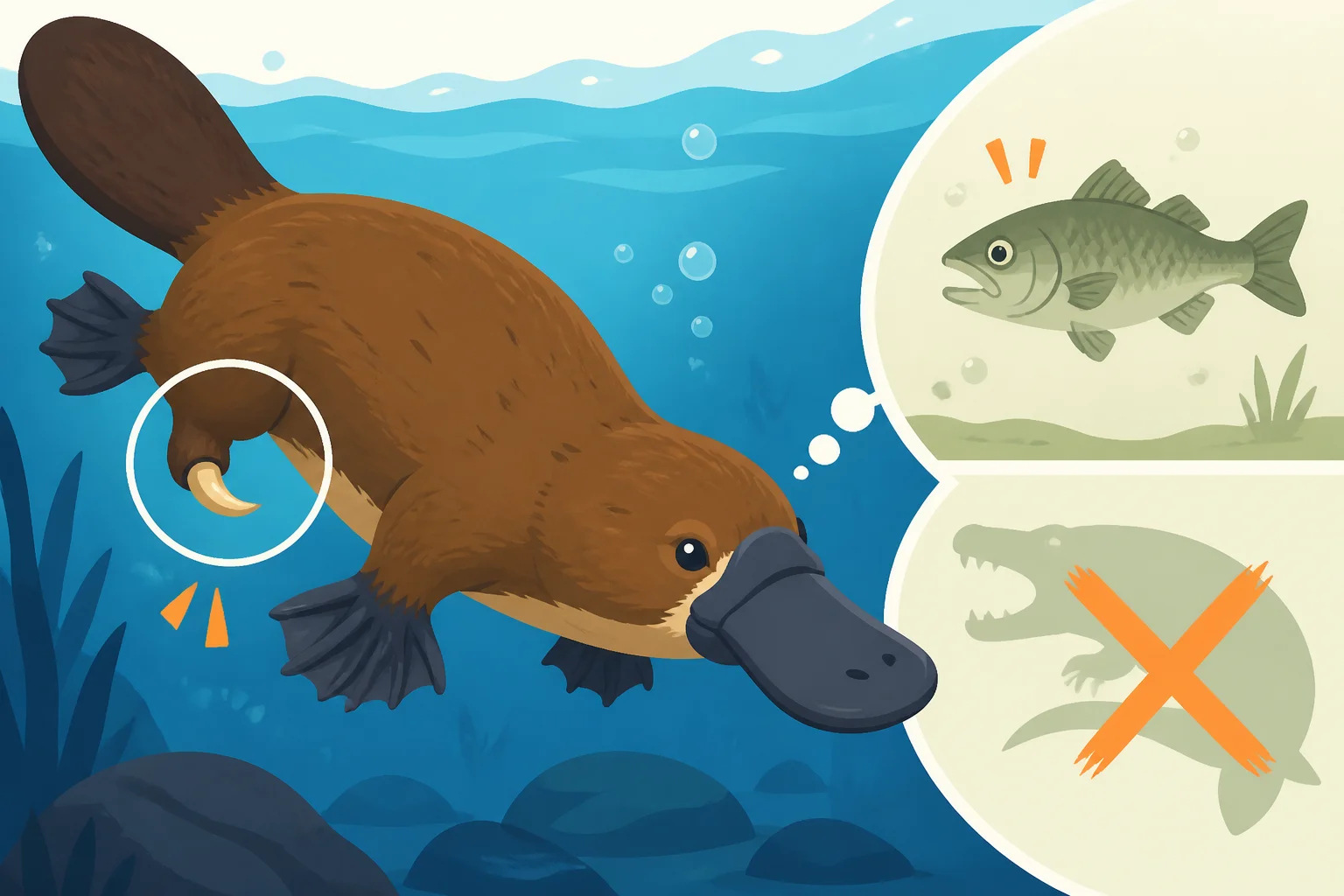
Male platypuses have venomous ankle spurs. Why are they probably not mainly prey-hunting tools?
Animal Behavior
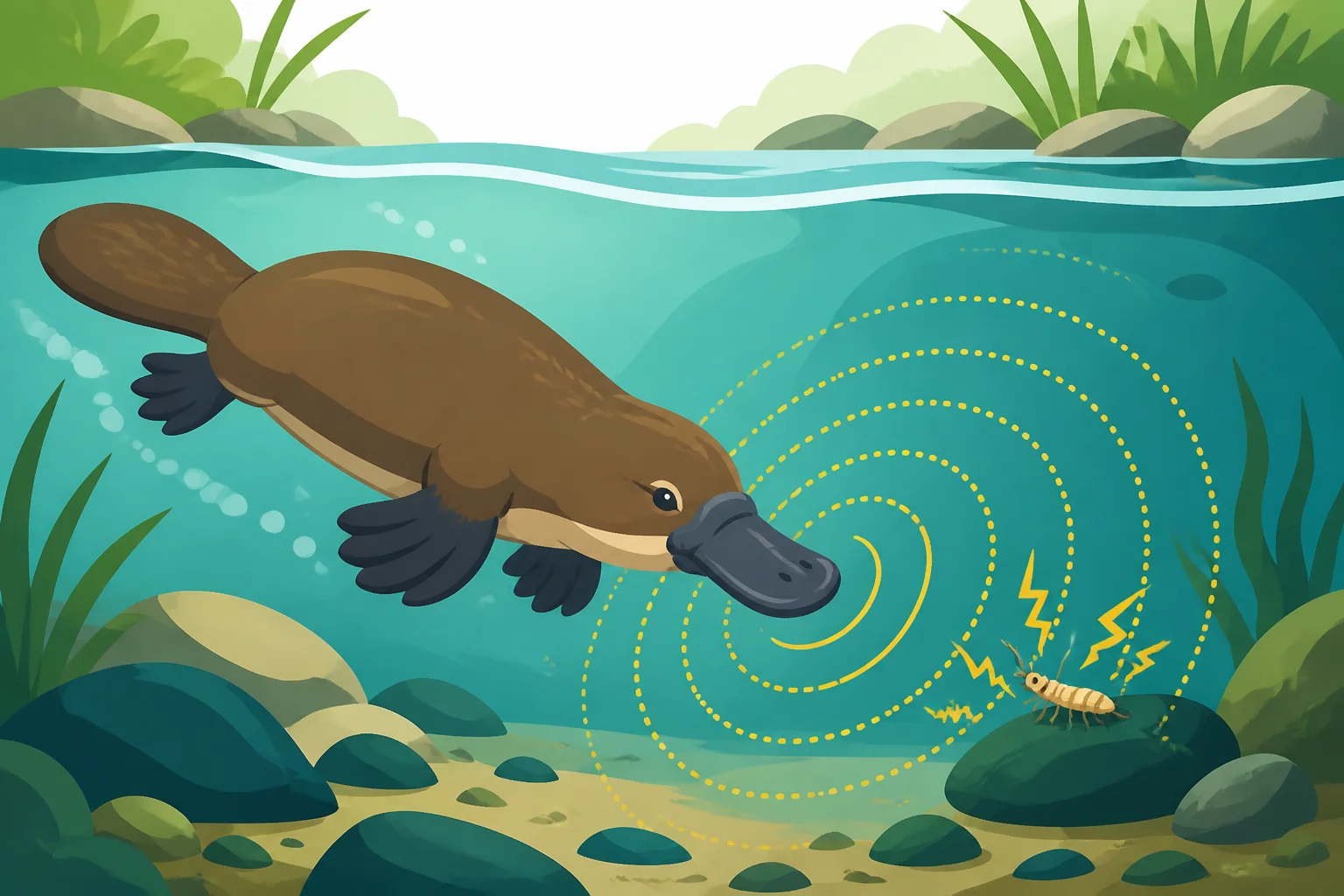
Why is a watery creek a good place for a platypus to sense tiny prey electricity?
Physics in Daily Life
Related Posts
Random Animal Facts: Weird Adaptations Explained
Random animal facts explained through real adaptations: polar bear fur, anteater tongues, salmon homing, skunk spray, bee dances, and elephant trunks.
Interesting Facts About Owls: Silent Hunters
Interesting facts about owls: silent flight, dish-shaped faces, uneven ears, fixed tube eyes, pellets, and the mechanics behind night hunting.
Fun Facts About Penguins: Adaptations Explained
Fun facts about penguins: how feathers, feet, flippers, salt glands, countershading, huddles, and deep dives make impossible adaptations work.