
Example of Critical Thinking: 8 Methods Explained
On this page· 20
You're scrolling through your phone when you see a familiar claim: a particular morning routine makes people more productive. A friend swears by it. A creator explains it confidently. The comments are full of agreement, so you start wondering whether you should change your mornings too.
Then you ask a simple question: were those people already more organized before they adopted the routine? Suddenly, the explanation isn't quite so convincing. Their experience might be real, but it doesn't establish what caused the improvement.
That pause is an example of critical thinking. You haven't rejected the claim or accepted it. You've identified what you'd need to know before deciding.
Critical thinking means evaluating an explanation against evidence, assumptions, and competing possibilities. It isn't about disagreeing with everyone, winning arguments, or finding a flaw in every sentence. It's about making your confidence match what you can support.
A convincing explanation tells you why something might happen. A testable explanation also tells you what you should observe if it's right.
The following methods make that distinction practical. Some help you ask better questions; others help you investigate causes, judge online information, or check whether a number makes sense. Each gives you a reasoning chain you can reuse: make a prediction, choose a test, and identify which alternatives the result would weaken.
1. Socratic Questioning
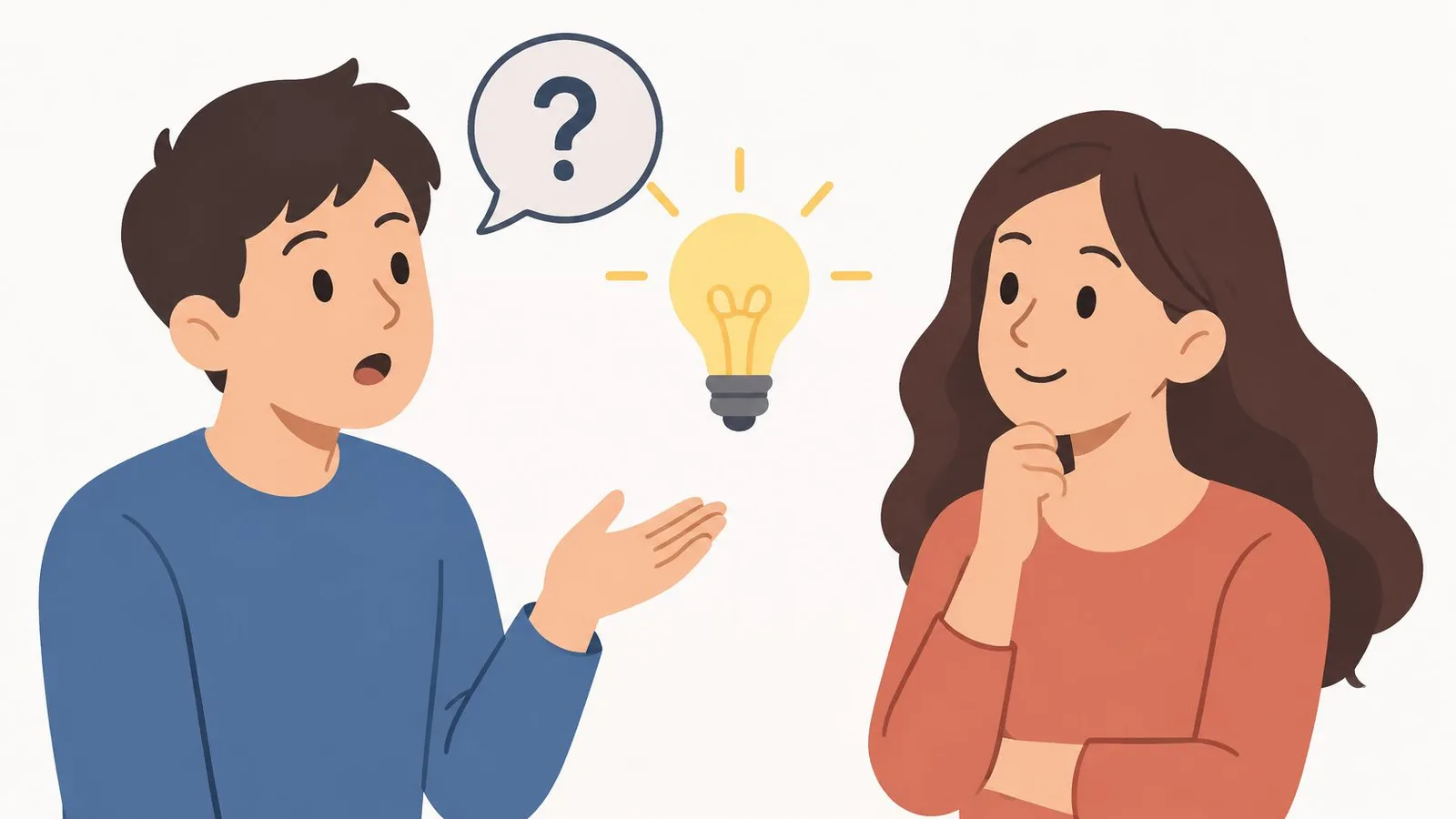
Someone in your study group says handwritten notes are better than typed notes. Instead of arguing, you ask what better means. Does it mean remembering definitions, explaining ideas, or finishing notes quickly?
Socratic questioning uses a sequence of open-ended questions to clarify a claim and examine its support. Each answer guides the next question. The point isn't to trap the other person, but to discover what their conclusion depends on.
Suppose they explain that handwriting improves understanding because it encourages summarizing. You now have a more useful claim: perhaps summarizing matters more than the writing tool.
Follow the Answer, Not a Script
Try this reasoning chain:
- Clarify the prediction. If summarizing explains the benefit, students who summarize typed notes should also demonstrate understanding.
- Identify a fair test. Compare explanations of the same material after summarizing by hand and summarizing on a keyboard.
- Challenge the alternatives. Ask whether differences could reflect prior knowledge, distractions, or extra study time.
That chain helps distinguish the proposed mechanism from the broader claim that handwriting is always superior. It doesn't establish which approach works best before you gather evidence.
You can also turn the questions inward. What experience made you believe the claim? Have you noticed occasions when it didn't hold? What evidence would make you less certain?
Learning how to ask better questions starts with replacing broad challenges with precise requests for meaning and evidence. Ask calmly, leave room for an answer, and follow the strongest version of the person's reasoning rather than an easy version to defeat.
Question 1 of 5
In Socratic questioning, what decides which question gets asked next?
2. The Scientific Method and Hypothesis Testing
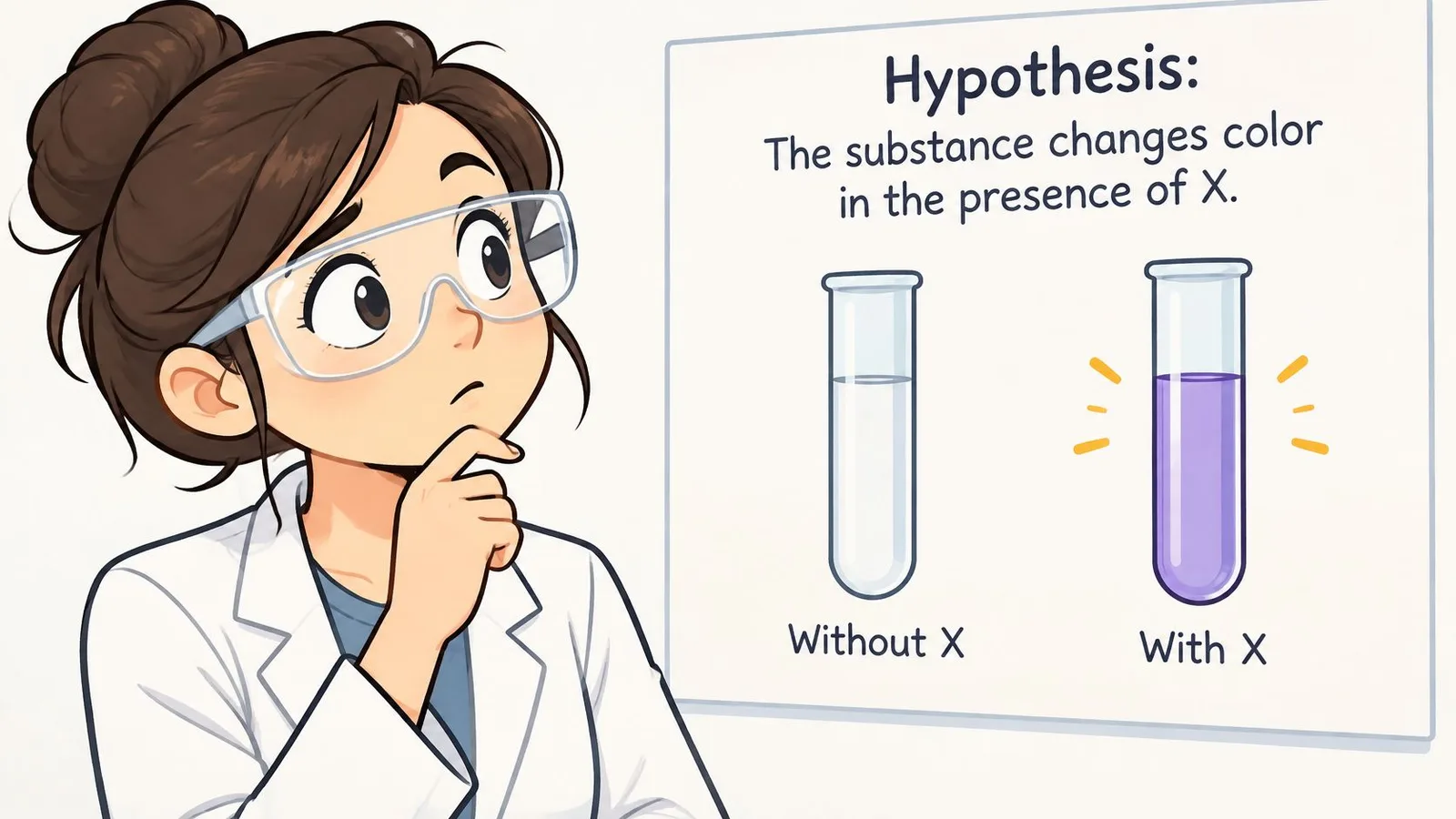
A hypothesis is a proposed explanation that you can test. The scientific method connects that explanation to a prediction, then compares the prediction with observations.
Say your desk plant is wilting. You suspect insufficient water, but poor drainage and unsuitable light are also possibilities. Watering more immediately might change the plant's condition, yet it won't necessarily tell you which explanation was right.
Before acting, examine the soil, drainage holes, and recent care. Define what you expect to observe under each explanation rather than treating every wilted leaf as evidence of thirst.
Change Something You Can Interpret
Your reasoning might look like this:
- Prediction. If inadequate watering is the main problem, the soil should be dry, and an appropriate watering adjustment should improve the plant's condition.
- Test. Check soil moisture and drainage, adjust watering without simultaneously moving or repotting the plant, and record what happens.
- Alternatives weakened. Improvement would support the watering explanation, but wouldn't establish a universal rule for every plant or exclude every contributing cause.
The comparison matters. If you change watering, light, soil, and fertilizer together, you won't know which change helped.
In classrooms, evidence-based explanation can be a learning outcome in its own right: a Science Writing Heuristic trial published in Science Education found statistically significant critical-thinking improvement even though science-content gains weren't statistically significant.
Use the same discipline when exploring common science misconceptions. Ask not just whether an explanation sounds plausible, but what observation would distinguish it from its rivals.
3. Falsifiability (Karl Popper's Criterion)
A claim that can explain every possible outcome gives you no clear way to test it. Falsifiability means that some possible observation could show a claim to be false.
Consider a seller who says a bracelet improves concentration. If you focus better, they credit the bracelet. If you don't, they say you weren't receptive to its effects.
The explanation protects itself from every result. Your next step isn't to debate whether it sounds scientific. It's to ask the seller to specify what would count against it.
Practical rule: Before looking for support, finish this sentence: I would reconsider this explanation if…
Make Failure Possible
Turn the vague bracelet claim into a specific proposal. For example, wearing it should improve performance on a defined attention task under comparable conditions, without knowing whether the bracelet is the advertised product.
The prediction is an observable difference. The test compares results under conditions designed to reduce expectation effects and ordinary variation. The alternative you challenge is that confidence, task familiarity, or selective memory explains the perceived benefit.
A result that doesn't support the prediction weakens that particular claim. It doesn't automatically settle every possible claim about the product, but the seller can't fairly treat it as confirming evidence.
Falsifiability and hypothesis testing have different jobs. Hypothesis testing asks how to investigate a proposed explanation. Falsifiability first asks whether the explanation permits a meaningful investigation at all.
This is especially helpful with vague promises about success, personality, and wellness. Ask what improvement means, under what circumstances it should occur, and what outcome would count as a failure. If the conditions keep changing after each disappointing result, suspend judgment rather than chasing the revised promise.
Question 2 of 5
A bracelet seller says it boosts focus: if you concentrate better, it worked; if not, you weren't receptive. Why does this claim fail Popper's test of being scientific?
4. The Five Whys
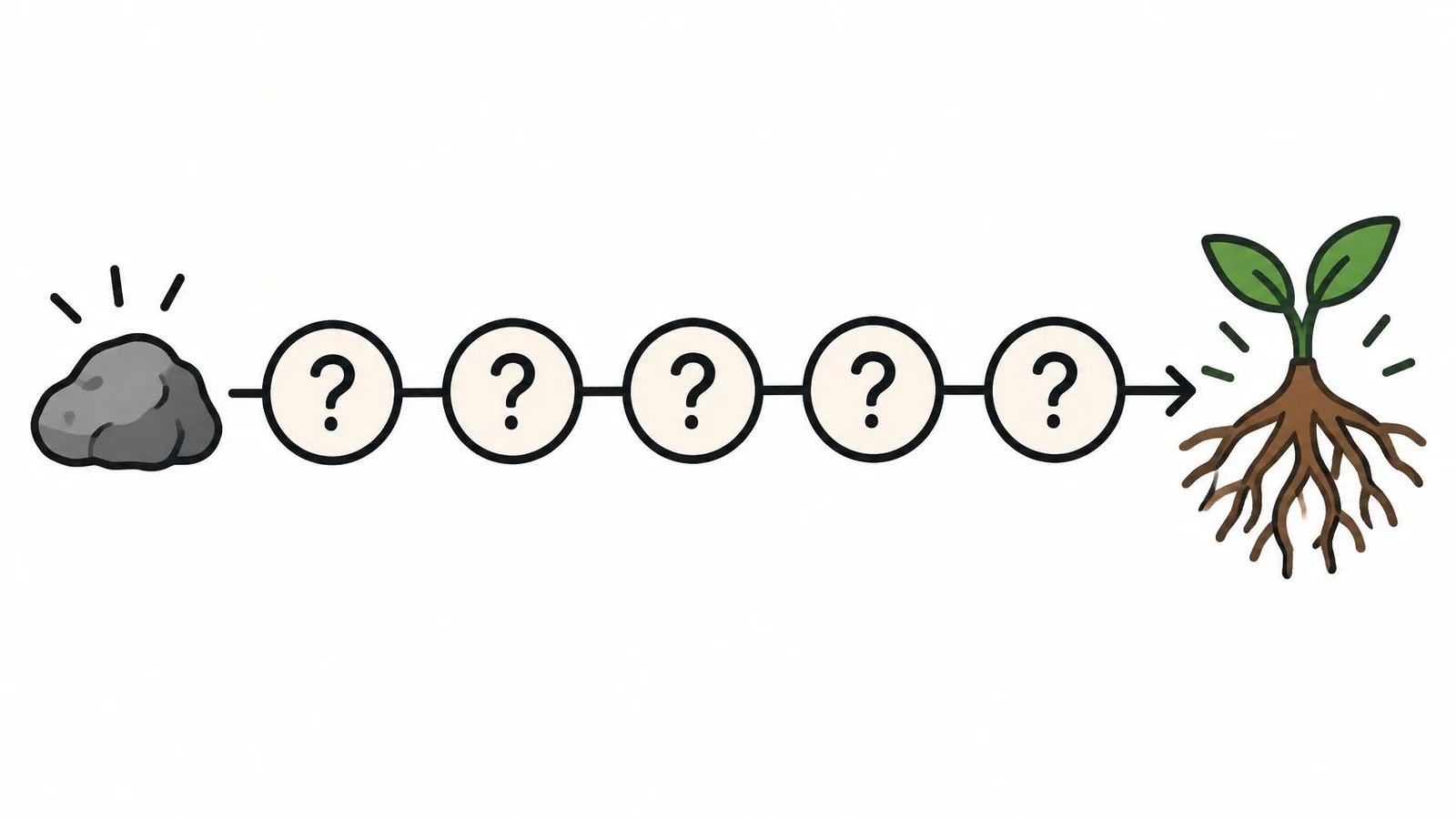
Your household keeps missing recycling collection. The easy explanation is that everyone's careless. The Five Whys method asks you to follow the problem backward instead of stopping at that judgment.
The name describes repeated questioning, not a requirement to force every problem through an identical chain. Stop when you reach a supported cause you can address, and branch when the evidence suggests several causes.
Here's a possible chain, framed as something to investigate rather than an established diagnosis:
- Missed collection. The bin wasn't outside when the truck arrived.
- Missed reminder. Everyone expected someone else to put it out.
- Unclear responsibility. The household hadn't assigned the task.
- Unreliable arrangement. People relied on a casual conversation rather than a visible schedule.
Verify Every Link
Your prediction is that a clear assignment and reminder will prevent the same kind of missed collection. Your test is to put that arrangement in place and check what happens at subsequent collections.
This challenges the assumption that people don't care. But it doesn't rule out other explanations, such as a changed pickup schedule or an inaccessible bin.
Ask what evidence supports each link. Did people think someone else was responsible, or have you supplied that answer because it sounds reasonable? A neat story isn't the same as a verified cause.
For a failed classroom experiment, the same method might lead from an unexpected result to mislabeled materials, then to an unclear setup procedure. Keep the focus on conditions people can inspect and change. If your chain ends with a character judgment, ask whether you've stopped before examining the process.
Question 3 of 5
What actually tells you when to stop asking 'why' in the Five Whys method?
5. Base Rate Reasoning and Bayesian Thinking
An unexpected message appears to come from your delivery company. It mentions a parcel, uses familiar branding, and asks you to update your payment details.
Those details feel persuasive because you're expecting a delivery. Base rate reasoning asks you to consider the broader context before allowing a vivid detail to determine your conclusion.
A base rate is how common something is within a relevant group. Bayesian thinking means updating your initial judgment as new evidence arrives, giving stronger evidence more influence than weaker evidence.
Start With Context, Then Update
You don't need invented probabilities to reason carefully. Ask whether you normally receive payment requests through this channel, whether the sender's address matches the company, and whether the delivery appears in your existing account.
The reasoning chain is straightforward:
- Prediction. If the request is genuine, you should be able to verify the issue through the company's independently accessed website or app.
- Test. Open that trusted route yourself rather than following the message's link.
- Alternative weakened. A matching issue in your account supports authenticity; familiar logos and knowledge of an expected parcel don't provide the same support.
The key question is how much a detail should change your mind. An image copied from a company website is weak evidence. Confirmation inside an independently accessed account is more informative.
Treat a vivid detail as a reason to investigate, not as permission to skip the background check.
The same approach helps with product faults and alarming headlines. Start with an appropriate comparison group, then update using evidence that distinguishes the possibilities. Don't manufacture a numerical probability when you lack trustworthy inputs, and don't turn a low initial likelihood into a claim of impossibility.
6. SIFT Method for Evaluating Online Information
SIFT is a routine for checking online claims: Stop, Investigate the source, Find better coverage, and Trace the claim to its original context.
Suppose a post says a familiar food damages memory. It includes a scientific-looking chart and links to an article. Before changing your diet or forwarding it, separate the post's conclusion from the evidence behind it.
Your prediction is that, if the headline accurately represents the evidence, the original material should support the same conclusion about the same population and circumstances. Your test is to locate that material and compare the wording.
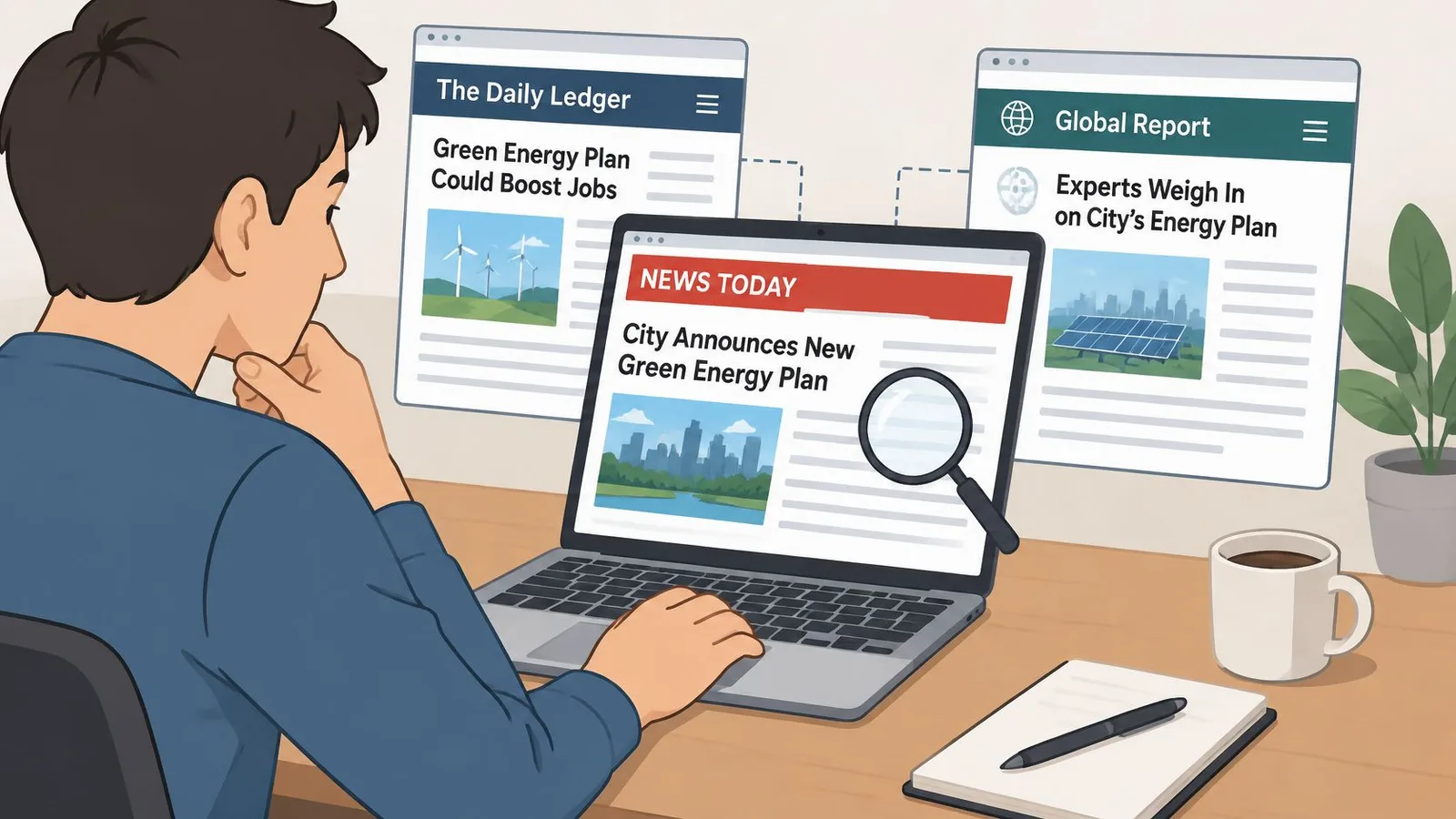
Leave the Page to Evaluate It
- Stop. Notice whether fear, excitement, or agreement is pushing you to share.
- Investigate the source. Check who published the claim and whether they have relevant expertise or a commercial interest.
- Find better coverage. Look for independent explanations that discuss limitations, not just sites repeating the headline.
- Trace the claim. Locate the original study or document and inspect what it examined.
This can expose several alternatives: a headline overstating an association, evidence from a different setting, or a chart stripped of essential context. Finding one of these gaps doesn't prove the opposite claim. It shows that the post hasn't earned its conclusion.
For more involved reporting, a misinformation verification workflow for newsrooms provides a related verification framework. Apply the same source checks to verification guides themselves.
When an answer comes from a chatbot, understanding why ChatGPT makes mistakes is a useful reminder to verify factual claims independently. Smooth wording isn't evidence, and a citation matters only if the cited document supports the statement.
Question 4 of 5
What are the four moves in the SIFT method for evaluating online information?
7. Pre-Mortem Analysis
Before starting a project, describe its failure as though it has already happened. Then ask what caused it.
That's pre-mortem analysis. Instead of defending your preferred plan, you temporarily assume it went wrong and work backward to identify vulnerabilities.
Say you're organizing a community science evening. Your initial plan includes demonstrations, volunteers, and a shared venue, but you haven't examined how those parts could fail together.
Rehearse the Failure Before Committing
Ask participants to write possible causes privately before discussing them. Someone might identify missing equipment; another might notice that the instructions assume knowledge visitors won't have.
Turn those concerns into tests:
- Prediction. If instructions are too technical, a newcomer will struggle to complete the activity without help.
- Test. Ask an unfamiliar reader to try the instructions and explain what they think each step means.
- Alternative weakened. Successful completion makes that specific concern less pressing, while confusion identifies something to revise.
Use the same pattern for equipment availability and volunteer coverage. A risk becomes actionable when you can name its warning sign, test the assumption, and assign someone to handle the response.
Planning insight: A concern is most useful when it changes a decision, a test, or a contingency plan.
Don't treat the longest list of disasters as the best analysis. Prioritize plausible failures with meaningful consequences and practical ways to reduce them.
A pre-mortem doesn't prove that your event will succeed. It challenges the unsupported assumption that an attractive plan will work as intended. The goal is neither optimism nor pessimism, but a plan whose important assumptions you've actually examined.
8. Fermi Estimation
A headline claims that a local venue can welcome an enormous crowd. Before accepting or rejecting the number, break it into quantities you can inspect.
Fermi estimation means approximating a quantity by dividing it into manageable parts. You make assumptions visible, combine them, and ask whether the resulting scale is plausible.
For a venue, start with usable visitor space rather than the building's entire footprint. Account for seating, aisles, stages, equipment, and areas visitors can't enter.
Build the Estimate From Smaller Pieces
A rough model might be:
Usable visitor area × plausible occupancy per unit of area = estimated simultaneous crowd
That expression isn't a substitute for an approved occupancy limit or a safety assessment. It's a way to notice whether a promotional claim deserves closer inspection.
Your prediction is that a plausible crowd figure should fit the usable space and the type of event. Your test is to compare the claim with a floor plan, seating layout, and documented capacity information.
The alternatives you examine include a figure referring to attendance across the whole event rather than people present simultaneously, or a count that includes surrounding outdoor space. A large number might be misleading without being fabricated.
- Write assumptions visibly. Separate what you know from what you've guessed.
- Use a range. Show how the estimate changes under plausible assumptions.
- Inspect the sensitive input. Verify whichever assumption changes the answer most.
For a household version, estimate how much shelf space your books need from their typical thickness and the number you own. Then measure a representative stack.
The value isn't false precision. It's knowing which quantities matter, noticing impossible scales, and identifying the missing fact that would most improve your estimate.
Question 5 of 5
You have roughly estimated a stadium crowd by multiplying usable area by people per square meter, and both numbers are shaky. What is the best next step to make the estimate trustworthy?
How the 8 Critical Thinking Methods Compare
| Item | Core Move | Best For | Main Limitation |
|---|---|---|---|
| Socratic Questioning | Probe ideas with open-ended questions | Examining assumptions and strengthening reasoning | Takes time and requires skill to avoid leading or frustrating people |
| The Scientific Method and Hypothesis Testing | Test a falsifiable hypothesis against observed evidence | Building reliable, revisable knowledge | Requires careful design and may not suit questions that cannot be tested directly |
| Falsifiability (Karl Popper's Criterion) | Ask what observation could prove a claim wrong | Spotting vague claims and avoiding confirmation bias | Does not establish truth on its own |
| The Five Whys | Repeatedly ask why to uncover an underlying cause | Quick root-cause analysis | Can oversimplify problems with multiple causes |
| Base Rate Reasoning and Bayesian Thinking | Combine general probabilities with specific evidence and update beliefs | Judging risk and interpreting evidence | Base rates can be hard to estimate, and priors may be subjective |
| SIFT Method for Evaluating Online Information | Stop, investigate the source, find better coverage, and trace claims | Quickly checking online information | Depends on reliable alternative sources and does not replace expertise |
| Pre-Mortem Analysis | Imagine a project has failed and work backward to identify why | Surfacing risks before a decision or launch | Can overemphasize unlikely risks |
| Fermi Estimation | Break a quantity into smaller estimates and combine them | Checking whether numbers are plausible | Results depend on assumptions and are not precise |
Turn These Methods Into a Daily Habit
Choose an everyday claim that matters enough to investigate but is small enough to handle. It might concern a study technique, a product recommendation, a viral fact, or the reason your bread didn't rise.
Start by writing what you currently expect. Then name the assumption carrying most of the explanation: perhaps the comparison was fair, the source was quoted accurately, or a change happened before its supposed effect.
Don't use every method on every question. Choose the method that addresses the uncertainty. Use Socratic questioning for unclear meaning, hypothesis testing for a proposed cause, SIFT for uncertain sourcing, and estimation for a suspicious quantity.
Keep a Short Reasoning Record
Use a notebook or a note on your phone:
- My prediction. What do I expect to find if the claim is right?
- My assumptions. What am I accepting without checking?
- My test. What observation or source could distinguish the explanations?
- My revision. What did I learn, and how confident should I now be?
Include an alternative you initially found unconvincing. Explain what would make it plausible and what evidence would weaken it. That makes the exercise more demanding than collecting reasons to agree with yourself.
Practice can outlast the lesson itself: an Informed Health Choices meta-analysis in Trials found that students who received structured instruction retained an advantage in evaluating health claims at follow-up. The practical lesson is to revisit your reasoning later, not just celebrate getting an answer right immediately.
Carry the Question Into Another Field
After investigating a claim, look for a related reasoning problem elsewhere. A food headline and a history explanation can both confuse events happening together with one causing the other, but evaluating them requires different background knowledge.
A review of critical-thinking instruction emphasizes that transfer across topics isn't automatic and that relevant knowledge matters. Use the general question again, but learn what counts as evidence in the new setting.
Tomorrow, start with something familiar. Predict an answer before searching, write the key assumption, and find evidence that could challenge your first explanation. Finish by naming what remains uncertain.
That's a successful example of critical thinking even if you don't reach a final verdict. You've replaced automatic acceptance with a judgment you can explain, inspect, and revise.
Million Whys offers short why-questions that invite you to predict an answer, then explore explanations for every choice, including the wrong ones. Visit Million Whys to practice that loop with a daily question, follow what still puzzles you, and connect the idea to another field.
Keep Exploring
Why does the Socratic method use questions instead of giving direct answers?
Philosophy & Ethics
Why do teachers still use the 'Socratic method' of asking questions instead of just giving answers?
Philosophy & Ethics
What makes an AI study helper sharpen a student's critical thinking rather than just supply answers?
Technology
Related Posts
How to Ask Better Questions: A Five-Step Method That Works
Learn how to ask better questions with a five-step method, before-and-after examples and follow-ups that test assumptions.
150 Would You Rather Questions: Funny, Hard, Kids & Adults
150 original would you rather questions sorted by mood — funny, hard, deep, for kids, couples, and a science edition where every choice comes with the why.