

Deepstash Review: Is It Free, and Is Pro Worth It?
If you came to Deepstash because you want your phone time to leave you understanding something new, take a look at Million Whys before paying for another subscription. Deepstash makes book ideas convenient to browse. Million Whys gives you an everyday why question to think through, then explains the mechanism and why the other answers do not work.
That difference matters if you finish a short summary thinking, “Interesting—but I want to understand more.” A memorable takeaway can introduce an idea. Working through a question gives you a chance to examine your own explanation of it.
We build Million Whys for that second kind of curiosity. Here is how Deepstash's free and paid offering compares with what you may actually be looking for, drawing on its official descriptions and published user experiences.
The quick verdict
- Choose Million Whys for everyday why questions: predict an answer, unpack the mechanism, and see why a plausible alternative fails. Try a question.
- Consider Deepstash for book discovery: its short visual ideas can help you encounter a concept or decide what to read next.
- Deepstash has a free tier: Pro adds conveniences including audio, offline access, and ad removal. Exact account limits and offers need checking.
- If the issue is depth, change the experience: before upgrading a feed that leaves you unsatisfied, see how Million Whys makes the explanation part of the activity.
Curious? Try one 👇
Why is the sky blue?
Jump into the daily quiz →What is Deepstash?
Deepstash presents ideas as short visual cards, with personalized recommendations across subjects such as psychology, productivity, philosophy, and leadership. Its current developer description emphasizes insights from popular books, while also mentioning articles, podcasts, and videos. The central promise is making ideas accessible in a short reading session. Official Google Play listing
The format is an invitation to explore books and ideas. That is a useful role. But if your reason for downloading a learning app is to investigate why things happen, a book-led feed may be an indirect route to the experience you want.
For example, an idea about habits might help you choose a book. A question about why fireworks produce different colors calls for something else: competing explanations, a prediction, and a mechanism that resolves it. That second experience is what we build around at Million Whys.

Developer-supplied promotional image from Deepstash on Google Play.

Deepstash book preview, supplied by the developer on Google Play.
Is Deepstash free?
Yes: Deepstash advertises a free starting tier and an optional Pro upgrade. Free access should not be confused with unrestricted access to every feature. The official store description identifies the following split:
| Area | What the developer explicitly describes |
|---|---|
| Free starting tier | Access to its idea library; creating and sharing ideas |
| Pro | Ad-free reading, audio playback, offline library access, and unlimited reading history |
| Saving and organizing | Described as product features, but the listing does not clearly specify every free-account limit |
Source: Deepstash's developer-written Google Play description.
The listing describes saving and organizing but does not spell out every free-account allowance. Check those limits in the offer shown to you, especially if building a saved library is your main reason to subscribe.
The practical question is whether the access offered to your account covers your intended routine. Reading a few ideas, keeping a searchable personal library, and listening offline are different use cases. A free download alone does not tell you which of them will remain available without payment.
Where Million Whys is the better fit
Choose Million Whys when you want to work out why something happens—and understand why a tempting answer is wrong. Deepstash's book-led discovery is useful for encountering ideas. Our advantage is the structure of the thinking you do around an everyday question.
1. You form an explanation before you read ours
Million Whys starts with a question and plausible choices. You make a prediction first, then open the explanation. That gives you a specific thought to compare against the answer: “I expected this because…” rather than simply deciding whether an idea sounds interesting.
This is the experience we would choose for a spare moment when we want something to puzzle out. You do not need to have read a particular book or memorized a list of obscure facts to take part. The choices give you possible explanations to reason between.
2. The wrong answers teach you something too
Getting an answer right is only part of the experience. Million Whys explains the alternatives so you can see which assumption led you astray. A wrong choice can reveal a useful distinction that a correct-answer label alone would miss.
For a concrete example, our public chemistry questions ask about firework colors. The answer points to different metal compounds; the alternatives distinguish that explanation from colored wrapping or a simple temperature explanation. The value is in working through those possibilities, not just memorizing which option wins.
Imagine choosing “temperature” because you have seen different colors in a hot flame. That is a reasonable connection to make. The useful next step is distinguishing heat-related light from the characteristic colors produced by the substances in a firework. The feedback gives you somewhere to refine your reasoning instead of simply telling you to choose B next time.
A question like this offers three moments of value: a prediction to make, a mechanism to understand, and an intuition to reconsider. You can inspect the actual choices and their explanations in the linked public example.
That is the advantage to look for if ordinary quizzes leave you thinking, “Fine—but why?” We make that follow-up part of the question rather than leaving you to search for it afterward.
3. Everyday mechanisms are the subject
Deepstash's current positioning emphasizes ideas from books. Million Whys is built around curiosity about the world: the science, animals, history, and everyday phenomena that make you ask a question in the first place. You can start with the thing you find puzzling, rather than a book you want condensed.
For someone who wants a deeper explanation of a familiar observation, this is a more direct starting point. The useful outcome is being able to describe the mechanism and distinguish it from a plausible misconception—not just recognizing a memorable takeaway.
| What you want to do | Why we would choose Million Whys |
|---|---|
| Think before seeing the answer | Prediction comes before the explanation |
| Understand your mistaken intuition | Alternative choices receive their own explanations |
| Explore everyday why questions | The question itself is the starting point |
| See what this approach feels like | Public examples let you inspect the reasoning before choosing the app |
Our recommendation: if book summaries leave you wanting more “why,” try Million Whys. Start with the public chemistry examples, then explore the app. The reason to choose us is concrete: prediction, mechanism, and feedback on the alternatives are central to the experience, so the question does more than check whether you remember a line of text.
How much does Deepstash Pro cost?
Deepstash Pro pricing varies by offer. The US App Store lists monthly subscriptions at $12.99 and $19.99, and annual entries at several prices, including $69.99, $89.99, and $99.99. Check the price and renewal period offered to your account before subscribing. US App Store listing
Before comparing an offer with another app, distinguish:
- The amount charged today from the amount charged at renewal.
- The billing period from an advertised monthly equivalent.
- A free trial from a discounted introductory subscription.
- The platform handling the purchase from the platform where you installed the app.
Start with the learning experience you want, then decide whether its paid conveniences are worth the price. If short summaries are what leave you wanting more, a lower annual rate does not solve that mismatch. Try the Million Whys question experience before committing to more of a format you already find unsatisfying.
What Deepstash gets right—and when you may want more

Book selection and presentation in a UBC course-blog discussion of Deepstash, May 2024.
A convenient route into unfamiliar ideas
Jim Eagar's Original Mac Guy review describes finding useful ideas and using them as starting points for his own writing. He also appreciated the visual presentation. That is a clear use case for a discovery feed: finding a starting point for further work.
His account dates back to 2023. The appeal he describes is easy to understand: discovering something worth exploring. If you want the explanation itself to be the activity, Million Whys takes you directly into a question and its reasoning.

An idea card from Jim Eagar's firsthand review on Original Mac Guy, originally published in March 2023. Shown here alongside his account of discovering and saving ideas.
Short content can fit an otherwise unused moment
Positive Trustpilot reviews praise accessible summaries, clear presentation, and engaging with books without setting aside a long reading session.
One useful way to assess that praise is to ask what the app replaces. Replacing an unchosen few minutes of social browsing with a topic you care about may feel worthwhile. Replacing a book you actually wanted to read with a compressed outline may leave you disappointed. The comparison is personal, and both responses can be reasonable.
A short session can still ask you to think
You do not need a long lesson to have a worthwhile encounter with an idea. What matters is what you do in that time. At Million Whys, you start by deciding which explanation makes sense. When you reveal the answer, you have a prediction to examine: what did you notice, what did you assume, and where did your reasoning change? That gives a short session a concrete purpose.
Where the criticism deserves attention
Some readers want more depth or clearer sources
A Reddit discussion in r/productivity raises a specific concern: the poster wanted material grounded in expertise rather than another feed of generic self-improvement advice. The older thread captures a useful distinction: wanting interesting explanations is not the same as wanting more self-improvement advice.
Recent public feedback includes similar concerns about depth. A September Google Play review found summaries too thin and the accompanying test too easy. Deepstash does include quizzes in the experience described by that user; the complaint is about their depth. Google Play reviews
For us, the important distinction is what the question asks you to work out. Recognizing a statement you just read and choosing between competing explanations are different activities. Million Whys emphasizes the latter: you encounter a why question, reason between options, and then investigate the explanation. That is the specific reason we recommend it when a simple recap quiz feels too shallow.
A useful feed may still be awkward in your workflow
Eagar's independent review also describes frustration with exporting useful material and preserving its source information. He later reported cancelling because the product did not fit his knowledge-management routine and he disliked the streak experience. He was describing an earlier version of the app. Original Mac Guy
For someone building research notes, the ability to reconnect an idea with its original context may matter more than the quality of a reading screen. For someone who simply wants an interesting morning read, exporting may barely matter. Decide whether you want a collection to maintain or a question to explore. Our focus is giving you the latter, with the reasoning attached.
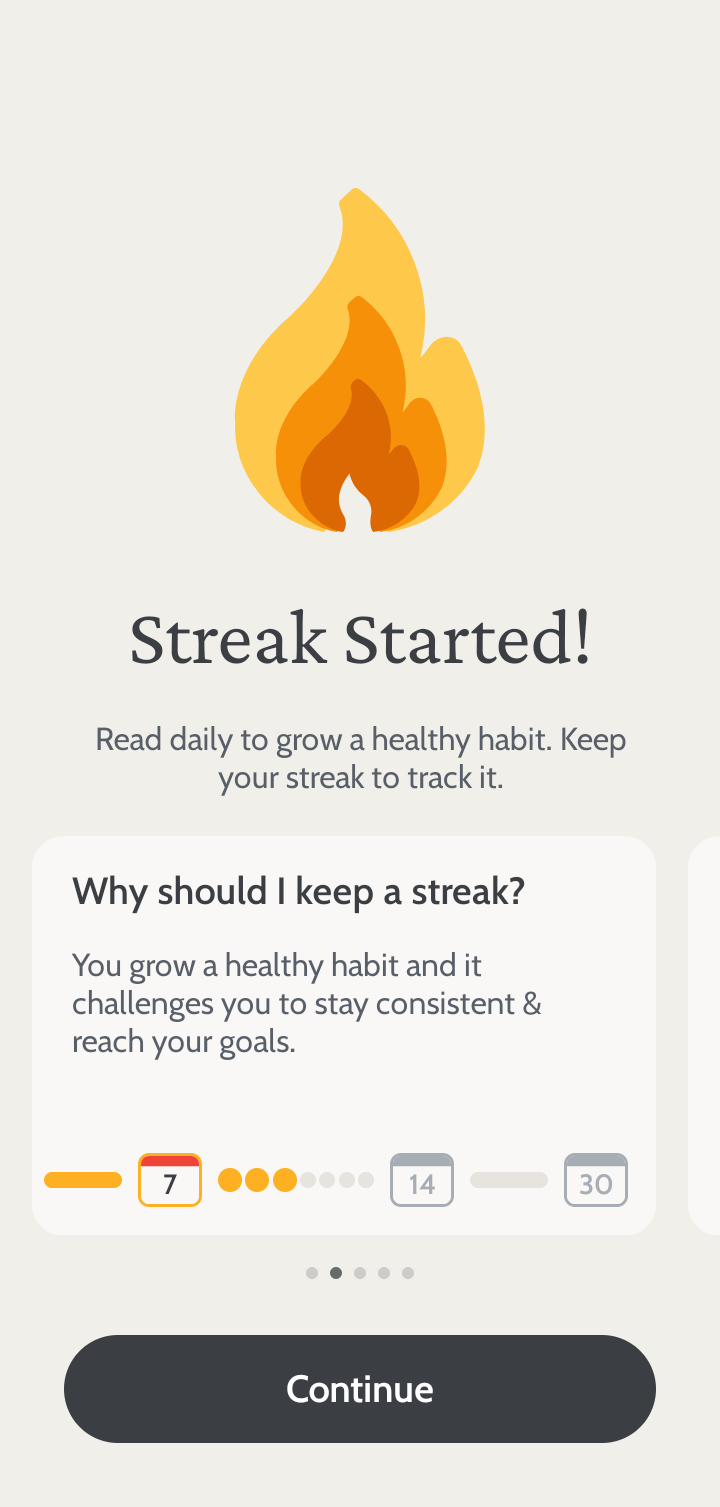
The streak prompt in Uiland's recorded Deepstash flow. Interface capture from October 2024.
Subscription experiences are mixed
The Trustpilot material we inspected includes both complaints about unexpected charges and positive accounts of support or refund handling. Some favorable service reviews also say the product itself was not a good fit. That makes it especially important to separate support satisfaction from learning value. Trustpilot reviews
Those reports are a reason to read your purchase terms closely, not to assume everyone will have the same experience. Keep the bigger decision in view: even a smoothly managed subscription needs to deliver the kind of learning you wanted.
What about video reviews?
For readers who prefer video, two relevant starting points are:
- “DEEPSTASH APP REVIEW” — How to use apps?, an older review with a companion article on MrHack. The written article emphasizes personalization and creating and sharing ideas; treat it as historical context.
- “Deepstash App Review: What Nobody Tells You Before Subscribing (2026)” — Tinkr. Its creator description highlights Journeys and free-versus-Pro restrictions, questions worth comparing with the current official listing.
These videos offer additional perspectives; compare any feature or pricing claims with the current official listing.
How to use apps? · External video
Watch on YouTube if the embedded player is unavailable.
Our verdict: try Million Whys if you want more why
If Deepstash appeals to you because you want to spend phone time learning about the world, our recommendation is to try Million Whys first. You can see the core difference in one question: make a prediction, read the mechanism, then explore why the other explanations fail.
Pro is more plausible when you already value the material and need a specific paid convenience. For example, you may want to listen during a commute or access your library without a connection. In that case, the question is whether the feature solves a recurring problem at a price you accept.
Pro is less plausible when your dissatisfaction is with the substance of the material. Removing ads or unlocking a convenience does not, by itself, establish that the explanations will become deeper or better matched to your interests. Look for evidence about the content you want, rather than assuming a subscription will fix a mismatch.
Start with a question, not a subscription decision. Try Million Whys and see whether reasoning through an everyday why is the experience you were looking for. For a broader shortlist, see our Deepstash alternatives guide.
Frequently asked questions
Is Deepstash completely free?
It offers a free tier alongside Pro. The distinction between being able to start free and having every feature available is the important one. See the official feature split above rather than assuming a trial offer describes all free access.
Is Deepstash a replacement for reading books?
Our view is that summaries work best as introductions, reminders, or discovery aids. If you want an author's full reasoning and supporting context, consult the original work. Whether a short version is enough depends on your purpose.
Will Deepstash stop me doomscrolling?
The feedback includes people who value it as an alternative use of phone time. To decide what works for you, look at what you do when you open it. Million Whys gives you a specific question to answer and an explanation to explore—a concrete activity to choose when you reach for your phone.
Why do reviews disagree so much?
Reviewers may be evaluating different versions, offers, topics, and goals. Someone seeking convenient inspiration is asking a different question from someone building a research library. Read the reason behind a rating, especially whether it describes content, usability, or a billing interaction.
What makes Million Whys a better alternative for curious learners?
Its focus is working out everyday why questions. You predict first, then explore the mechanism and the explanations for the other choices. Choose it if you want to examine your thinking and understand a phenomenon rather than primarily collect short ideas from books. Explore Million Whys.
Curious? Try one 👇