Skip to content
★ Animal Quiz

Animal Quiz Questions and Answers, Explained

Tap an option to see if it’s right — and why.

Why does a skunk give you fair warning before it sprays? How does a baby bird find its way south using nothing but the stars? These animal quiz questions and answers run from backyard mammals to ocean drifters and the secret genius of insects — guess each one first, then tap to see why the animal kingdom is stranger than it looks.

Random Animal Facts You Can Quiz Yourself On

Why do anteaters have long tongues?
Easy
Why do anteaters have long tongues?
#wildlife#zoology#anteaters
AReaching deep into ant nests
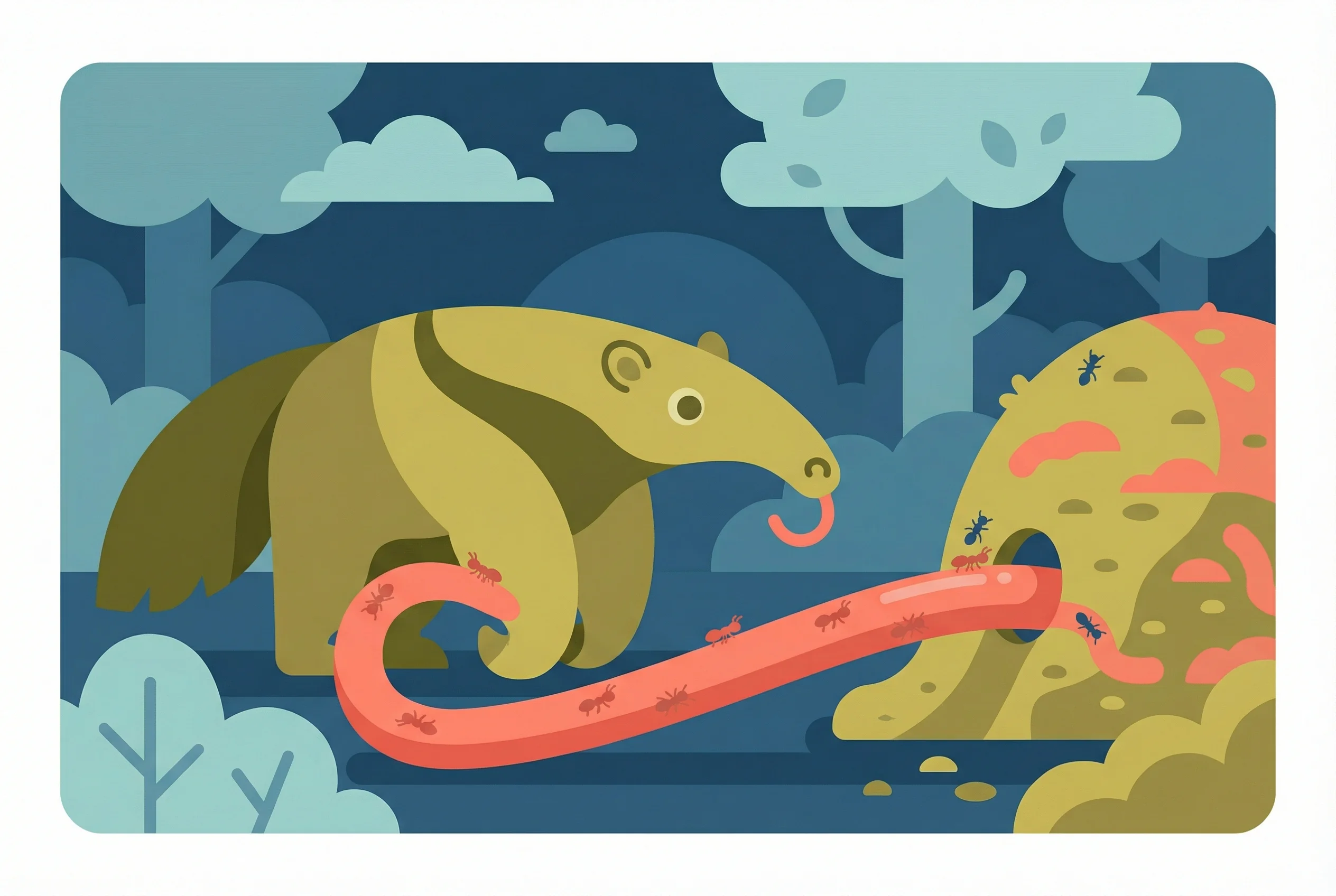
Correct! Specialized feeding! Giant anteater tongue: 2ft long! Adaptations: (1) Length—reaches deep into ant/termite tunnels. (2) Sticky saliva—insects adhere to tongue. (3) Rapid flicking—160 times/minute! (4) Attached to sternum—extends far. No teeth—swallows insects whole. Strong stomach grinds food. Eats 30,000 ants/termites daily! Also: powerful claws rip open nests. Narrow snout fits in tunnels. Specialized myrmecophage (ant-eater). Tongue moves so fast it's nearly invisible!
BIt helps regulate body temperature
Wrong. Tongue doesn't regulate temperature. It's specialized feeding tool—extremely long and sticky for extracting ants/termites from nests.
CFighting off predators
Wrong. Anteaters use powerful claws for defense, not tongues. Long tongue is feeding adaptation—reaching deep into insect colonies.
Answer this question
Why do frogs croak?
Easy
Why do frogs croak?
#animal behavior#herpetology#frogs
AAttracts mates and defends
Correct! Vocal mating and territory! Male frogs croak primarily for: (1) Attracting females—species-specific calls (each species unique frequency/pattern). (2) Territory defense—warning other males. (3) Chorus effect—synchronized calling amplifies signal. Mechanism: vocal sacs inflate (amplify sound), can be very loud (some 100+ decibels)! Females choose mates by call quality. Bigger frogs = deeper calls. Only males croak in most species. Peak during breeding season (spring). Croaking uses enormous energy!
BHelps with breathing underwater
Wrong. Croaking doesn't aid breathing. Frogs breathe through skin underwater. Croaking is vocal mating call and territory defense.
CCroaking clears their throat
Wrong. Frogs don't clear throats. Croaking is deliberate vocal signal—attracting mates and warning rival males during breeding.
Answer this question
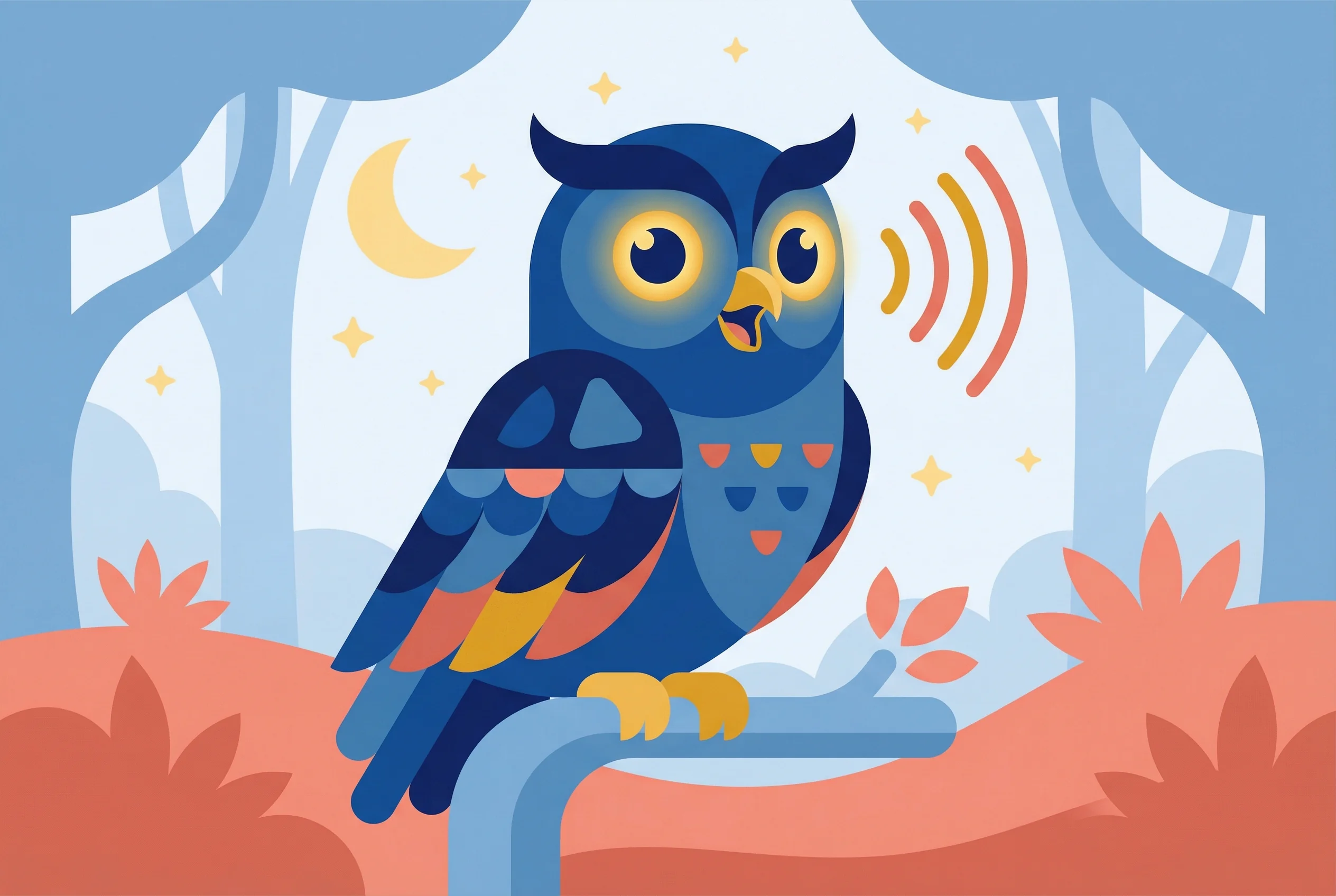
Why do owls hoot?
Medium
Why do owls hoot?
#animal communication#birdwatching#nocturnal
ATerritory and mate communication
Correct! Vocal territory and mating! Owls hoot for: (1) Territory defense—'This area is occupied!' (2) Mate attraction—species-specific calls. (3) Pair bonding—duets between mates. (4) Contact calls—locating family members. Each species unique hoot pattern (Great Horned: 'hoo-hoo-hoo'). Males typically hoot more (territorial). Not all owls hoot—screech owls screech, barn owls hiss/screech. Nocturnal communication—sound travels well at night. Also: silent flight for hunting!
BCalling their young back home
Wrong. Owls don't hoot to call their young—chicks stay in the nest until they can fly. Hooting is primarily territorial defense and mate attraction, used mainly by adult owls.
CEcholocation like bats use
Wrong. Owls don't echolocate—they use exceptional hearing and vision. Hooting is vocal communication for territory and mating.
Answer this question
Medium
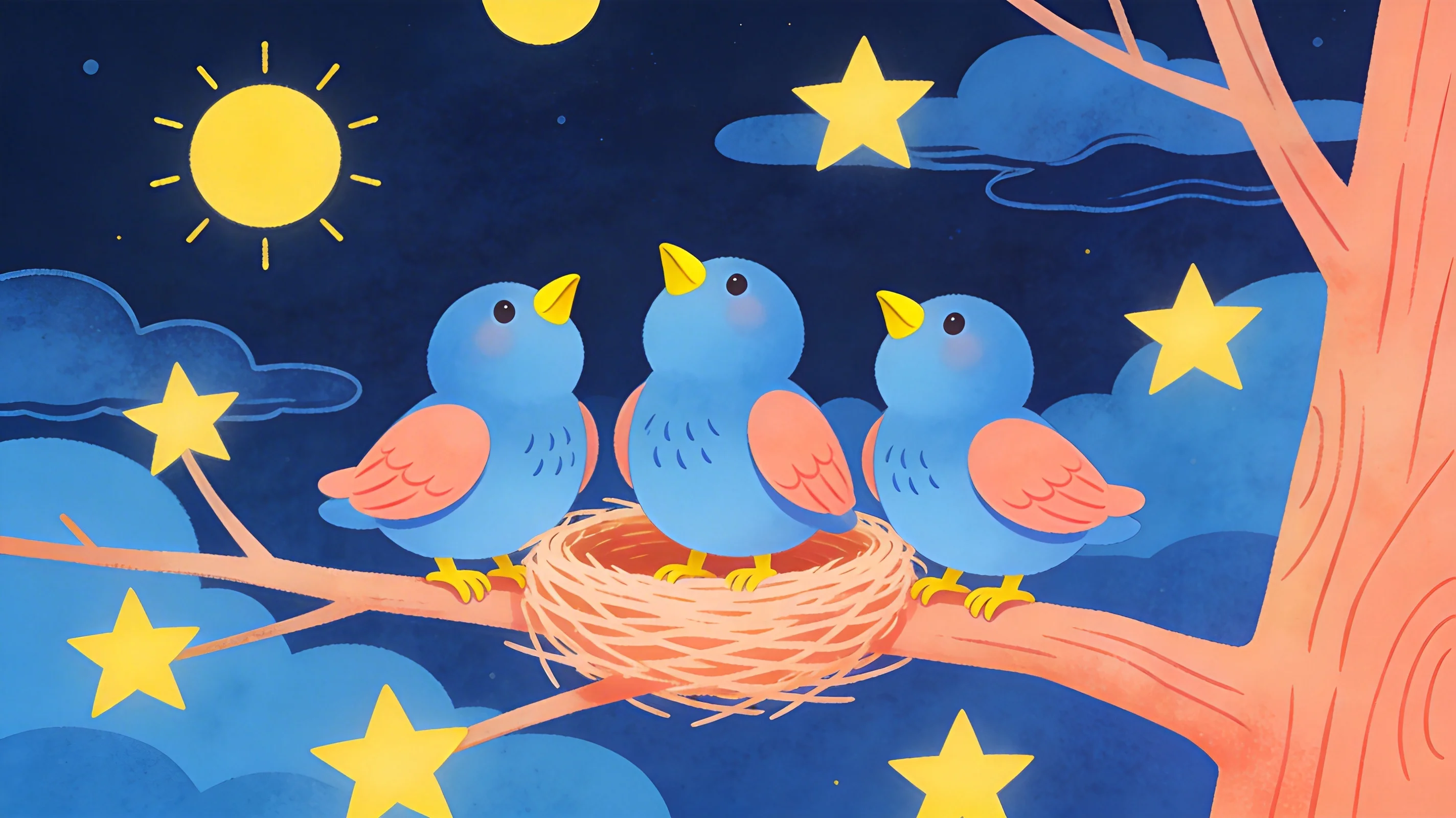
Why do migratory birds study the night sky like astronomers?
#animal behavior#astronomy#birdwatching
ATo use star patterns as a compass for navigation during migration
Correct! Birds like indigo buntings and other migratory species learn star patterns during their youth, especially the rotation around Polaris (North Star). This celestial map helps them determine direction during nighttime migration. Scientists discovered this by raising birds in planetariums and changing the artificial star patterns - the birds adjusted their migration direction accordingly!
BTo predict weather changes by observing cloud movements at night
Wrong. While birds are sensitive to weather, they do not use star observations to predict it. Birds rely on barometric pressure changes, wind patterns, and temperature shifts to sense weather, not celestial observations. Their 'study' of stars is specifically for directional navigation, not meteorology.
CTo find insects that are attracted to moonlight for feeding
Wrong. Though some birds do feed on nocturnal insects, this is not why they develop mental maps of the night sky. Insect-hunting birds like nighthawks use their excellent night vision and hearing to catch prey, not star maps. The celestial navigation ability is specifically evolved for long-distance migration orientation.
Answer this question
Medium
Why do fireflies flash in specific patterns instead of just glowing constantly?
#animal communication#bioluminescence#fireflies
AEach species has unique flash patterns to identify potential mates of their own kind
Correct! Fireflies use species-specific flash patterns as a sophisticated communication system. Males fly around flashing their unique pattern (some flash twice quickly, others flash long and slow), while females respond with their species' matching pattern. This prevents interbreeding between different firefly species. Scientists have identified over 2,000 firefly species, each with its own 'flash code' - like different languages that only the right partner understands.
BFlashing saves energy compared to glowing continuously throughout the night
Wrong. While bioluminescence is energy-efficient, fireflies flash in patterns for communication, not energy conservation. In fact, producing light through the chemical reaction of luciferin and luciferase requires significant energy. If energy saving were the goal, fireflies could simply reduce their total glow time rather than creating complex timed patterns. The patterns exist specifically to send recognizable signals to potential mates.
CThe patterns help fireflies navigate and avoid bumping into trees in the dark
Wrong. Fireflies do not use their light for navigation or obstacle avoidance. They rely on their compound eyes and other senses to fly safely. The flashing patterns are too slow and specific to be useful for navigation - imagine trying to steer using a light that blinks on and off every few seconds! The patterns are exclusively a mating signal, with males advertising their presence and females responding when they recognize their species' pattern.
Answer this question
Medium
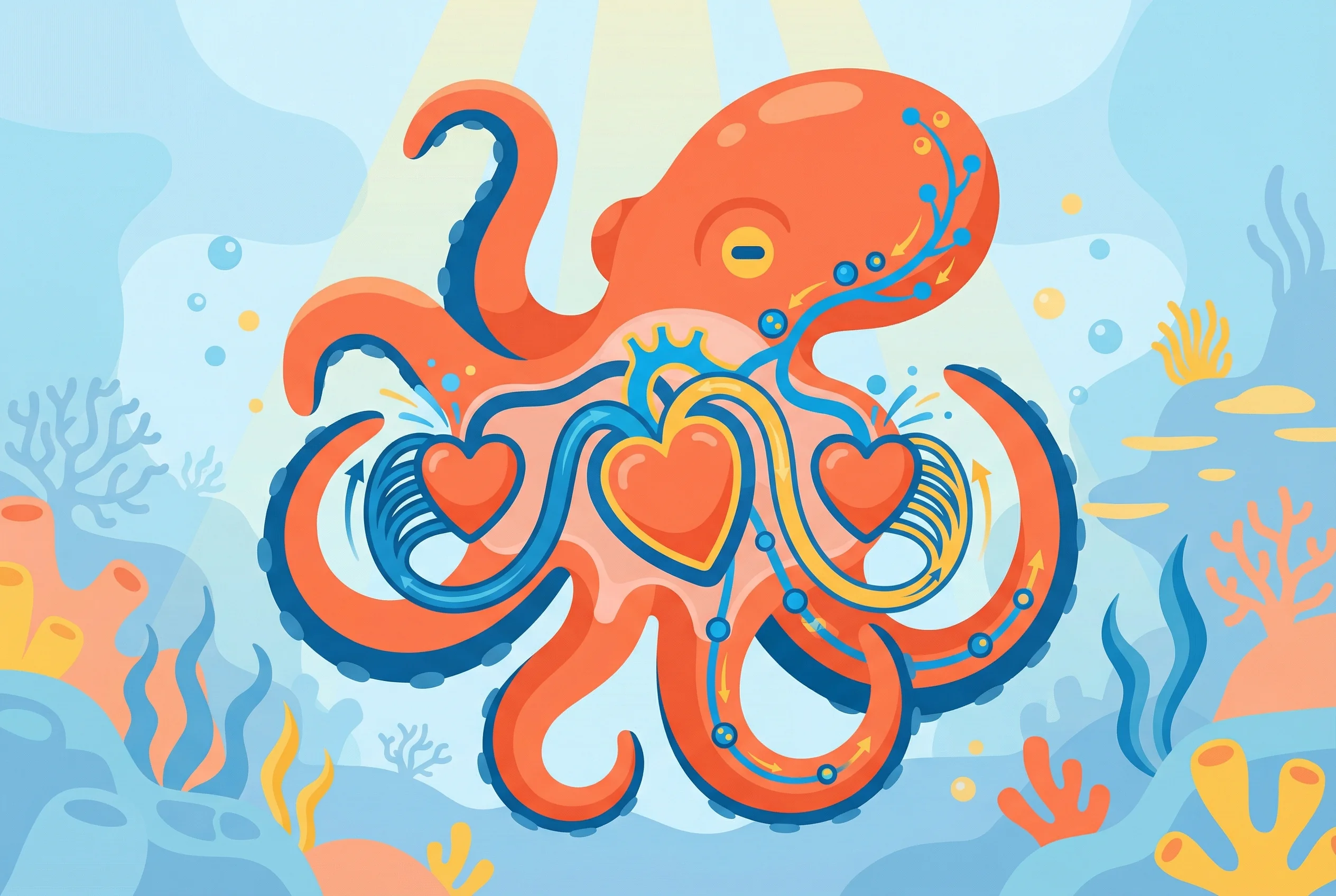
Why can chameleons and octopuses change color so quickly?
#reptiles#zoology#cephalopods
AThey have special pigment cells that expand and contract
Correct! These animals have chromatophores - specialized cells containing pigment sacs. By expanding or contracting these cells using muscles and nerves, they can reveal or hide different colors in milliseconds. Octopuses have three types: chromatophores (red, yellow, brown), iridophores (reflecting cells), and leucophores (white cells). This allows them to create complex patterns for camouflage, communication, or warning displays.
BTheir skin absorbs colors from nearby objects
Wrong. Animals cannot absorb colors from their environment like a sponge. Color change requires active biological mechanisms. If this were true, a chameleon on a checkered surface would become checkered, but they actually respond to mood, temperature, and light conditions through internal processes, not by passively taking on surrounding colors.
CThey secrete colored chemicals that coat their skin
Wrong. While some animals do secrete substances (like ink for defense), color change for camouflage happens through existing cells in the skin, not by coating the surface with chemicals. Secreting and spreading chemicals would be far too slow for the rapid changes we observe - an octopus can change color in under a second, which requires instant cellular action.
Answer this question

Fun Facts About Ocean Animals

Why do salmon swim upstream?
Hard
Why do salmon swim upstream?
#wildlife#migration#aquariums
AEscaping ocean predators
Wrong. Ocean has predators, but upstream migration is for reproduction—returning to natal streams to spawn.
BSpawning in birthplace
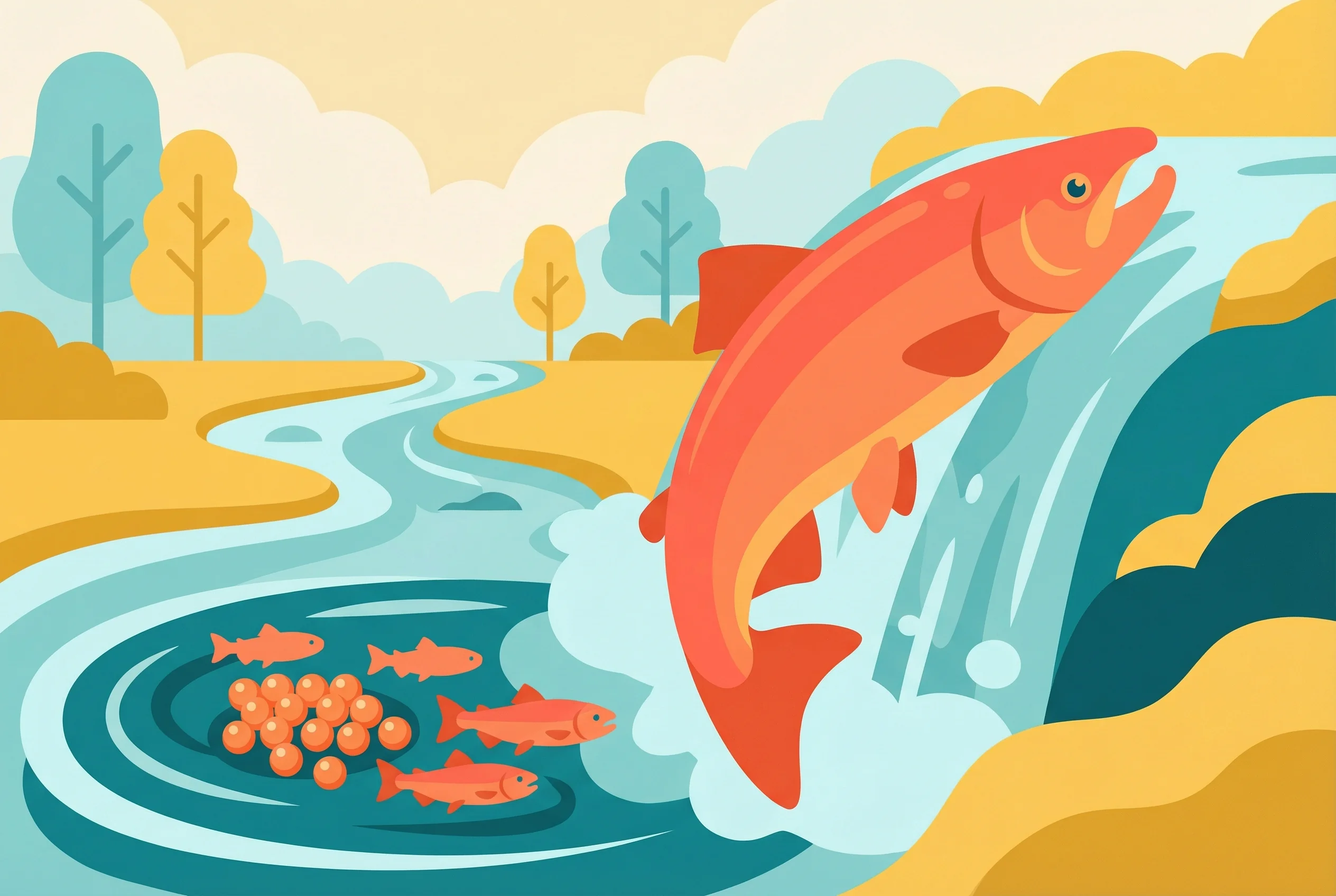
Correct! Natal homing! Salmon return to birthplace to spawn: (1) Imprinting—remember birth stream's chemical signature. (2) Olfactory navigation—follow scent upstream. (3) best conditions—gravel beds for eggs. Incredible journey: hundreds of miles, swimming against current, jumping waterfalls. Anadromous life cycle—born in freshwater, mature in ocean, return to spawn. Most Pacific salmon die after spawning (semelparous). Exhausting migration—use all energy reserves. Magnetic sense aids ocean navigation!
CSearching for more food
Wrong. Salmon don't feed during spawning migration—use stored energy. Upstream journey is reproduction-driven, not foraging.
Answer this question
Medium
Why are dolphins considered one of the most intelligent animals?
#ocean#marinebiology#wildlife
AThey can recognize themselves in mirrors, showing self-awareness
Correct! Dolphins pass the 'mirror test', touching marks on their bodies they can only see in mirrors. This self-recognition ability is rare, shared only by great apes, elephants, and magpies. Dolphins also use complex whistles to communicate, work together to solve problems, and teach their young hunting techniques - all signs of high intelligence.
BThey have the largest brain of any animal in the ocean
Wrong. While dolphins do have large brains relative to body size, sperm whales actually have the largest brains in the ocean, weighing up to 17 pounds. Brain size alone does not determine intelligence - it is the brain structure, neuron density, and cognitive abilities that matter most.
CThey can swim faster than any other marine animal
Wrong. Dolphins are fast swimmers but not the fastest. Sailfish can reach speeds over 68 mph, while dolphins typically swim at 18-25 mph. Intelligence is measured by cognitive abilities like self-awareness, problem-solving, and communication, not physical speed.
Answer this question

Cute Facts About Animals: Mammals Up Close

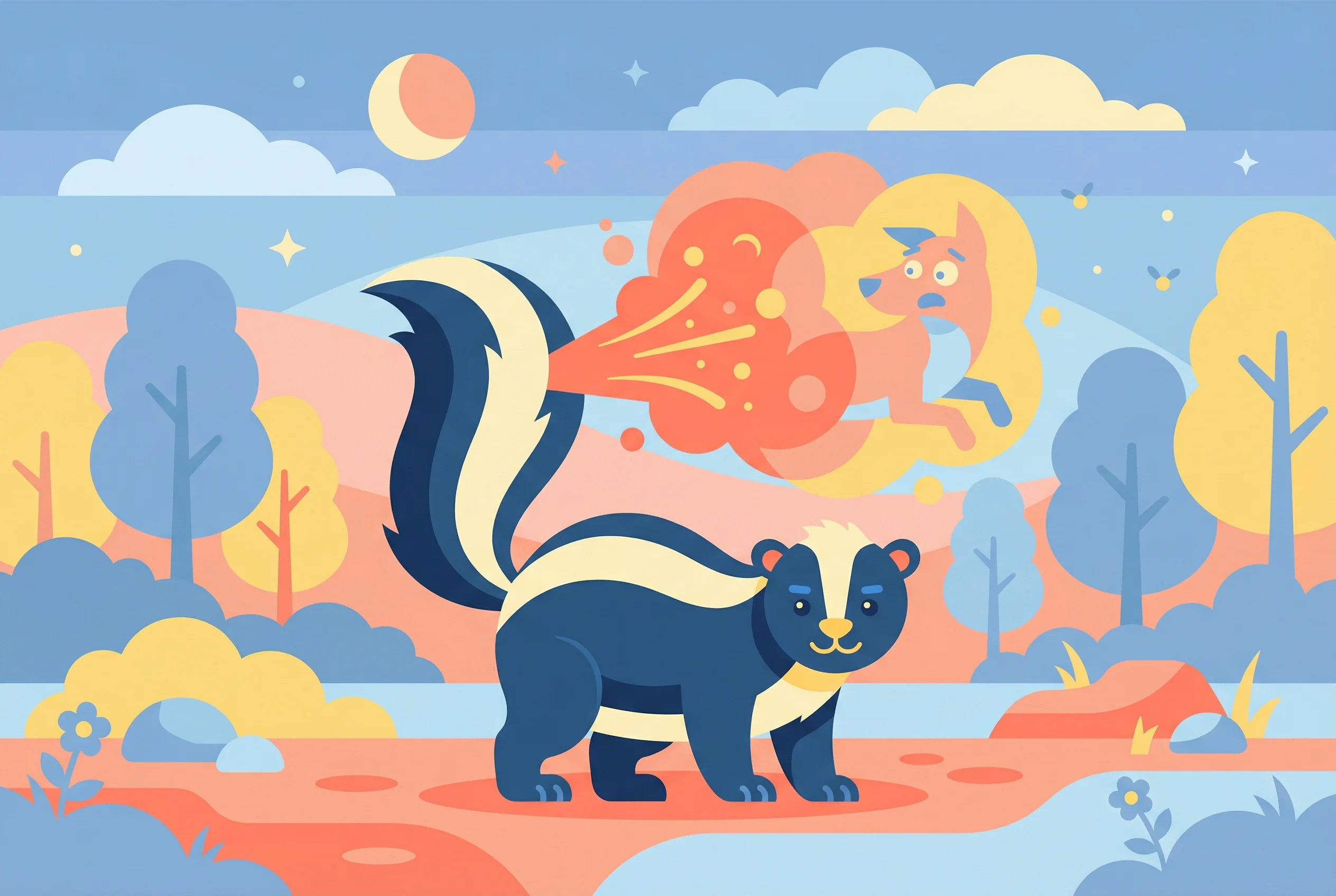
Why do skunks spray?
Easy
Why do skunks spray?
#animals#animal behavior#wildlife
AAttracting mates with scent
Wrong. The spray is extremely unpleasant and repels all animals, including potential mates. Skunks use completely different, milder scents for attraction.
BLast-resort predator defense
Correct! Chemical warfare defense! Skunk spray: last resort against threats. Composition: sulfur-containing thiols (mercaptans)—extremely pungent. Process: (1) Warning signals first—stomping, tail raising, hissing. (2) If threat persists—spray from anal glands. (3) Accurate aim up to 10ft. Effects on predators: temporary blindness, nausea, intense smell (lasts days-weeks). Limited supply (5-6 sprays)—takes 10 days to replenish. Effective deterrent—most predators learn avoidance. Great horned owls (no smell sense) are main predators!
CKeeping their fur clean
Wrong. Spray doesn't clean fur—it's an oily, foul-smelling substance that animals try to avoid. Skunks groom themselves like other mammals.
Answer this question
Why do polar bears have white fur?
Medium
Why do polar bears have white fur?
#arctic#wildlife#polar bears
ACooling system in Arctic
Wrong. Arctic doesn't need cooling—needs insulation! White fur provides camouflage. Black skin underneath actually absorbs heat.
BCamouflage in snow and ice
Correct! Arctic camouflage! Polar bear fur appears white: (1) Camouflage—blends with snow/ice during seal hunting (stalking). (2) Individual hairs are transparent, hollow—scatter light (appears white). (3) Skin underneath is black—absorbs heat. Fur isn't actually white—light reflection creates color. Can appear yellow/brown from oxidation/algae. Dense undercoat + guard hairs insulate. Cubs born with white fur. Excellent stealth predator—seals don't see approach!
CWhite attracts prey animals
Wrong. White doesn't attract prey—it conceals predator. Polar bears hunt seals, using white fur as camouflage on ice.
Answer this question
Why do elephants have trunks?
Easy
Why do elephants have trunks?
#wildlife#biomechanics#elephants
AMulti-purpose tool for survival
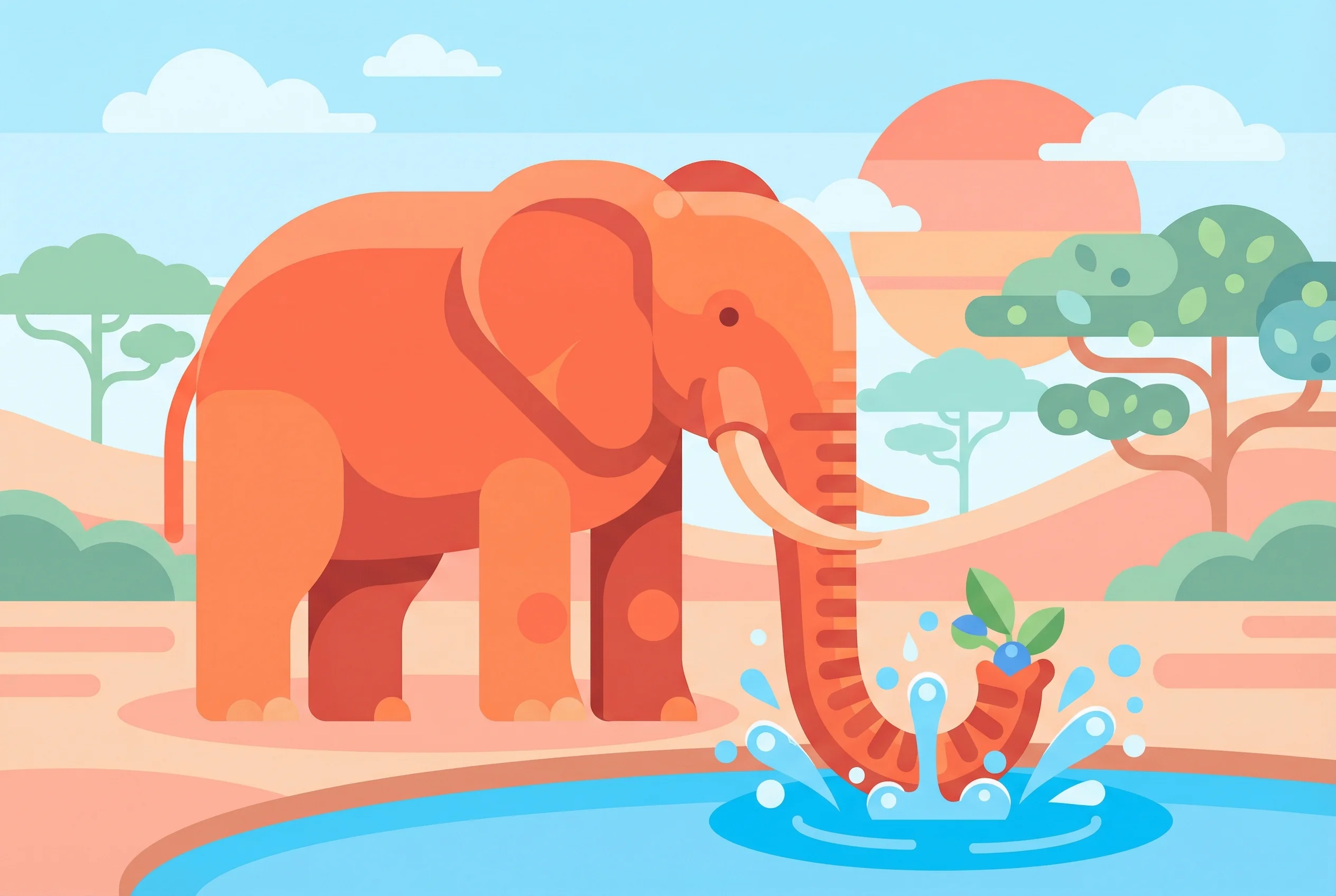
Correct! Versatile appendage! Elephant trunk: fusion of nose + upper lip, 40,000 muscles (no bones)! Functions: (1) Feeding—grasp food, strip leaves, pick up small items. (2) Drinking—suck water (12 liters), squirt into mouth. (3) Communication—touch, smell, trumpeting sounds. (4) Cooling—spray water/dust on body. (5) Tool use—move objects, dig. (6) Social bonding—caressing. (7) Defense—can lift 350kg! Incredibly sensitive—detect seismic vibrations. African elephants: 2 'fingers' at tip; Asian: 1.
BCooling system only
Wrong. Trunk does cool through water/dust spray, but primary functions are feeding, drinking, breathing, communication—multi-purpose tool.
CStoring water inside trunk
Wrong. Trunk doesn't store water (common myth). It draws water then squirts into mouth. Trunk is tool for feeding, drinking, sensing, communication.
Answer this question
Why do armadillos roll into balls?
Medium
Why do armadillos roll into balls?
#wildlife#mammals#adaptations
AArmor protects from predators
Correct! Defensive armor! Only some species (three-banded armadillo) fully roll. Defense mechanism: (1) Hard shell (carapace)—modified skin/bone plates. (2) Roll into ball—no vulnerable soft parts exposed. (3) Predators can't penetrate or unroll. Shell protects from bites, claws. Other armadillo species burrow or run instead. Shell also protects from thorns in habitat. Trade-off: armor adds weight, slows movement. Unique mammalian adaptation. Name means 'little armored one' (Spanish)!
BConserves body heat in cold
Wrong. Rolling doesn't conserve heat. It's predator defense—hard shell ball protects vulnerable belly from attacks.
CCatches insects while rolling
Wrong. Armadillos don't catch insects by rolling. They forage by digging with claws—rolling is defensive response to threats.
Answer this question
Why do dogs eat grass?
Medium
Why do dogs eat grass?
#animal behavior#veterinary#dogs
ADogs confuse grass with meat
Wrong. Dogs distinguish grass from meat. Grass-eating is deliberate behavior—often to relieve stomach discomfort or induce vomiting.
BInstinct to induce vomiting
Correct! Self-medication behavior! Dogs eat grass for multiple reasons: (1) Digestive upset—induces vomiting to expel irritants. (2) Dietary fiber—helps move intestinal contents. (3) Instinctive behavior—inherited from wild ancestors. (4) Boredom/anxiety—behavioral comfort. Not harmful unless grass treated with pesticides. Wolves/wild canids also eat grass and plants. If frequent, may indicate diet deficiency or GI issues—vet checkup recommended. Normal occasional behavior!
CSharpens teeth on grass blades
Wrong. Grass doesn't sharpen teeth—chewing bones does. Dogs eat grass for digestive relief, inducing vomiting, or adding fiber to diet.
Answer this question
Medium
Why do meerkats take turns standing guard while others search for food?
#animal behavior#wildlife#mammals
ATo share the burden of watching for danger so everyone can eat more safely
Correct! Meerkats use a 'sentinel system' where individuals take turns standing on high ground watching for predators like eagles and jackals. This cooperative behavior allows the foraging meerkats to focus on digging for insects without constantly looking up, increasing feeding efficiency by up to 30%. Sentinels use specific alarm calls to warn the group of different threats, and they rotate duties so no one goes too long without eating.
BBecause only the tallest meerkats can see far enough to spot predators
Wrong. While sentinels often stand on elevated positions for better visibility, height is not the determining factor. Any adult meerkat can serve as a sentinel regardless of size. The rotation system ensures all group members share guard duty fairly, and even smaller meerkats can effectively spot aerial and ground predators from their lookout posts.
CTo practice their balance skills before hunting larger prey
Wrong. Sentinel behavior is not practice for hunting - it is a survival strategy focused on predator detection. Meerkats primarily eat small prey like insects, scorpions, and lizards that do not require balance skills to catch. The standing posture is specifically adapted for scanning the horizon for threats, not for developing hunting abilities.
Answer this question

Hard Animal Trivia: The Hidden Genius of Bees and Ants

Why do bees dance?
Hard
Why do bees dance?
#animal communication#beekeeping#honey
ACourtship ritual for mating
Wrong. Bee dances aren't mating behavior—they're communication system. Waggle dance conveys food source location/quality to hive mates.
BCommunicating food locations
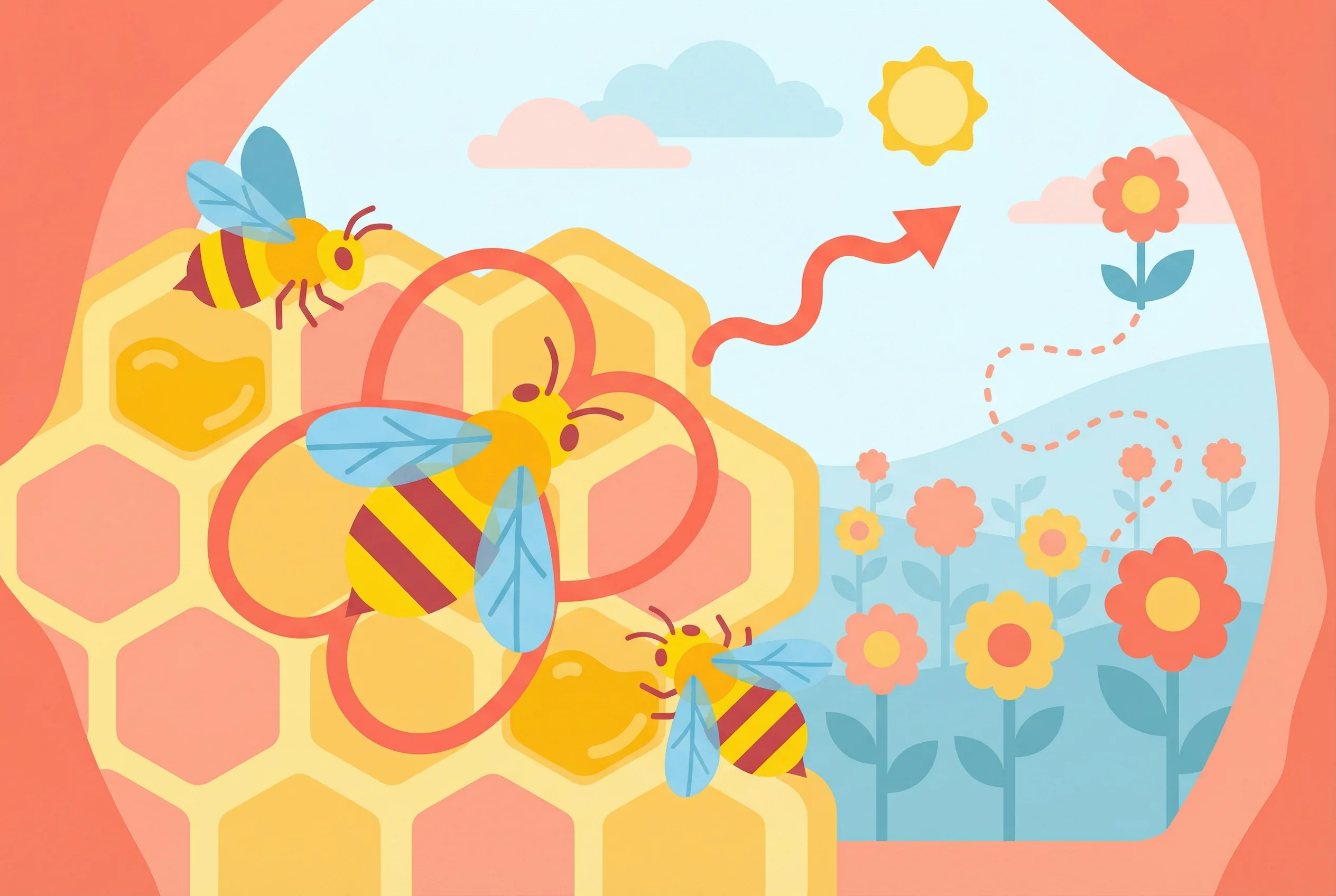
Correct! Spatial communication! Waggle dance: figure-8 pattern communicating flower location. Information encoded: (1) Angle—sun direction vs food direction. (2) Duration—distance to source (1 sec ≈ 1km). (3) Vigor—food quality. Round dance: food nearby (<50m). Von Frisch discovered this (Nobel Prize). Bees dance on vertical comb in dark hive—gravity substitutes for sun reference. Remarkable navigation and abstract communication in insects!
CWarming up flight muscles
Wrong. Bees do warm muscles through shivering, but waggle dance specifically communicates food source location/distance to colony.
Answer this question
Medium
Why can a bee swarm choose a better hive location than a single bee?
#swarm intelligence#animal behavior#insects
AHundreds of scout bees share discoveries through dances, and the swarm moves only when enough scouts agree on the best site
Correct! Scout bees explore different sites and perform waggle dances with intensity matching site quality. Other bees visit these sites and add their dances. The swarm only commits when a 'quorum' of 10-20 scouts repeatedly dance for the same location, ensuring collective wisdom filters out mediocre choices. This distributed decision-making typically finds optimal sites that any single bee might miss.
BThe queen bee has superior intelligence and makes the final decision after consulting a few advisors
Wrong. The queen bee does not make housing decisions. She is relatively passive during swarming and simply follows where the collective decides to go. Scout bees (non-reproductive female workers) do all the exploration and decision-making through their democratic dance-voting system. The queen's role is reproduction, not navigation or site selection.
CBees randomly follow the loudest buzzing sound, which usually comes from the direction of the best location
Wrong. Bees use precise communication, not random following. The waggle dance conveys specific information: distance, direction, and quality of sites. Bees make systematic comparisons between options, with poor sites gradually losing supporters while excellent sites gain more dancers. This organized process takes 1-3 days and produces better decisions than random chance or noise-following.
Answer this question
Hard
Why do ants form colonies where most never reproduce?
#ants#evolution#entomology
AWorkers share 75% of genes with sisters, so helping the queen is genetically efficient
Correct! Due to haplodiploidy (males from unfertilized eggs), sister workers share 75% of genes versus only 50% with their own offspring. Helping their mother (the queen) produce more sisters is genetically more beneficial than reproducing themselves. This 'kin selection' drives the evolution of complex colonies where workers specialize in different tasks (foraging, nursing, defense) to maximize the colony's success.
BThe queen releases mind-control pheromones that force workers to obey
Wrong. While queens do release pheromones that regulate colony behavior and suppress worker reproduction, these are coordination signals, not mind control. Workers actually 'choose' not to reproduce because it is genetically advantageous - they pass on more of their genes by helping raise super-fertile sisters than by having their own less-related offspring.
CWorker ants are actually males who cannot reproduce anyway
Wrong. Worker ants are actually sterile or reproductively suppressed females, not males. Males (drones) are produced only during mating season and their sole purpose is reproduction. Workers are daughters of the queen who have functional ovaries but typically do not lay eggs because helping the colony is more genetically profitable than individual reproduction.
Answer this question
Want to play these for real?

Turn questions like these into a 10-second daily quiz that follows your curiosity.

Play live on AIgneous Million Whys →

Frequently Asked Questions

What’s a random animal fact that sounds fake but is true?

Plenty in this quiz qualify — an anteater’s tongue is longer than its head and flicks up to 150 times a minute, and a young songbird can learn to read the night sky before it ever migrates. The fun is that the explanation is usually stranger than the fact itself.

What are some good fun facts about ocean animals?

Salmon can return to the exact stream they hatched in years later by smell alone, and dolphins are self-aware enough to recognise themselves in a mirror — both are in the ocean section above, each with the why spelled out.

What’s a hard animal trivia question that stumps people?

The social-insect ones. A swarm of bees can ‘vote’ on a better nest site than any single bee could choose, and in an ant colony most workers never reproduce at all — both sound like trick questions until you see the colony working as one organism.