

I Used Duolingo for 777 Days. Learning Was Almost the By-Product.
My Duolingo streak recently reached 777 days.
I still remember the day I started.
It was 2024. I was lying on the sofa in my apartment in Champaign, Illinois, having just come home from my PhD office. My girlfriend was preparing to apply to graduate schools in Japan.
それはいいですね, I thought.
Then I suddenly realized: after watching so much anime and playing so many Japanese games—I am a Crisis Core: Final Fantasy VII fan, and that game deeply shaped my values—I had gradually picked up quite a few Japanese catchphrases.
そうですね.
The problem was that, a lot of the time, I had absolutely no idea what they meant. So why not learn some Japanese alongside my girlfriend?
I had heard of Duolingo long before that. I downloaded it, tried one lesson, and immediately became a little obsessed. I did nearly five Japanese sessions in one go.
What I liked first was not actually the language.
It was the animation.
I liked Duo, Lily, and Falstaff, the bear. The animations had this strangely vivid beauty to them. Sometimes I would just stare at the quiz buttons and replay the same animation over and over again.
Lily tossing her head. Lily clapping. Duo dancing. Duo collapsing dramatically. Every one of them deserved to be studied a hundred times.
Oh right—and then there was the language learning itself, hahahahaha.
水を一つください!
“One water, please!”
My girlfriend gradually found herself being bombarded with this very specific genre of Duo-style Japanese.
After I started learning, I actually went to Japan three times. It was not until the third trip, when my streak was already somewhere above 700 days, that I finally said this to a waiter:
これを一つください。そして、こちらも一つください。お願いします。
“One of this, please. And one of this too. Thank you.”
Of course, once the waiter replied, I still could not really continue the conversation lol.
There were also several moments when I seriously wanted to quit the game—and yes, I mean the game.
The first was when I discovered that wrong answers cost you health. One day I was exhausted, made mistake after mistake, and nearly ran out completely.
I still had a little money back then lol, so I immediately bought the subscription. That turned me into a sucker paying month-to-month for more than a year. I did not finally cancel until I started a company and became sufficiently broke.
Then I discovered that Duolingo’s energy system had changed. Somehow, I could now have a perfectly good time without paying anything.
Is that really good for the business, though?
The second painful period was when Duolingo forced me to memorize hiragana and katakana. So many of those characters simply refused to stay in my head. Annoying. But somehow I survived that too.
There were also several times when I was sure my streak was about to die. Then, through a suspicious combination of luck and obviously intentional product design, I somehow repaired it and kept going.
If you miss one or two days, Duolingo is usually remarkably willing to help you pretend that nothing happened.
Looking back, learning was almost secondary to the whole experience. It felt more like a by-product.
The fun is really everything.
I liked being inside this little playground. I liked watching that unhinged green bird strike ridiculous poses. I liked Lily being passive-aggressive at me. I liked the UX feedback.
And the tiny, almost embarrassingly small amount of Japanese I learned added a little more fun to the rest of my life. It gave me new ways to annoy my girlfriend and new material for her to roast me with.
The experience did not stay inside the app.
It leaked out of the UX and into the rest of my life: the jokes between me and my girlfriend, three trips to Japan, the first sentence I finally managed to say to a waiter, and even the small moment of recognition when I saw Duo sticking his ass out in an Instagram ad.
All of that was part of Duolingo.
I now build a learning app myself. It is called Million Whys. We are trying to make learning about almost anything feel less like rote memorization: answering the question should help you understand it, and every little piece of knowledge begins with something a real person was genuinely curious about.
And I still have not deleted Duolingo.
Some learning-product founders really do delete it because they feel their own product has replaced Duolingo on the learning dimension. But I think that misses what Duolingo actually is.
At least for me, the most fascinating part of Duolingo is no longer simply learning a language—although plenty of people do use it seriously for that, and its chess course is honestly designed really well.
What makes Duolingo special is the entire system of experiences and symbols around it.
The characters. The animation. The feedback. The streak. The jokes. The slightly embarrassing reputation it has among people who “learn languages for real.” The knowing laugh when Duo appears on Instagram doing something completely deranged.
Even being made fun of for using Duolingo is, somehow, part of using Duolingo.
After 777 days, what I have accumulated is probably not just that tiny and still painfully insufficient amount of Japanese.
It is a piece of life tangled together with Duo, Lily, my girlfriend, three trips to Japan, monthly subscription regret, almost-broken streaks, and one successful restaurant order followed by a conversation I could not understand.
The learning did happen.
But it happened after I had already decided that I wanted to keep coming back.
Maybe that is what a durable, genuinely good product looks like.
It does not merely perform a useful function.
It becomes a small place inside your life.
Curious? Try one 👇
Why is the sky blue?
Jump into the daily quiz →Keep Exploring
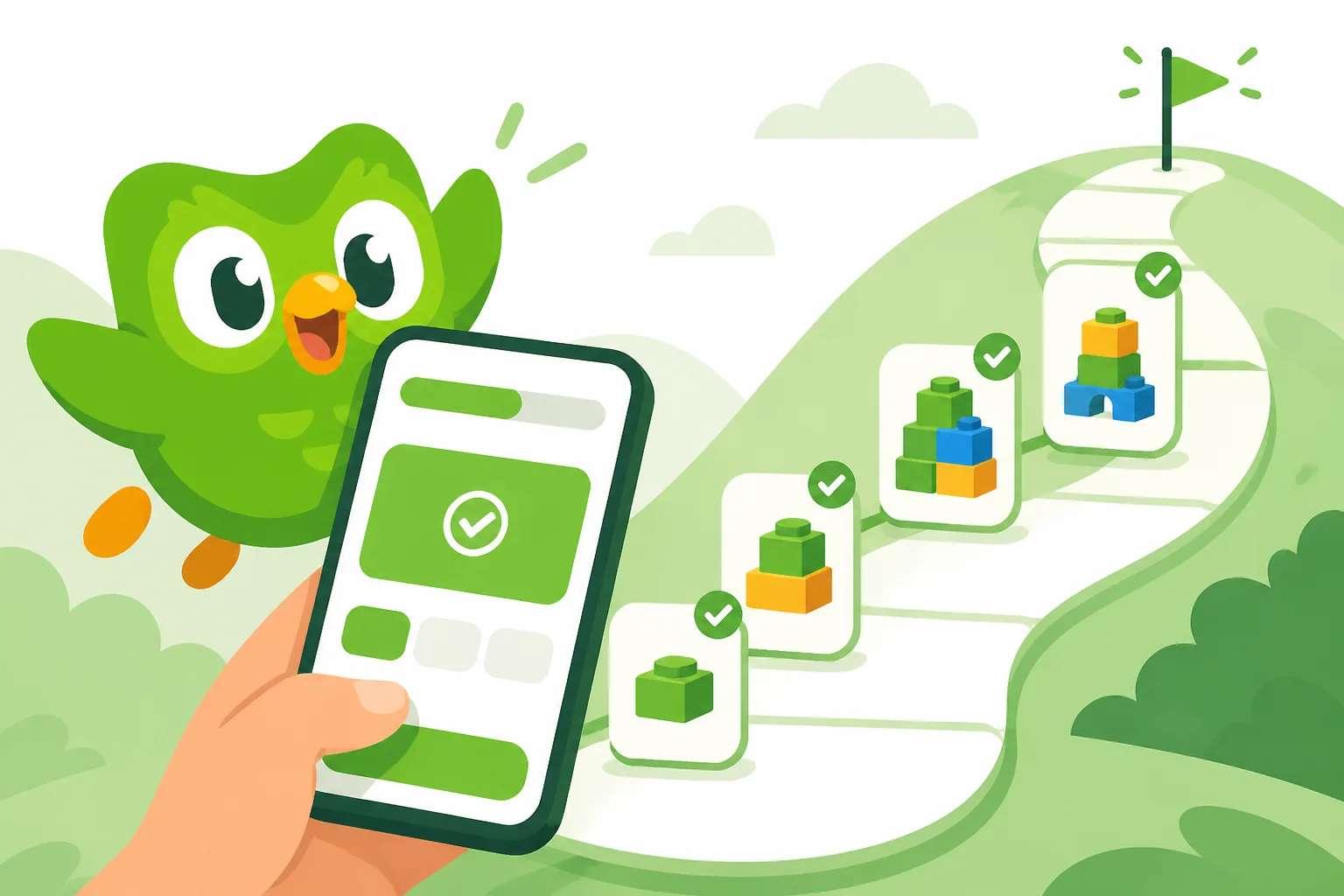
Why does Duolingo's short, bite-sized lesson format still feel like steady progress rather than random practice?
Language & Linguistics
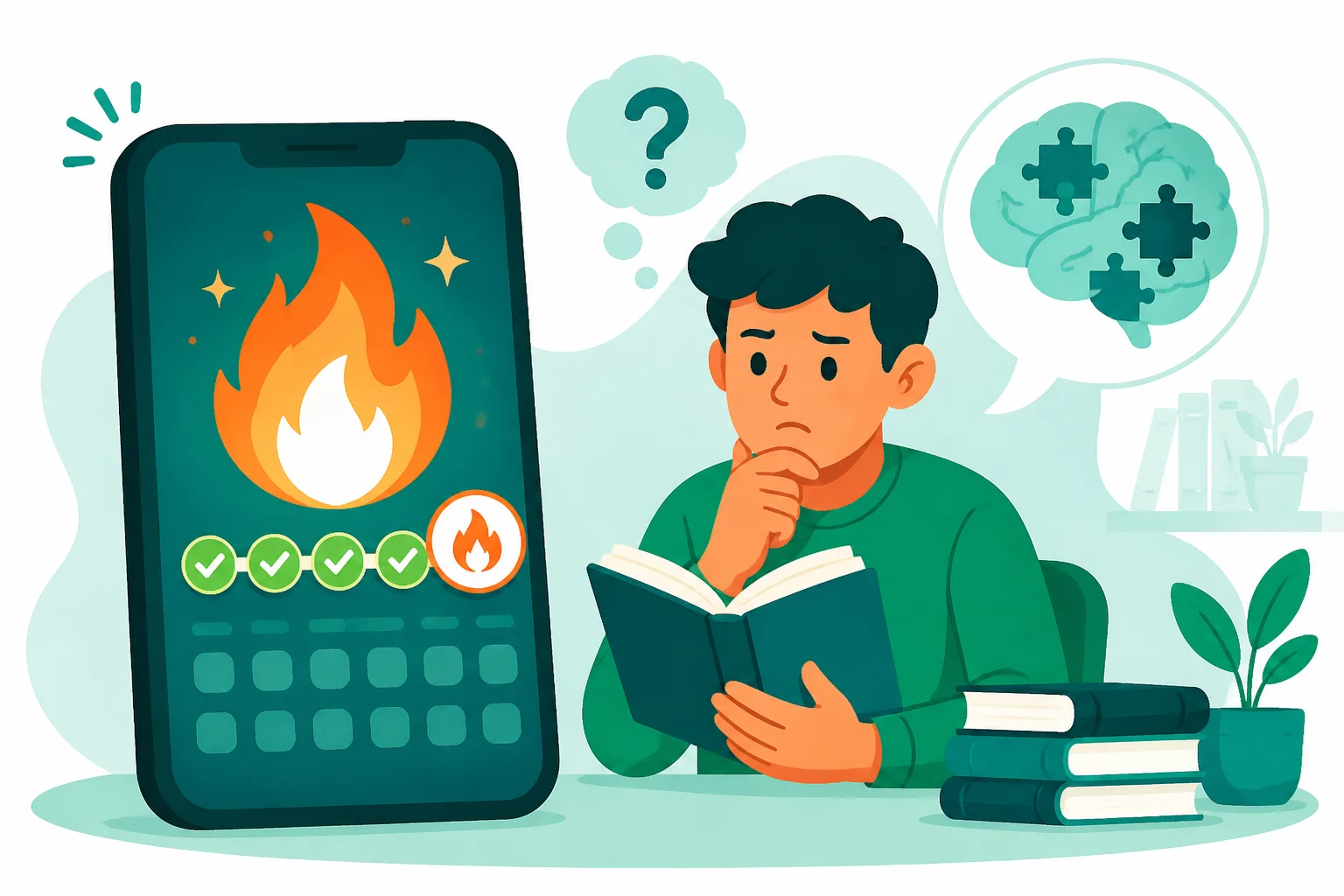
Why does a long daily streak in a learning app not prove you are actually learning anything?
Psychology & Behavior
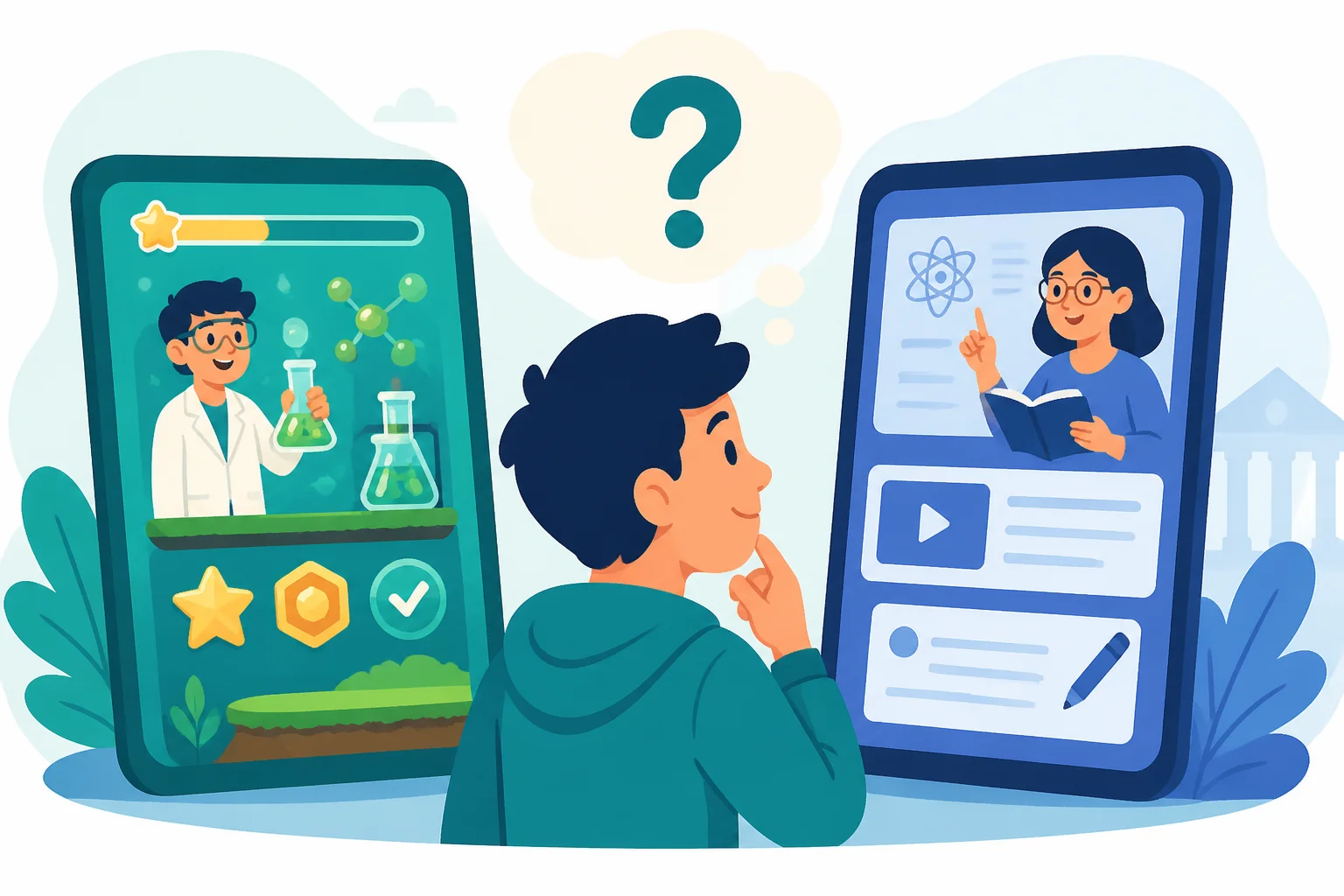
Why do daily learning apps feel so different to use, even when they cover the same subjects?
Technology
Related Posts
Daily Quiz Apps in 2026: Why 5 Questions a Day Beats Cramming
Wordle, Bing's homepage quiz, QuizStreak, Quizl, Duolingo and MillionWhys — what daily quiz apps get right about memory, and which habit is worth keeping.
Best Duolingo Alternatives in 2026 — Not Just for Languages
The best Duolingo alternatives in 2026, sorted by what you want: another language, deeper courses, book ideas, or a 10-second daily general-knowledge habit.
Duolingo for General Knowledge: Best Apps
Duolingo for general knowledge means tiny daily sessions beyond languages. Compare Million Whys, Kinnu, Imprint, Brilliant, Nerdish, and Blinkist.