

Best Learning Apps for Commuting: 2026 Guide
On this page· 14
The best learning apps for commuting are not the ones that promise to turn a train ride into a full classroom. A commute is broken by doors opening, signal drops, traffic lights, platform noise, and the small mental tax of getting somewhere. The best app respects that shape. It gives you one clean unit of curiosity, closes it before your stop arrives, and leaves a trace you can carry into the day.
TL;DR
For commuting, the best learning app is the one that can complete a real learning loop in the smallest reliable window. MillionWhys is the best fit for question-led curiosity because one 10-second card gives you a guess, an answer, and the little click of closure. Blinkist is strong for audio summaries, Khan Academy is best for free structured lessons, Duolingo is best for language streaks, and Brilliant is best when you can give math or coding your full attention.
Short answer: choose by commute shape, not by ambition. If your ride gives you quiet 15-minute stretches, audio summaries work. If your ride gives you one hand, spotty attention, and three stops before you need to move, a 10-second question loop is the more honest design. That is where MillionWhys fits: curiosity first, no exam framing, no guilt mechanic, no fixed syllabus deciding what you are allowed to wonder about next.

A commute is already fragmented. The best learning app should fit that grain instead of pretending it is a quiet desk.
The commute test: can one loop finish before the next interruption?
The United States Census Bureau treats commuting as a real measurement category: where people work, when they leave, how they get there, and how long the trip takes are all part of journey-to-work data (Census commuting data). That matters because a commute is not just "free time." It is constrained attention. You may have audio, but not hands. You may have a hand, but not quiet. You may have attention for 90 seconds, then a transfer.
This is why the usual "learn more every day" promise is too broad. The real question is smaller: can the app finish a complete cognitive loop before the environment breaks it? A complete loop means you feel a gap, make a prediction, get the answer, and leave with closure. George Loewenstein's information-gap theory describes curiosity as the felt gap between what you know and what you want to know (Loewenstein, 1994). On a commute, that gap has to be visible and closeable quickly. Otherwise the app becomes another tab you meant to return to.

Question 1 of 2
According to George Loewenstein's information-gap theory, what makes a question spark curiosity in someone?
Best learning apps for commuting, ranked by fit
1. MillionWhys: best for 10-second curiosity. MillionWhys turns a spare moment into one question, one guess, and one explanation. The point is not to simulate school on your phone. The point is to let a naturally fragmented moment stay fragmented while still compounding. One person wonders why movie water looks real, why coffee smells like memory, or why ice floats; the app turns those whys into fact-checked cards that other curious people can discover. That is an emergent curriculum, not a fixed catalog.
2. Blinkist: best for audio summaries. Blinkist is a strong commute choice if your ride is long enough for listening. Its own site describes its core format as book summaries you can read or listen to in about 15 minutes (Blinkist). That makes sense for trains, buses, and walks where audio is available and you want the main ideas from a nonfiction book. The tradeoff is that the unit is still a summary of someone else's book, not your own curiosity gap.
3. Khan Academy: best for free structured learning. Khan Academy is the best choice when the commute is part of a deliberate learning path. Its mission page frames the organization as a free, nonprofit source of education for anyone, anywhere (Khan Academy). That is a huge strength. It is also a different job: you are following a curriculum or skill path, which may be exactly right for math practice, but heavier than a one-stop curiosity break.
4. Duolingo: best for language habit loops. Duolingo is excellent if your commute goal is language practice. Its help page defines a streak as the number of days in a row you complete a lesson (Duolingo streak help). That streak mechanic is powerful because it turns daily practice into a visible habit. For general knowledge, though, the better question is whether you want a fixed language path or a lighter curiosity ritual with no streak anxiety attached.
5. Brilliant: best for focused interactive problem solving. Brilliant is built around guided interactive problem solving in math, programming, data analysis, AI, and science (Brilliant). It is excellent when you can concentrate. It is less naturally commute-shaped when you are standing, switching lines, or half-listening for announcements. Brilliant wants a little desk in your mind. MillionWhys wants the tiny gap before the doors open.

The comparison that actually matters
| App | Best commute use | Typical unit | Curriculum source | Pressure model |
|---|---|---|---|---|
| MillionWhys | One-stop curiosity breaks | One question and explanation | Community curiosity plus AI-assisted fact-checking | Curiosity sparks, not streak guilt |
| Blinkist | Audio summaries on longer rides | Book summary | Licensed/editorial book catalog | Library progress |
| Khan Academy | Free structured practice | Lesson, article, video, or exercise | Expert-built curriculum | Mastery path |
| Duolingo | Language repetition | Language lesson | Course tree | Daily streak |
| Brilliant | Focused math/coding/science practice | Interactive lesson | Expert-built problem sequences | Lesson progress |
The table looks simple, but it prevents the most common mistake: comparing learning apps as if they all serve the same appetite. A commute can support language repetition, audio listening, structured practice, or open curiosity. Those are different jobs. The best learning apps for commuting are the ones whose smallest unit matches the amount of attention you truly have.

Why tiny questions work better than tiny lectures
A lecture, even a short one, asks you to receive. A question asks you to predict. That difference matters. When you see "Why does a camera lens flip the image upside down?" your brain cannot help trying an answer. You are suddenly half-knowing: close enough to care, uncertain enough to want closure. That is the sweet spot the curiosity literature keeps pointing back to.
This is the worldview behind MillionWhys. Learning input is natively fragmented. We do not begin with a perfect syllabus inside our heads. We begin with one itch: why did that happen, why does this work, why did nobody tell me this before? Structure can emerge later. On the commute, the smallest honest unit is not a module. It is a why.
Question 2 of 2
Why does a short question stick in the mind better than a short lecture on the same topic?
What people usually miss
The hidden cost of many commute-learning setups is not money. It is continuation debt. You start a long lesson, get interrupted, and carry an unfinished thread into the day. That can be fine for a course you care about. But for idle moments, unfinished learning often turns into another mild obligation. MillionWhys chooses the opposite shape: close the loop fast, then let the next loop be optional.
This is not anti-depth. It is pro-entry-point. A 10-second question can become a book, a search session, a dinner conversation, or a follow-up question. The difference is that the first step does not demand that you become a better person before your next stop. It simply gives your curiosity somewhere to land.
Related videos
The first 20 hours -- how to learn anything | Josh Kaufman | TEDxCSU
Learning how to learn | Barbara Oakley | TEDxOaklandUniversity
FAQ
What is the best learning app for commuting?
If you want the shortest complete learning loop, MillionWhys is the best fit because one question can be answered in seconds. If you want audio book summaries, Blinkist is stronger. If you want structured school-style learning, Khan Academy or Brilliant fits better.
Are audio learning apps better for driving?
Usually yes. Drivers should not interact with visual apps while driving. Audio-first tools like podcasts, audiobooks, or Blinkist-style summaries are safer fits for car commutes. MillionWhys is better for public transit, waiting rooms, queues, or passenger moments where looking at your phone is appropriate.
Is Duolingo good for commuting?
Yes, if your goal is language practice. Duolingo's short lessons and streak system are commute-friendly for language habit building. It is less directly suited to broad general knowledge or open-ended curiosity because its core experience is still course-based language learning.
Can a 10-second question really count as learning?
It can, if the answer creates real closure. A single fact will not replace a course, but it can change what you notice. Enough small closures compound into a wider map of questions, and that map is often what makes deeper learning feel natural instead of forced.
What does this have to do with AIgneous Million Whys?
AIgneous Million Whys is built for exactly this kind of small, real curiosity window: one question, one answer, one satisfying explanation, then you are free to stop. It treats the commute as a place where knowledge can compound gently, not as another productivity debt.
Keep Exploring
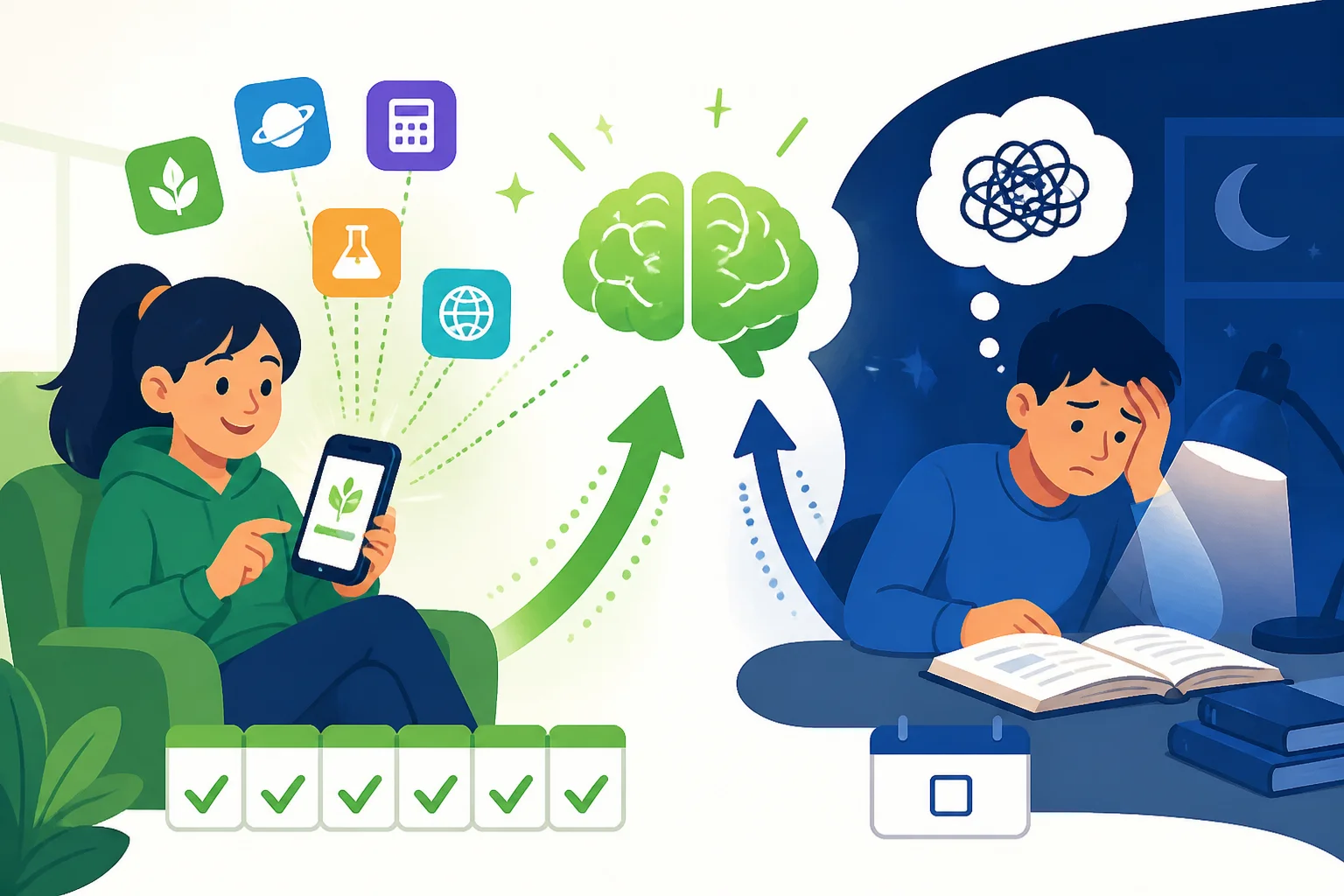
A free learning app gives a few minutes of lessons a day in many subjects. Why does that stick better than one long study session?
Psychology & Behavior
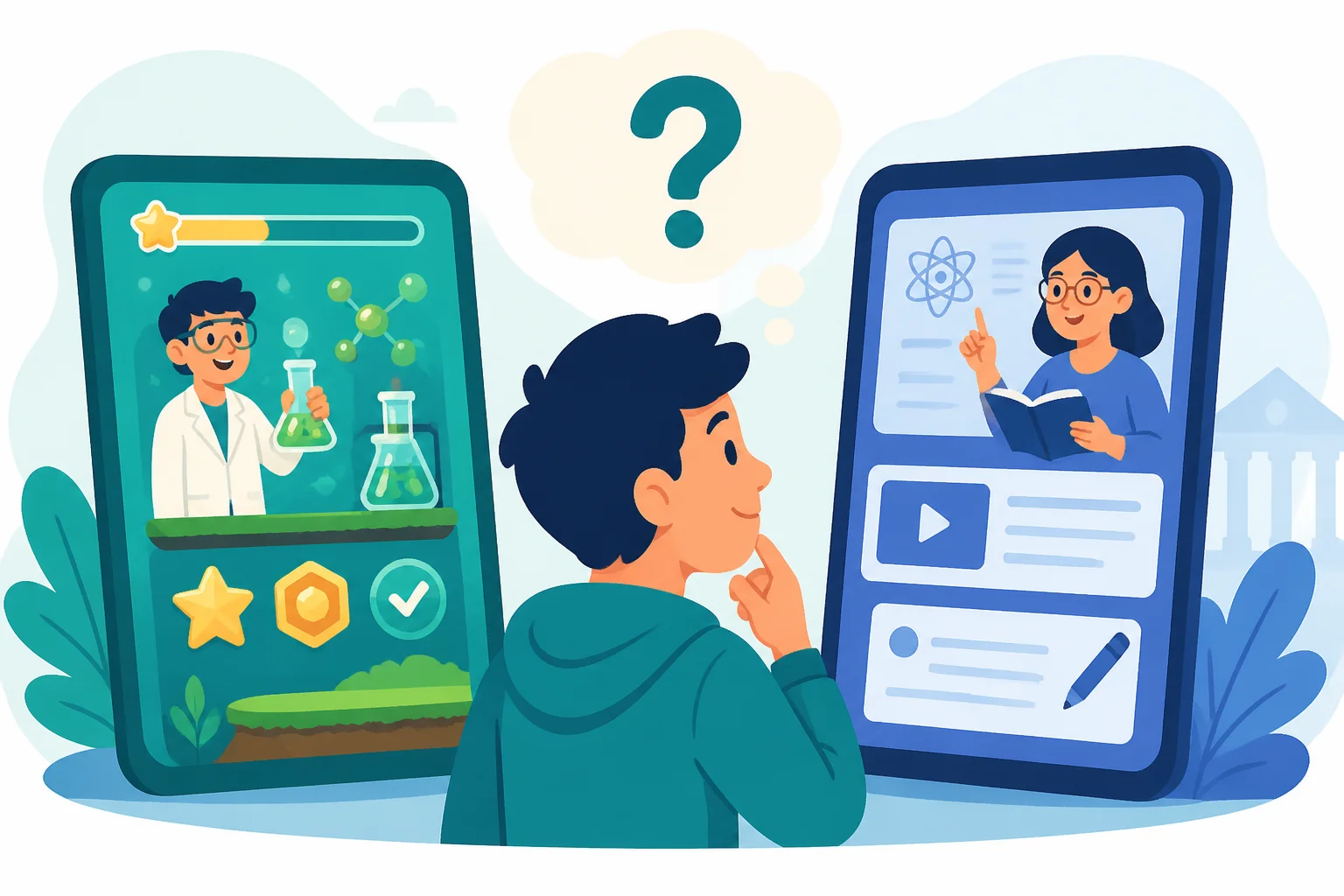
Why do daily learning apps feel so different to use, even when they cover the same subjects?
Technology
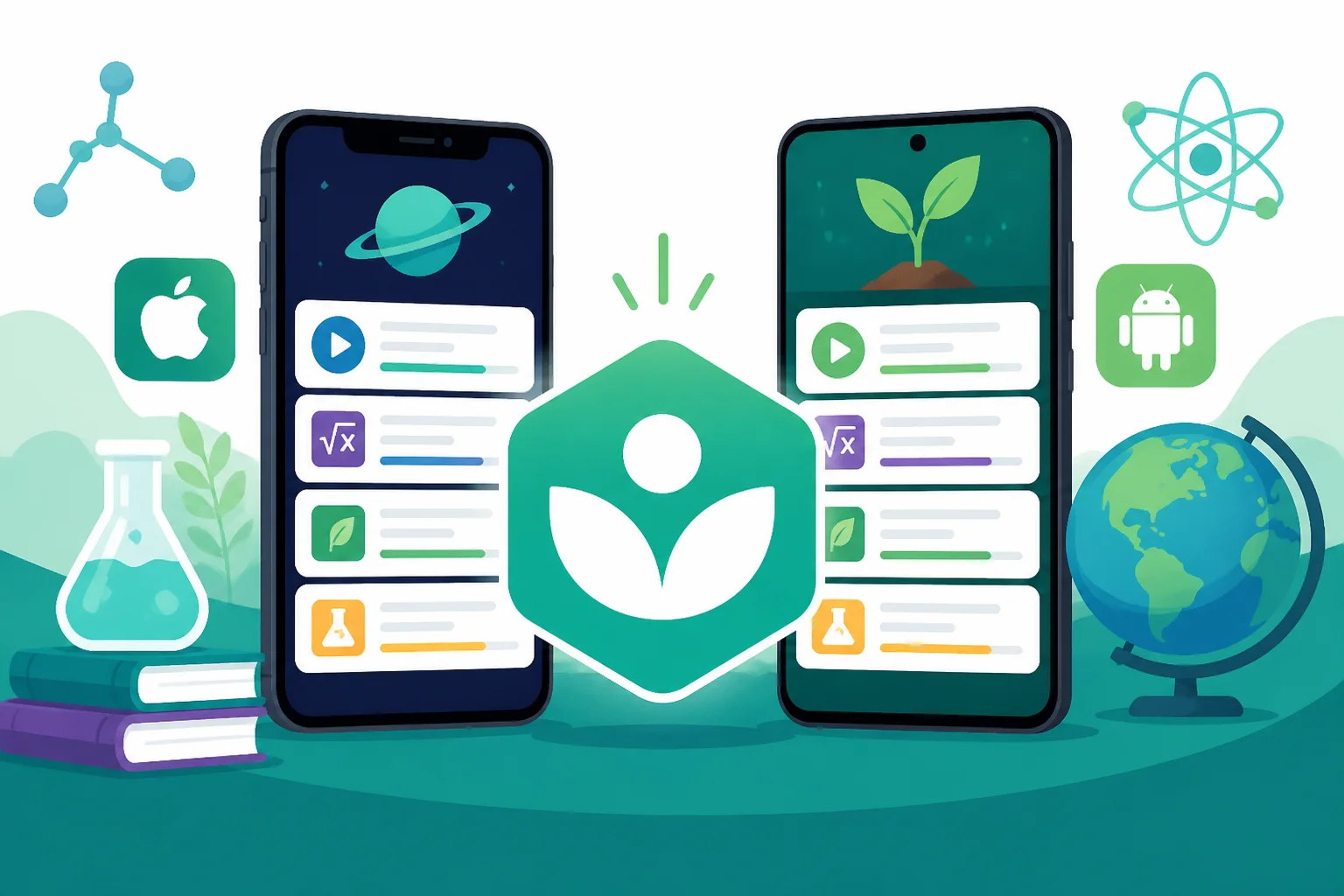
What makes Khan Academy's iOS and Android apps different from most free learning apps?
Technology
Related Posts
Best Learning Apps for Adults 2026: Curious Picks
Best learning apps for adults 2026, compared by session length, pressure, content source, and how each app turns spare moments into real closure for adults.
Best Learning Apps for Busy People: 2026 Guide
Best learning apps for busy people in 2026, ranked by what survives a 60-second interruption: Million Whys, Imprint, Blinkist, Duolingo, Anki, and podcasts.
Best Mobile Learning Apps 2026: Curiosity Wins
Best mobile learning apps 2026 compared by learning unit, pressure, cost signals, and curiosity fit, from Duolingo and Khan Academy to MillionWhys today.