

Summary of Greek Mythology: The Definitive Guide
On this page· 22
Have you ever noticed that the hardest part of Greek mythology isn't remembering the gods, but deciding which version of the story you're supposed to believe? One poet gives you a family tree of divine quarrels, another gives you a hero's ordeal, and a city's local festival may preserve a completely different detail from both. That's why a summary of Greek mythology works best when it feels like a family drama, not a fixed textbook canon.
The tradition grew across Minoan Crete, Mycenaean Greece, and later Greek literature, and it was transmitted orally for centuries before surviving in writing Britannica on Greek mythology. That long, layered history explains why the myths feel alive. They don't behave like one neat story, they behave like relatives who keep interrupting one another at dinner.
Why a Summary of Greek Mythology Is Harder Than It Sounds
A family quarrel sits at the center of many Greek myths. One version of the Trojan cycle may stress Aphrodite's promise, another may dwell on Agamemnon's pride, and a local cult could preserve a different detail altogether. That is why a summary of Greek mythology has to do more than list gods and heroes, it has to make room for variation.
The same gods, different family arguments
Greek mythology is a living network of stories that were retold, reshaped, and aimed at different audiences over generations Britannica on Greek mythology. A god can appear one way in epic poetry, another in local cult, and another in temple art, because Greek myth served narrative, ritual, and civic life at the same time Oxford Academic on myth's ritual and civic roles. The variation is the mechanism that kept the stories usable.
Practical rule: when two myths conflict, ask which community, poet, or ritual context is speaking.
The earliest surviving written traces appear later, especially from around the 900s BCE onward, while Homer's Iliad and Odyssey, associated with the 8th or 9th century BCE, helped stabilize some of the most enduring images of gods, heroes, fate, and divine intervention Britannica on Greek mythology. Even then, the stories do not settle into a single script. They keep the older oral world alive inside them.
Question 1 of 4
Why are the earliest surviving written traces of Greek mythology, including Homer's epics, dated centuries after the stories themselves were already being told?
The Big Bang, the Titans, and the Olympians
Before Zeus becomes king, the universe passes through a series of violent handoffs. Hesiod's Theogony preserves the clearest surviving divine genealogy, moving from primordial beginnings to the Titans and then to the Olympians Greek mythology overview. The sequence feels less like orderly succession than a dynasty built through overthrow.
From Chaos to order
In the oldest frame, cosmogony comes first, then conflict among divine generations, then the human world full of heroes. The universe, in this sequence, is learning how to organize itself.
The Titans do more than come before the Olympians. They embody an older divine order that the next generation challenges and replaces. Zeus's rise becomes the pattern for how power changes hands in myth, with family conflict standing in for cosmic change.
Why Homer and Hesiod feel different
Hesiod builds the cosmic family tree. Homer turns to another part of the story, and that difference matters. The Iliad centers on the Trojan War, while the Odyssey follows Odysseus after the war, so their energy falls on conflict, character, and consequence rather than origin. A scholarly summary of the succession myth in Hesiod's Theogony keeps that older divine struggle in view (Perseus Digital Library, Hesiod's Theogony).
The Olympians are not just “the main gods.” They are the newest ruling generation in a very old argument.
That is why Zeus feels like a ruler with history behind him, not a deity dropped in from nowhere. The stories around him only make sense when the earlier divine generations are still in the room.
Question 2 of 4
Why does Zeus's rise in Hesiod's Theogony mark the moment the Olympians replace the Titans?
Meet the Olympian Gods and Their Domains
A household argument sits at the center of the Olympians. One god rules a realm, another challenges it, and a third complicates the whole arrangement with jealousy, wit, or force. That is why Zeus feels more like a ruler with a history than a distant symbol. He governs authority and thunder, but he also plots. Athena belongs to wisdom and strategy, and she uses both with cold precision. Ares stands for war in its rawest form, which makes him the sharpest contrast to Athena's discipline.
A pantheon of personalities
The gods make more sense side by side, because each one reveals the others. Hera guards marriage while carrying the resentment of Zeus's betrayals. Poseidon rules the sea and earthquakes, and his temper matters as much as his trident. Apollo brings music, light, and prophecy. Artemis joins the hunt and the moon into a power that feels self-contained and untouchable.
| God | Domain | Character note |
|---|---|---|
| Zeus | Sky, thunder, kingship | Commands through authority, but often plots |
| Athena | Wisdom, strategy | Wins through planning, not brute force |
| Ares | War | Embodies aggression more than victory |
| Aphrodite | Love, beauty | Turns desire into drama |
| Hermes | Messages, trickery | Moves fast and bends rules |
| Demeter | Agriculture | Protects life through nourishment |
| Hestia | Hearth | Centers domestic stability |
Homeric and later traditions keep these figures flexible rather than fixed, and that flexibility gives them much of their power. A god can receive devotion in one city and suspicion in another. A profile of the Olympians at the Theoi Project shows how often the myths preserve that variety instead of forcing a single version.
Minor figures still matter
The smaller divine figures matter too. Nike personifies victory, and Hypnos gives sleep a shape. Greek myth keeps turning forces into people, then placing those people in family disputes, alliances, and rivalries that feel stubbornly human.
That is why the pantheon never reads like a list. It feels like a household, and every room has its own temper.
The Trojan War, where heroes and gods collide
What happens when a quarrel among gods ends with a city burning?
The Trojan War is where Greek myth turns crowded and personal. A divine dispute starts the chain, a mortal choice keeps it moving, and the ruin of Troy gives the story its lasting force. At the center is Paris, whose judgment opens a wound that never really closes.
Why this war dominates the imagination
The war matters because gods and humans share the same battlefield. Achilles fights with overwhelming force, Hector fights for his city and family, and Odysseus survives by intelligence and improvisation. The conflict becomes a test of character as much as strength.
Homer's Iliad concentrates on the fighting itself, while the Odyssey follows the long road home after Troy falls. That pairing matters because one poem captures what rage does in war, and the other follows what a survivor carries afterward.
Gods keep entering the action, choosing sides, shifting outcomes, and pressing on mortal decisions. Yet the heroes still bear responsibility for what they do under that pressure. Greek myth leaves room for both divine interference and human choice, which is part of why the war feels so alive.
The wooden horse and the long memory of trickery
The Trojan Horse survives because it brings intelligence and deceit into the same image. The wooden horse is more than a clever tactic, it shows that victory in myth often belongs to whoever can outthink the situation. Odysseus earns his place there through adaptability as much as force.
Greek heroes rarely win cleanly. They win, or fail, by the exact trait that defines them.
The Trojan War still lingers because it offers glory, pride, loss, loyalty, and betrayal in one story. Gods hover above the action, but the damage stays human. That is why later art and literature kept returning to it.
Question 3 of 4
How did a hollow wooden horse actually let the Greeks finally take Troy?
Greek Heroes and Their Tragic Shape
Greek heroes are fascinating because they're almost never simple role models. They're exceptional, but their greatness usually comes with damage attached. Heracles, Perseus, Jason, Theseus, and Atalanta all stand at the edge of mortality and divine favor, and none of them gets a clean life.
Strength is never the whole story
Heracles is the clearest example of the pattern. His tasks are so difficult that the term Herculean still carries his name in everyday language, but the deeper meaning is moral as much as physical. Heroism in Greek myth is often about surviving burdens that would break other people.
Perseus wins with strategy, not just force. Theseus defeats the Minotaur with the help of Ariadne's thread. Jason's quest for the Golden Fleece depends on a crew, not a lone champion. The stories keep refusing the fantasy that raw strength solves everything.
That refusal matters because these myths taught values. They warned against hubris, showed how closely glory can sit beside ruin, and made fate feel like a pressure that even the best people can't ignore. The heroes are admired precisely because they're vulnerable.
Heroism includes women too
Atalanta breaks a common expectation. She's not a side character in someone else's story, she sets the terms of her own contest and forces suitors to meet her on her ground. That matters because it widens the heroic pattern beyond a single masculine script.
The mythic hero is rarely a perfect person. More often, the hero is the one who keeps going after pride, grief, or prophecy has already complicated the road ahead.
Question 4 of 4
In the Greek myths, what really lets Theseus survive the labyrinth and Jason win the Golden Fleece?
Debunking the myth of a single Greek mythology
A Greek myth rarely arrives in one fixed form. A tale heard in Athens could look different in another city, yet both versions could belong to the same world of gods and heroes. Greek audiences expected that flexibility, and scholars of myth variation have shown how local traditions and poetic settings shaped what each community heard BMCR on Greek myth variation.
Variation was the system, not the error
A story could shift to fit civic identity, ritual practice, or competition among poets without losing its place in the tradition. That is why myth often reflects local cult life as much as shared memory, as studies of Athenian tradition and ritual make clear.
So a summary of Greek mythology works better when it asks, “Which version?” than when it searches for one final answer. The question opens up source, region, and purpose, and it keeps modern readers from flattening a living tradition into a fake consensus.
Family drama explains the contradictions
The myths behave like a family argument repeated in different houses. One cousin insists on one version, another swears by a different one, and both are talking about the same ancestors. The point is not to force every story into perfect agreement. The point is to keep the story useful where it is told.
In Greek mythology, inconsistency often signals local meaning, not bad storytelling.
That is a better lens than hunting for a single canonical answer. It respects the tradition on its own terms.
How to Learn Greek Myths Without Getting Overwhelmed
Which myth should you start with first? Follow the stories that keep showing up in Greek literature and art, then build outward from there. The Trojan War, Heracles, the Golden Fleece, and the return of Odysseus are strong entry points because they recur so often and give the rest of the tradition a familiar frame.
Learn by asking why, not just who
The better memory hook is motive. Why does Demeter grieve? Why does Odysseus delay? Why does Zeus step in? Those questions turn myth into cause and effect instead of a list of names.
A few habits make the stories stick:
- Start with one cluster: gods, then heroes, then underworld stories.
- Track the relationships: parent, child, rival, spouse, ally.
- Notice the recurring problems: pride, loss, revenge, loyalty, temptation.
- Compare versions carefully: the differences often reveal the local setting.
Micro-learning fits this material well because each myth carries a complete emotional arc. One strong episode can stay in your head without an encyclopedia beside it. A short story with a sharp consequence often teaches more than a long catalog of names.
Curiosity beats cramming
A small question at a time changes the whole experience. The myths stop feeling like a test and start feeling like a conversation. That pace suits a tradition shaped by centuries of retelling.
Greek myth also rewards repeated, low-friction exposure. Each return makes the family tree look less like a maze and more like a map.
Why Greek Mythology Still Matters Today
Why do these old stories still feel so close? Because they keep putting the same human troubles on display, in forms that are easy to recognize. A jealous god, a reckless hero, a grieving parent, a proud ruler, each one still looks like someone you have met in real life.
The stories keep resurfacing in literature, film, psychology, and everyday speech because they offer durable patterns for ambition, desire, courage, and failure. A phrase like Achilles' heel still works because the original story already gave weakness a name that sticks.
The old stories never really left
A modern novel, a film, or a stage play can change the setting completely and still borrow the same emotional shape. A hero's ordeal, a forbidden choice, a family rupture, a hard return home, these all echo the classical tradition because Greek myth gave later writers such strong models to reuse. The family drama never really stops, it just shifts costumes.
These myths also carry cultural memory. They show how ancient Greeks explained the world, imagined divine power, and made sense of suffering. That is why they are more than folklore. They preserve an older way of thinking about uncertainty, fate, and the ties between parents, children, rivals, and lovers.
Understanding them gives you a shared language for art, literature, and human nature. It also makes the references around you feel less random, because the old stories are still speaking in the background.
Keep Exploring
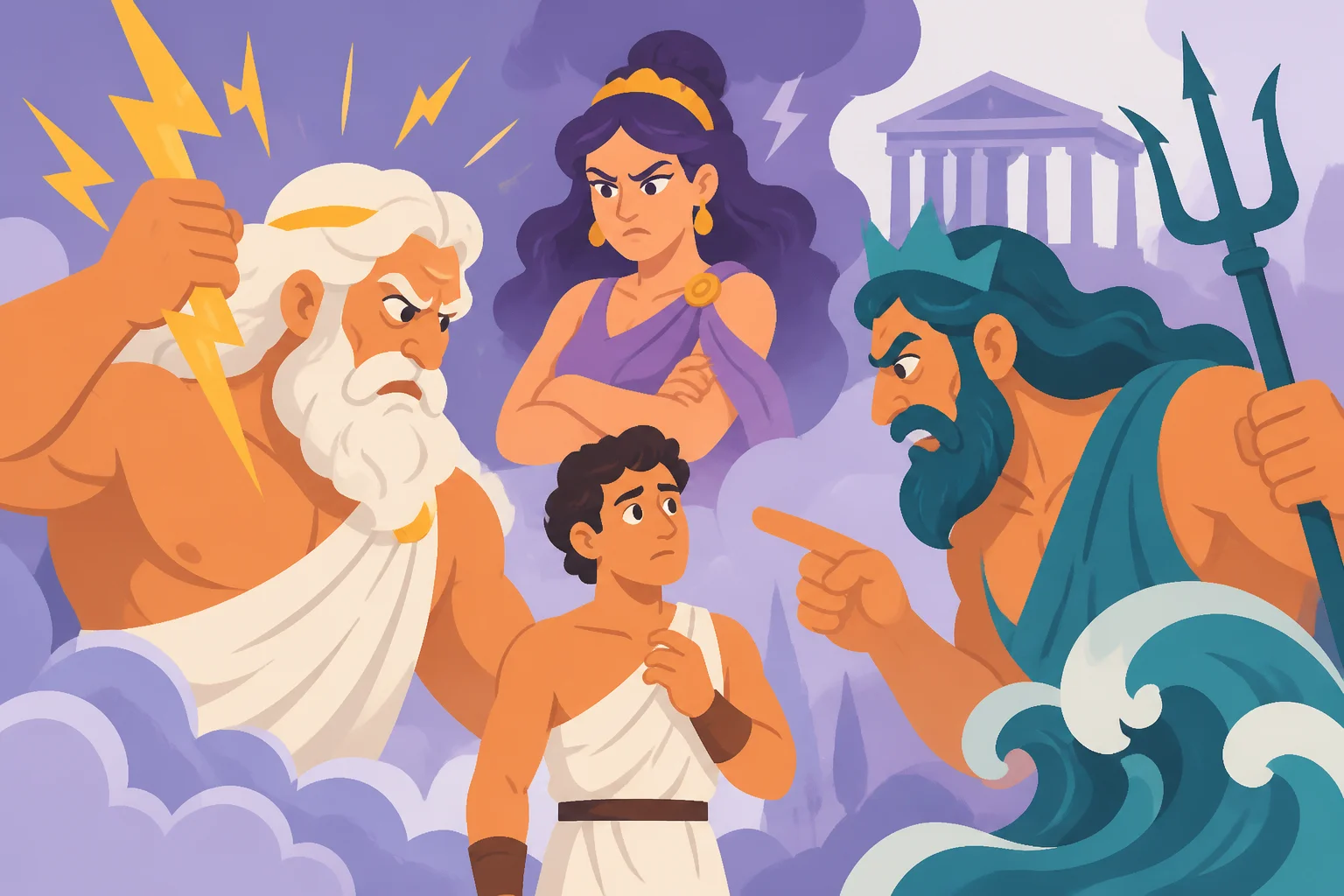
Why do the Greek gods in myths often behave like jealous rivals with human emotions?
Religion & Mythology
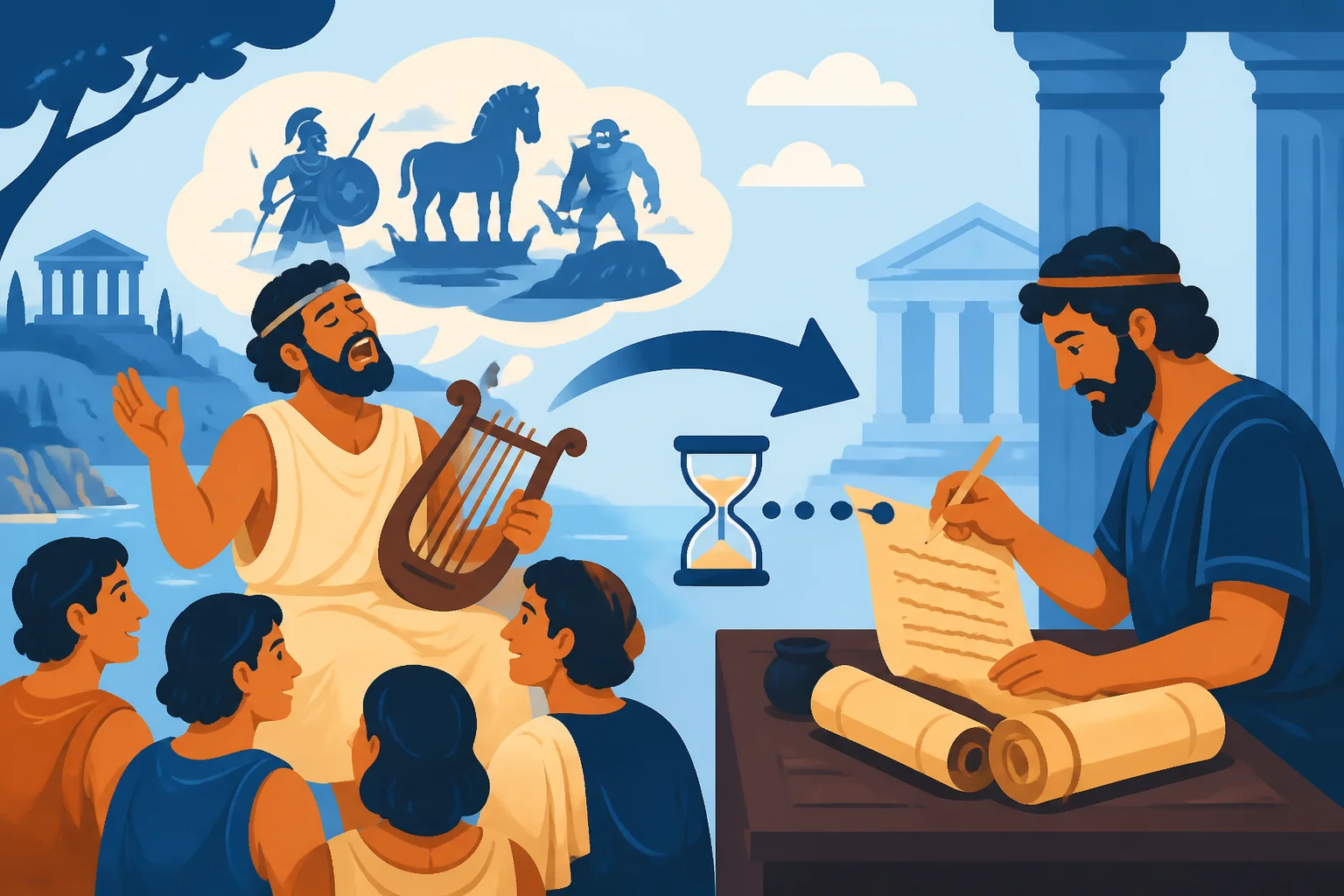
Why are the earliest surviving written traces of Greek mythology, including Homer's epics, dated centuries after the stories themselves were already being told?
Religion & Mythology
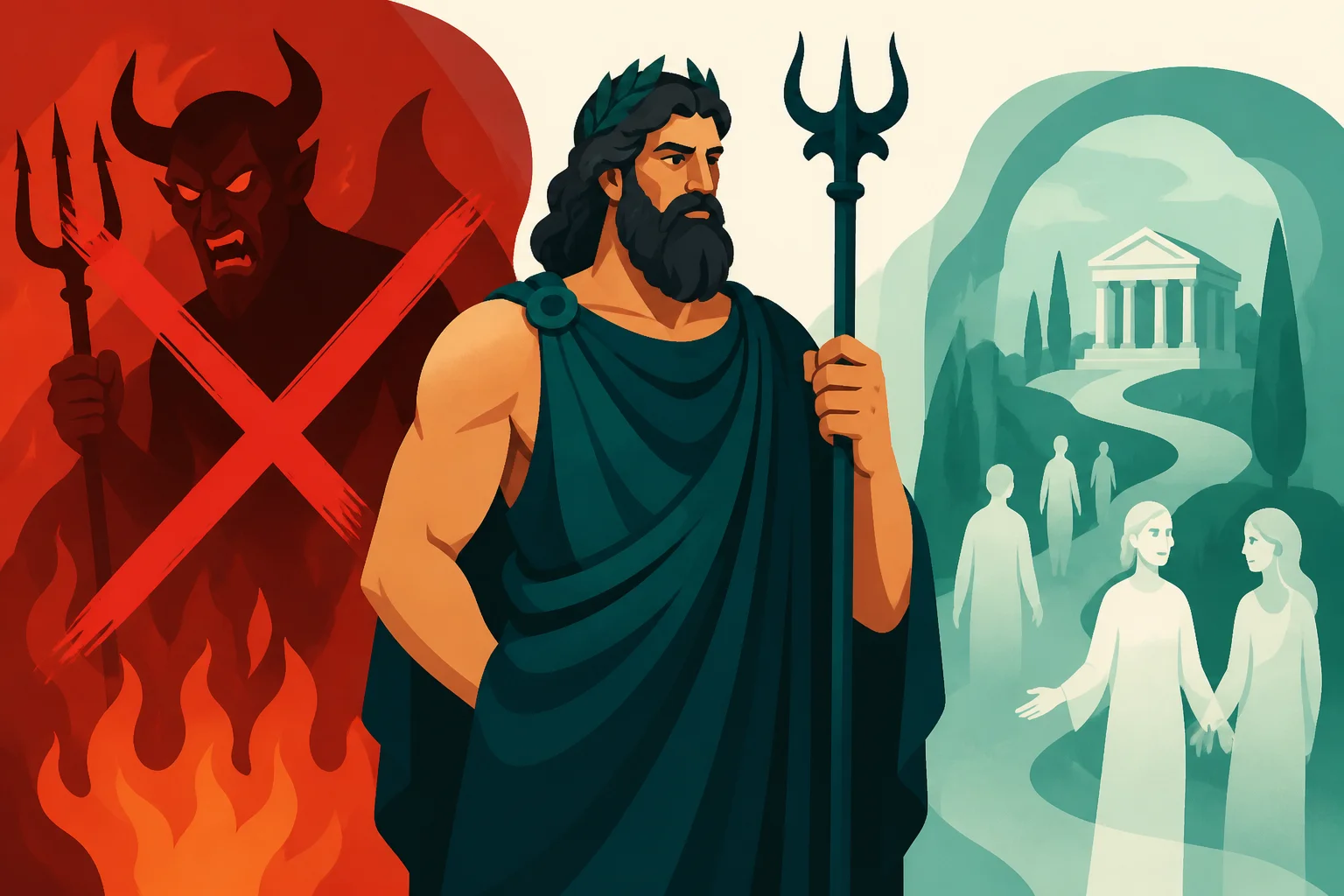
Why was Hades not like a devil-like ruler of the dead in Greek mythology?
Religion & Mythology