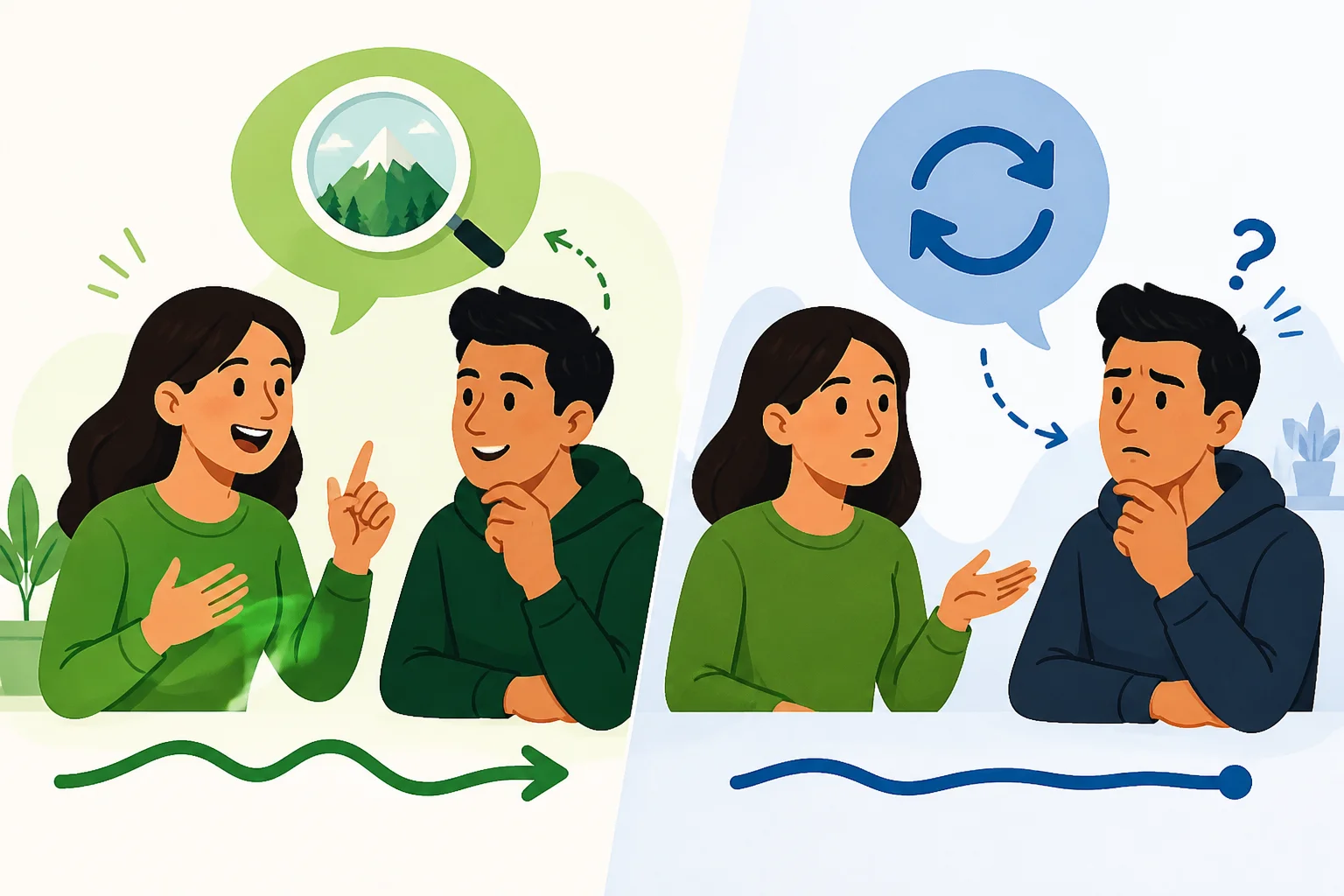
Questions to ask friends should not feel like an interview. The better move is to offer a small why and let the other person close it with you. A good friend question makes room for surprise: not a confession demand, not a test, just a doorway into what someone notices.
Questions to Ask a New Friend
ATo show you're not holding a weapon
✓Correct — Historical evidence suggests handshaking originated in ancient Greece and Rome as a gesture of peace. By extending your right hand (the weapon hand) and grasping another person's hand, you demonstrated you weren't holding a weapon. The up-and-down shaking motion may have helped dislodge any daggers hidden in sleeves. This practical security check evolved into a universal greeting symbolizing trust and goodwill.
BTo check if someone has a fever
✗Not quite — While modern infrared thermometers can detect fever through the forehead, handshaking was never designed for health checks. In fact, handshaking can spread germs, which is why many cultures developed alternative greetings like bowing. The original purpose was to demonstrate you weren't carrying weapons in your dominant hand.
CTo exchange good luck through touch
✗Not quite — Though many cultures have superstitions about touch, handshaking's origin was purely practical, not mystical. The custom developed as a security measure - showing your weapon hand was empty. The symbolism of trust and friendship came later, after the gesture became common. Some cultures believed in 'luck transfer' through touch, but this wasn't why handshaking started.
AYour brain didn't encode it into long-term memory
✓Correct — When you meet someone, if you're distracted or not paying full attention, your brain fails to 'encode' the name properly. Without encoding (processing information deeply), it stays only in short-term memory for about 20-30 seconds, then disappears. This is why repeating the name, using it in conversation, or creating a mental association helps you remember - it forces proper encoding into long-term memory.
BYour brain's storage space was completely full
✗Not quite — Your brain doesn't work like a computer hard drive that fills up. The brain has virtually unlimited storage capacity and constantly forms new neural connections throughout life. The issue isn't space - it's about how information is processed and prioritized. Even people with exceptional memories don't 'run out of room' for new information.
CThe name was automatically deleted after 30 seconds
✗Not quite — There's no automatic deletion timer in your brain. Information fades from short-term memory because it's constantly being replaced by new incoming information, not because of a preset time limit. With proper attention and encoding techniques, you can remember a name indefinitely from just one introduction. The 'forgetting' happens due to poor initial processing, not an automatic erasing mechanism.
AThe brain regions for physical warmth overlap with those for social warmth
✓Correct — Research shows the insula processes both physical temperature and social 'temperature' (warmth/coldness of personality). When you hold something warm, it activates concepts of interpersonal warmth through 'embodied cognition' - where physical experiences shape abstract thinking. In studies, people holding warm coffee rated strangers as more generous and caring than those holding iced coffee.
BWarm drinks release dopamine that makes you happier about everything
✗Not quite — While warm drinks can be comforting, the effect isn't about dopamine release making you generally happier. The phenomenon is specifically about temperature activating social warmth concepts in the brain. People holding warm objects don't rate everything more positively - just social traits like friendliness and trustworthiness, showing it's a targeted effect on social judgment.
CHeat dilates blood vessels, sending more oxygen to the judgment centers
✗Not quite — The effect isn't about improved blood flow or cognitive function from warmth. Even brief contact with a warm object (10-25 seconds) influences social judgments, too short for significant vascular changes. The mechanism is neural overlap - the same brain area (insula) that detects 'this is warm' also processes 'this person is warm,' creating unconscious associations between physical and social temperature.
Questions to Ask Your Best Friend You Think You Know
AYour unconscious mind processes millions of visual patterns simultaneously
✓Correct — Your unconscious mind processes about 11 million bits of information per second, analyzing countless facial features, body language cues, and movement patterns instantly. This massive parallel processing lets you recognize familiar faces in milliseconds while your conscious mind (handling only 40-50 bits per second) focuses on other tasks. It is like having thousands of workers searching simultaneously instead of one person checking slowly.
BYour eyes send special signals when seeing familiar people
✗Not quite — Your eyes do not have a special recognition system for familiar versus unfamiliar people. All visual information is processed the same way initially. The recognition happens in your brain's unconscious processing centers, which compare incoming visual data against stored memory patterns at incredible speed, not through any special eye signals.
CYour conscious mind scans each face methodically one by one
✗Not quite — If your conscious mind had to examine each face individually, it would take many minutes to scan a crowd. Your conscious awareness can only process about 40-50 bits of information per second, far too slow for instant recognition. The unconscious mind handles this task through rapid parallel processing that happens before you are even aware of seeing the person.
AMirror neurons fire automatically when observing others, triggering mimicry
✓Correct — Mirror neurons are specialized brain cells that fire both when you perform an action and when you watch someone else do it. This automatic activation happens unconsciously and is why we naturally mimic accents, gestures, and facial expressions. It's an evolutionary mechanism that helps us bond socially and understand others' intentions - sometimes called the 'chameleon effect.'
BYour vocal cords physically adapt to match the sounds you hear most often
✗Not quite — Your vocal cords don't physically change or adapt based on what you hear. The mimicry happens in your brain's motor control centers through mirror neuron activation, not through any physical changes to your voice box. Vocal cord structure remains constant regardless of accents you're exposed to.
CYour brain deliberately copies speech to practice new language patterns
✗Not quite — This mimicry is completely unconscious - you're not deliberately trying to copy speech patterns. In fact, most people don't even notice they're doing it until someone points it out. Mirror neurons trigger this automatic imitation without any conscious intention or practice effort on your part.
ASadness signals vulnerability, triggering empathy and support from others
✓Correct — When we show sadness, it acts as an honest signal that we need help. This activates empathy circuits in others' brains, encouraging them to offer comfort and support. Shared vulnerable moments create deeper trust and stronger bonds. Research shows that people who appropriately express sadness receive more social support and build more authentic relationships.
BSadness releases endorphins that make others feel happier around us
✗Not quite — Endorphins are 'feel-good' chemicals released during exercise or laughter, not sadness. While sadness does involve neurotransmitters like serotonin, it does not make others feel happier. In fact, sadness in one person typically triggers mirror neurons in observers, making them feel empathy or mild sadness too, which motivates them to help.
CSadness makes us speak louder, so people hear us better
✗Not quite — Sadness typically makes people speak more quietly and slowly, not louder. The strengthening of bonds comes from the emotional vulnerability displayed, not from volume. When we show authentic sadness, others recognize our emotional state through facial expressions, body language, and tone, which triggers their natural caregiving instincts regardless of how loudly we speak.
Deep Questions to Ask Friends
AStories use rhythm, emotion, and repetition to create stronger memory pathways
✓Correct — Oral traditions use multiple memory techniques: rhythmic patterns help recall sequence, emotional engagement strengthens encoding, repetition reinforces accuracy, and social context creates accountability. Aboriginal Australian songlines and Polynesian navigation chants demonstrate how these methods can preserve precise geographical and historical information for thousands of years. Written records can be copied incorrectly, lost, or misinterpreted without context.
BSpoken words contain more information than written symbols can capture
✗Not quite — Spoken and written words convey the same linguistic information. The advantage of oral tradition is not in information density but in the METHOD of transmission. Storytelling creates emotional connections, uses mnemonic devices like rhythm and rhyme, and involves active community participation that reinforces accuracy through multiple witnesses, unlike solitary reading of texts.
COral storytellers have photographic memory abilities from childhood training
✗Not quite — While some storytellers develop excellent memories through practice, they do not have superhuman 'photographic memory' abilities. The accuracy comes from the TECHNIQUE: stories are structured with repetitive patterns, performed regularly in social settings where errors are corrected by the community, and encoded with emotional and sensory details that make them memorable for ordinary brains.
ADifferent philosophical traditions: West seeks causes, East seeks harmony
✓Correct — Western philosophy (Greek logic, scientific method) emphasizes linear causality and breaking things into parts. Eastern philosophy (Taoism, Buddhism) emphasizes interconnected systems and contextual understanding. This shapes how questions are framed - Western 'why' digs for root causes, while Eastern 'how' explores relationships and balance.
BWestern languages have more question words than Eastern languages
✗Not quite — Both language families have rich question word systems. Chinese has '为什么', '怎么', '哪里' etc., while English has 'why', 'how', 'where' etc. The difference is not vocabulary size but cultural preference for which questions to prioritize based on underlying worldviews about knowledge and truth.
CEastern cultures consider asking 'why' to be impolite to elders
✗Not quite — While respect for authority exists in many Eastern cultures, asking 'why' is not inherently impolite. The difference is philosophical, not about manners. Eastern traditions often view reality as interconnected processes where 'how does this work within the system' is more meaningful than 'why did this single cause produce this effect'.
ACuriosity triggers dopamine release, making learning feel rewarding
✓Correct — When we're curious, our brain releases dopamine in the hippocampus and reward centers. This neurotransmitter creates pleasure while strengthening memory formation. Studies show curious people retain information 30% better and report higher life satisfaction. The curiosity-dopamine loop makes problem-solving feel like a rewarding game rather than difficult work.
BAsking questions burns more calories, improving brain metabolism
✗Not quite — While thinking does consume energy (about 20% of daily calories), asking questions doesn't significantly increase caloric burn. The real benefit comes from neurochemical changes, not metabolic ones. Curiosity's power lies in how it changes brain chemistry, not energy expenditure.
CCuriosity increases brain size by creating new neurons daily
✗Not quite — Adult human brains don't create significant new neurons daily through curiosity (neurogenesis is limited). Instead, curiosity strengthens existing neural connections (synapses) and improves their efficiency. It's quality of connections, not quantity of neurons, that curiosity enhances. Brain size remains relatively constant in healthy adults.
Funny Questions to Ask Friends
AWarm drinks create a sense of social warmth
✓Correct — Warm drinks activate embodied cognition, making us feel closer and more trusting.
BCaffeine makes conversations more interesting
✗Not quite — While caffeine may increase alertness, the primary social effect is from warmth, not caffeine.
CTea and coffee are traditional social lubricants
✗Not quite — Tradition plays a role, but the psychological mechanism is the physical warmth influencing social perception.
ADerived from the French 'petite conversation'
✗Not quite. While French has 'petite conversation', the English phrase 'small talk' developed independently. It first appeared in English literature in the 1750s, referring to light, polite conversation.
BInvented by Shakespeare in a play
✗A common myth, but Shakespeare did not coin this phrase. Many words and phrases are falsely attributed to him. The earliest known use of 'small talk' is in the 18th century, long after his death.
COriginated in 18th-century British high society
✓Correct — The term was first used among British aristocrats in the 18th century to describe trivial but socially necessary conversation. It spread through etiquette books and became standard English.
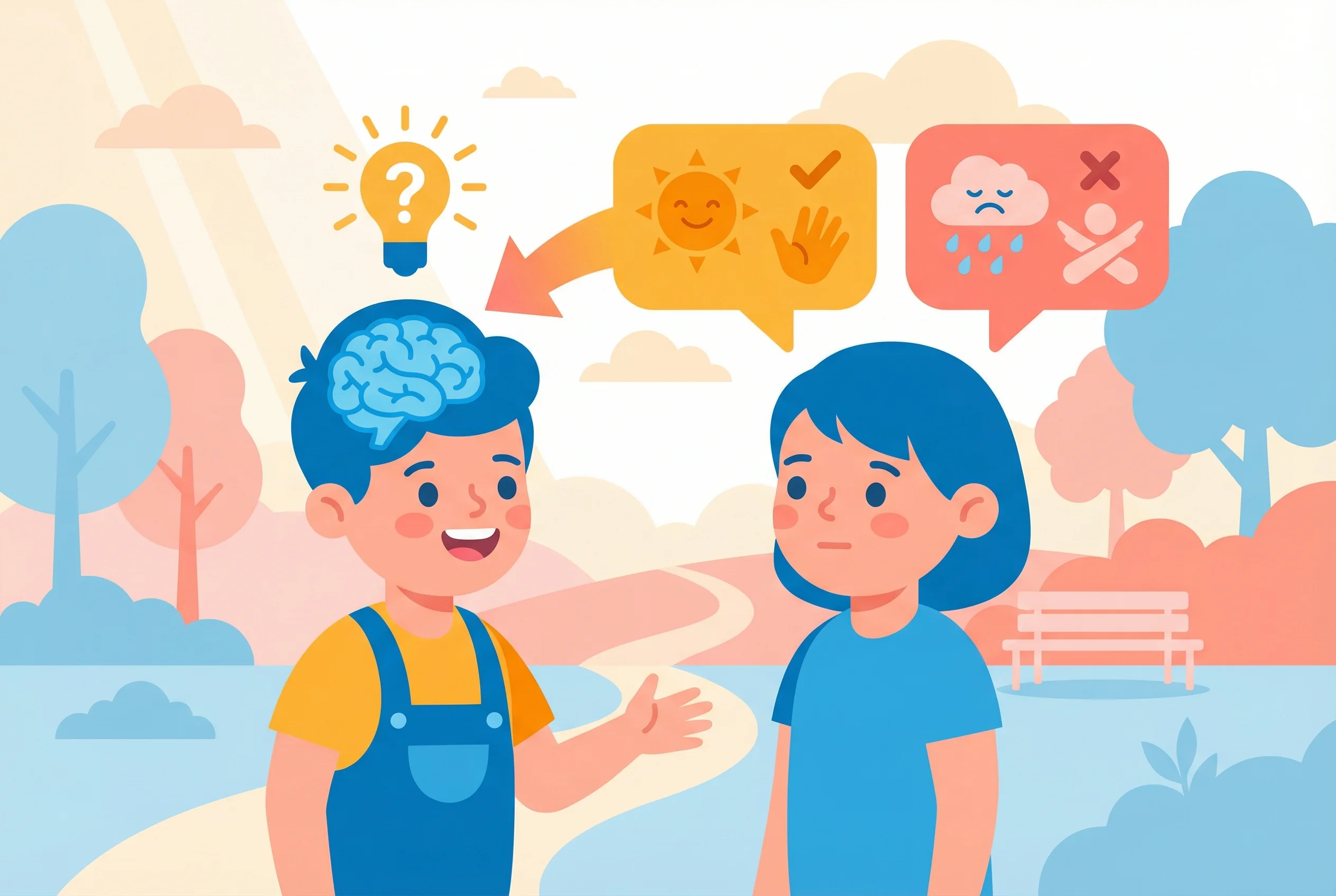
APrimacy effect in memory
✓Correct — First impressions matter due to the 'primacy effect' - information encountered first has disproportionate influence on our overall judgment. Our brains use initial information to create a schema (mental framework) about a person. Later information gets filtered through this existing schema through confirmation bias - we notice and remember things that confirm our first impression while dismissing contradictory evidence. This happens because changing existing schemas requires more cognitive effort than maintaining them.
BSocial rules require it
✗Not quite — Social etiquette doesn't cause the psychological stickiness of first impressions. The effect comes from cognitive mechanisms like primacy effect and confirmation bias, not social conventions.
CWe trust our instincts
✗Not quite — 'Trusting instincts' doesn't explain why first impressions persist even when later evidence contradicts them. The real mechanism is primacy effect plus confirmation bias, which makes us unconsciously favor information that confirms our initial judgment.
Questions to Ask on a Long Car Ride With Friends
AMoon's light heats the water
✗Not quite — Moonlight is just reflected sunlight and is very weak - it doesn't heat the ocean significantly. Temperature changes don't cause the regular twice-daily tides we observe. The tides are caused by gravitational forces, not thermal effects.
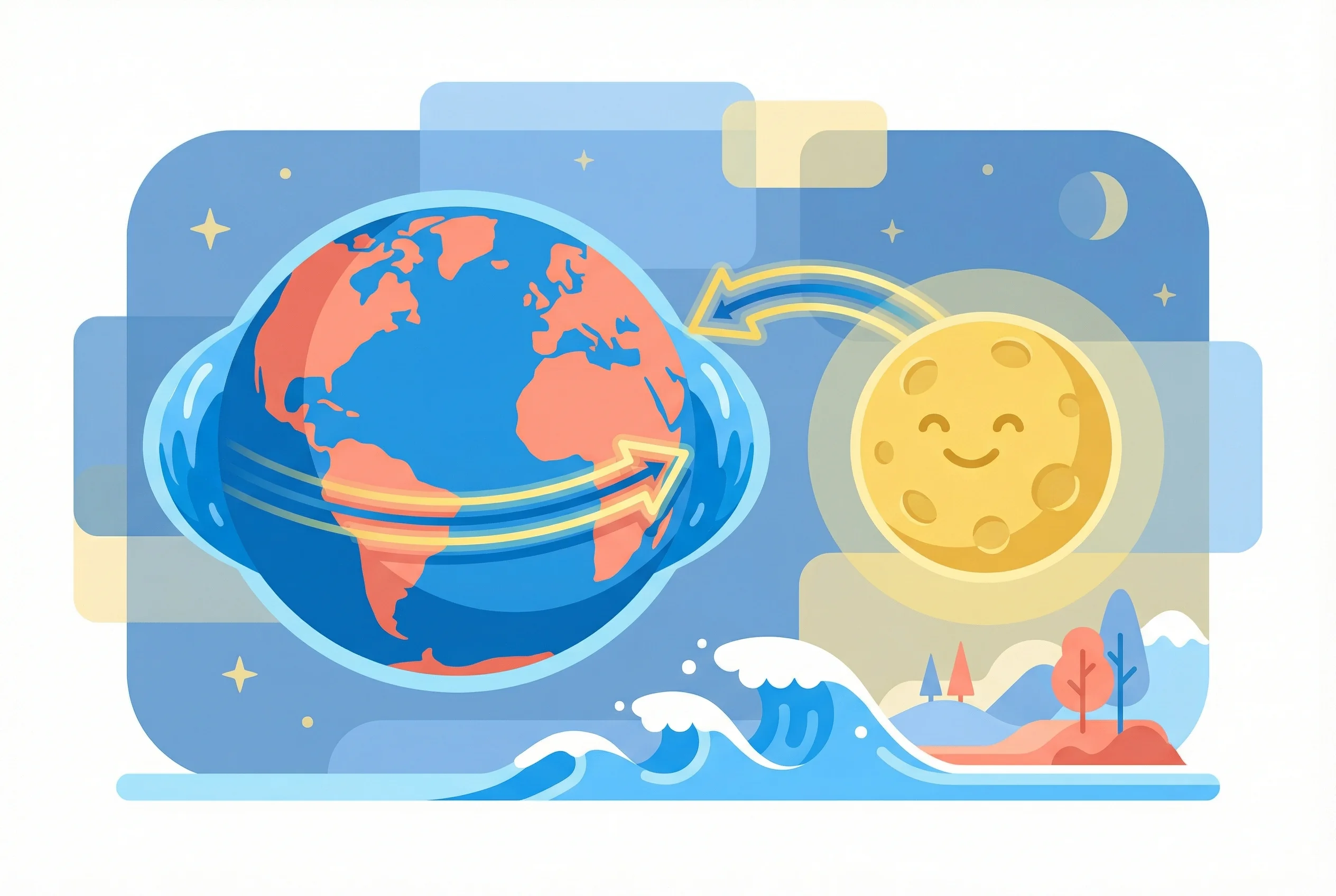
BMoon's gravity pulls the water
✓Correct — The Moon's gravity pulls on Earth's oceans. The side of Earth facing the Moon experiences stronger pull, creating a bulge of water (high tide). Surprisingly, the opposite side also gets high tide because Earth itself is pulled more than that distant water, leaving it 'behind' in a bulge. As Earth rotates, locations pass through these bulges, experiencing two high tides daily (every 12.4 hours). The Sun also affects tides but less strongly due to greater distance.
CMoon's magnetism attracts water
✗Not quite — The Moon has no significant magnetic field, and water isn't magnetically attracted anyway. Tides are caused by gravitational pull, not magnetism.
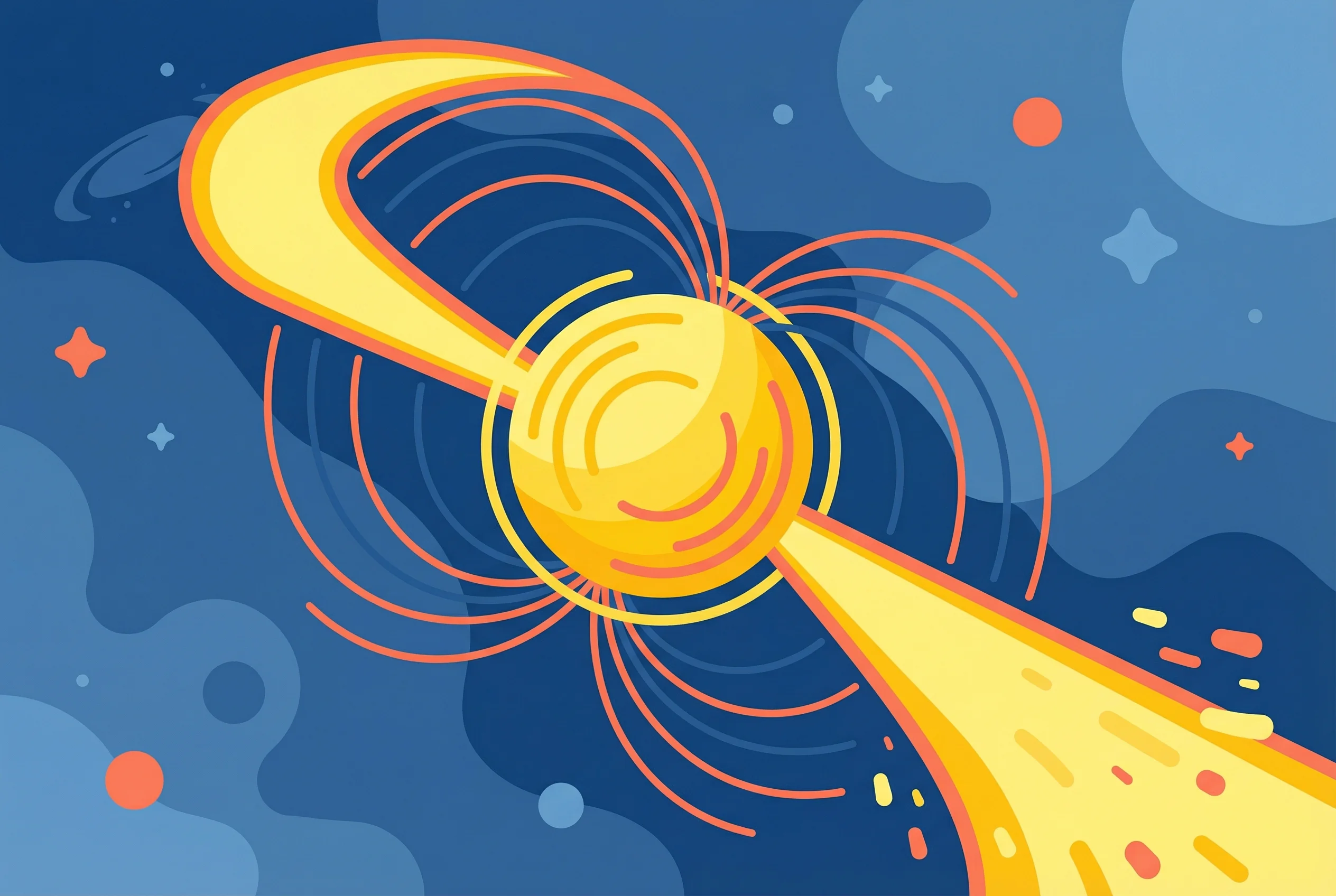
ANeutron stars rotate with beams
✓Correct — Pulsars are rapidly rotating neutron stars (collapsed star cores, ~20km diameter). They have powerful magnetic fields with radiation beams emitted from magnetic poles (not aligned with rotation axis). As the star rotates (milliseconds to seconds per rotation), beams sweep across space like lighthouse. When beam points at Earth, we detect a pulse. Incredibly precise—used for testing relativity, detecting gravitational waves!
BMagnetic fields oscillate naturally
✗Not quite — Magnetic fields are strong but don't oscillate to create pulses. Pulses come from rotation—beams sweep past Earth as neutron star spins.
CGravitational waves create pulses
✗Not quite — Gravitational waves don't cause pulses (though pulsars help detect them!). Pulses result from rotating neutron star's beamed radiation sweeping past Earth.
AFlags required by international law
✗Not quite — While international conventions govern flag use (ships, embassies), countries adopted flags to represent identity and unity, not because of requirements. Flags emerged from military banners and became symbols of sovereignty and national character.
BHistorical accident from wars
✗Not quite — Flags evolved from military banners used to identify armies, but they became national symbols representing identity, values, and unity. Their adoption was deliberate—expressing sovereignty and shared identity—not accidental.
CSymbol of identity and unity
✓Correct — Flags symbolize national identity, values, and unity. They emerged from military banners (identifying armies in battle) and became powerful symbols of sovereignty and shared identity. Colors and symbols convey history and values (stars, stripes, crescents, etc.). Flags mark territory, represent countries diplomatically, and create emotional bonds among citizens.
Weird Questions to Ask Friends That Reveal Something
AIt trains students to think critically and discover answers themselves
✓Correct — The Socratic method, developed by ancient Greek philosopher Socrates over 2,400 years ago, uses strategic questioning to guide students toward understanding. When teachers ask 'What do you think?' or 'Why might that be?' students must actively engage their reasoning skills, examine assumptions, and build knowledge structures in their own minds. Research shows this 'active learning' creates stronger, longer-lasting understanding than passive listening. Modern classrooms, coding bootcamps, and even AI chatbots use this technique because it develops the critical thinking skills essential for problem-solving in any field.
BIt saves teachers time by making students teach themselves
✗Not quite — While the Socratic method does involve students doing mental work, its purpose is not to reduce teacher effort. In fact, skilled Socratic teaching requires more preparation and expertise than simple lecturing. Teachers must anticipate student responses, craft follow-up questions in real-time, and guide discussions without giving away answers too quickly. The method is used because it produces better learning outcomes, not because it is easier for instructors. Studies show teachers using this approach often work harder, not less.
CIt was invented by computers and works best with technology
✗Not quite — The Socratic method was created around 400 BCE by the Greek philosopher Socrates, thousands of years before computers existed. Socrates would engage Athenians in dialogue in the marketplace, asking questions to expose contradictions in their thinking. While modern technology like educational software and AI can incorporate Socratic questioning techniques, the method itself is purely human in origin. Its longevity proves that fundamental principles of how humans learn transcend any particular technology.
AQuestions activate your brain's thinking and memory systems more deeply
✓Correct — When you ask questions, your brain must actively retrieve related knowledge, analyze gaps in understanding, and form connections. This 'active learning' creates stronger neural pathways than passive listening. Brain imaging studies show that questioning activates multiple brain regions including the prefrontal cortex (reasoning) and hippocampus (memory formation), leading to better retention and deeper comprehension.
BQuestions make the teacher speak slower so you remember more
✗Not quite — While teachers might pause to answer questions, the learning benefit is not about speaking speed. Even if a teacher speaks slowly while you listen passively, your brain processes information less deeply than when you actively generate questions. The key is mental engagement, not the pace of information delivery.
CQuestions use more of your hearing ability than listening alone
✗Not quite — Asking questions does not enhance hearing ability. Both listening and questioning use the same auditory systems. The difference is cognitive, not sensory. When you question, you engage higher-order thinking skills like analysis and evaluation, not improved hearing. Passive listening uses your ears equally well but lacks the deep cognitive processing that questioning triggers.
AIncrease signal strength
✗Not quite — More satellites don't strengthen signal. Multiple satellites are needed for trilateration—calculating distance from each to pinpoint your location.
BCover more geographic area
✗Not quite — Constellation coverage matters, but even in one area, your device needs signals from 4+ satellites simultaneously for 3D positioning.
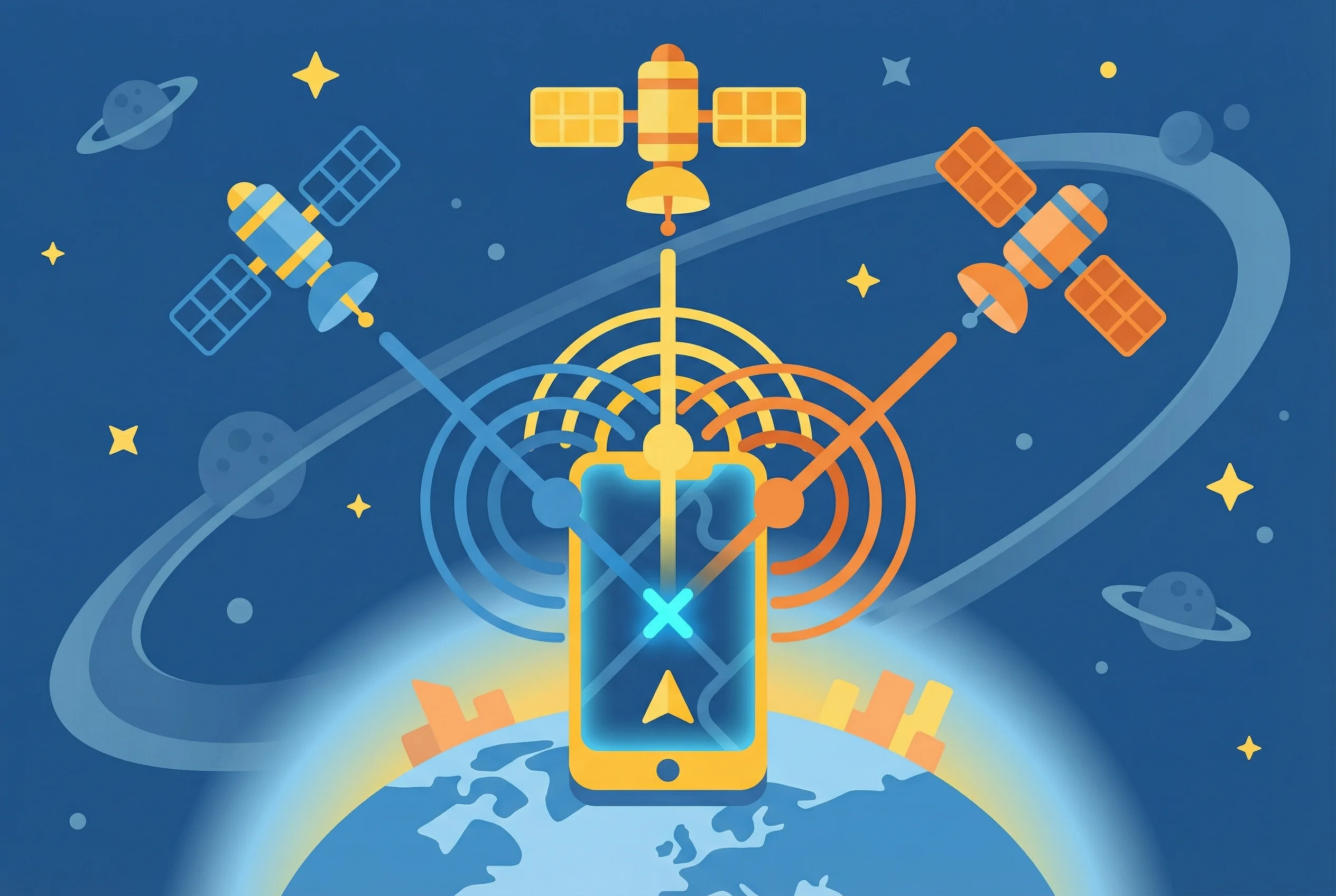
CCalculate precise position
✓Correct — GPS uses trilateration. Each satellite transmits time-stamped signals. Your device calculates distance from signal travel time (light speed). 3 satellites determine 2D position (latitude, longitude), 4th adds altitude. More satellites improve accuracy. The GPS constellation has 24-32 satellites ensuring 4+ are always visible anywhere on Earth. Math requires multiple measurements!
Frequently Asked Questions
What are the best questions to ask friends?
The best friend questions are specific enough to answer now and open enough to explain. Ask about a memory, a small belief, a weird preference, or a thing they changed their mind about.
What are good questions to ask new friends?
Start with low-stakes curiosity: greetings, food, names, travel, small habits, and everyday mysteries. Save heavy questions until the friendship has enough trust to hold them.
What are deep questions to ask friends without making it awkward?
Ask for a story, not a confession. "What changed your mind recently?" usually lands better than "What is your deepest fear?" because it gives the other person control.
Can funny questions to ask friends still be meaningful?
Yes. Funny questions often work because they lower the pressure. The meaning shows up when someone explains the choice, not when the group laughs at the wording.
What does this have to do with AIgneous Million Whys?
Million Whys treats curiosity as social material. Each small question can give you closure now and become something worth bringing back to a friend later.