Easy
AEach string plays one song
✗Not quite - the answer is C. Each string doesn't play a specific song. Strings produce different pitches that combine to play any music.
BStrings wear out at different rates
✗Not quite - the answer is C. Strings do wear differently, but their main purpose is to produce different pitches through varied thickness and tension.
CThickness changes pitch produced
✓CorrectGuitar strings vary in thickness (gauge). Thicker strings vibrate more slowly, producing lower pitches, while thinner strings vibrate faster for higher pitches. Combined with different tensions, this creates the range of notes a guitar can play.
Answer this question
ACheaper to make two colors only
✗Not quite - the answer is B. The two colors serve a musical purpose, not economic. They help distinguish between natural notes and sharps/flats.
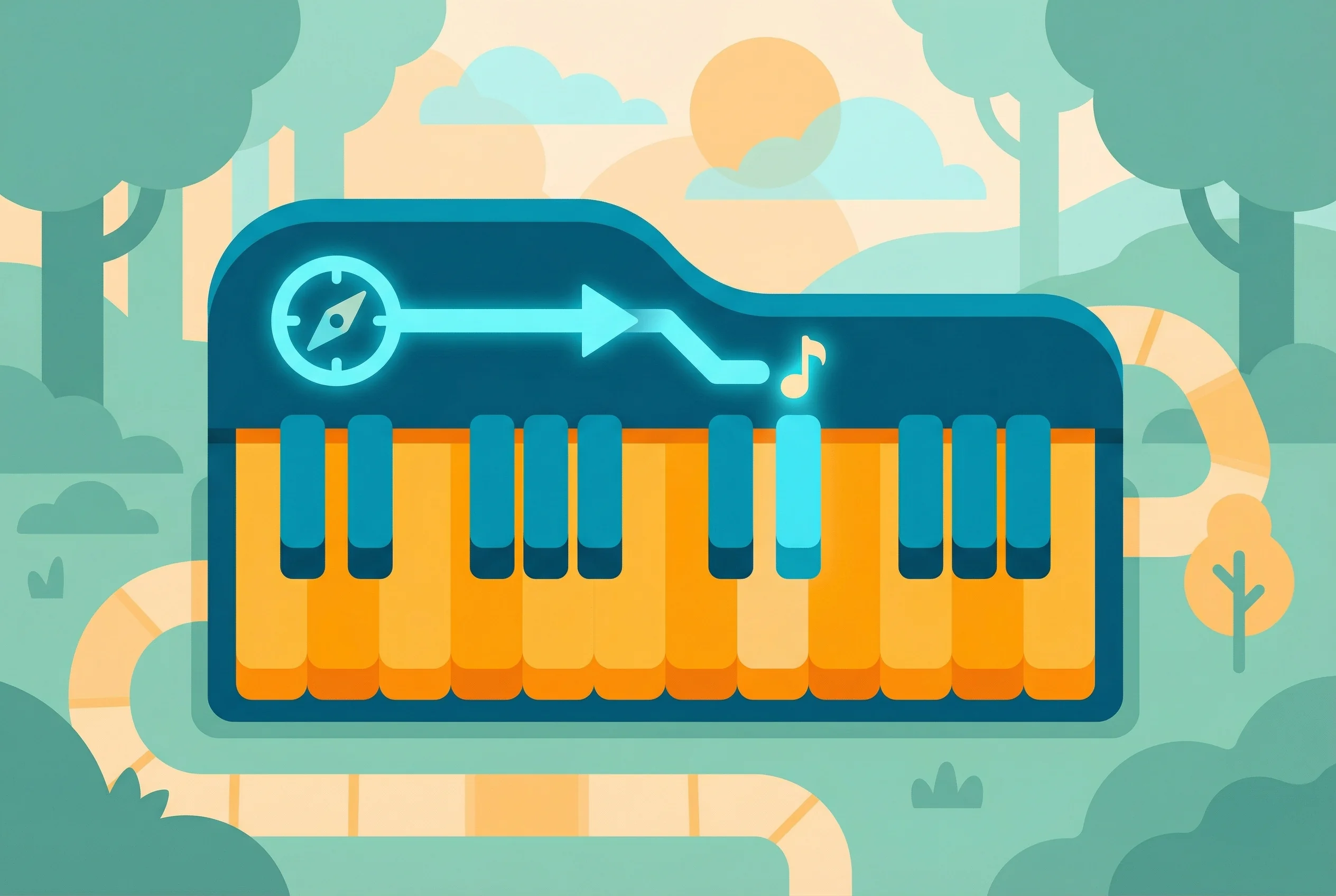
BShows sharps/flats vs natural notes
✓CorrectWhite keys represent the seven natural notes (C, D, E, F, G, A, B) in Western music. Black keys are the sharps and flats between them. This visual pattern helps pianists quickly identify notes and navigate the keyboard without looking.
CWhite keys play melody only
✗Not quite - the answer is B. Both black and white keys can play melody or harmony. The colors indicate note type (natural vs sharp/flat), not musical function.
Answer this question
AClapper bounces back repeatedly
✗Not quite - the answer is C. The clapper only strikes once per ring. The sustained sound comes from the bell's metal continuing to vibrate.
BMetal heats up from impact
✗Not quite - the answer is C. Impact doesn't create enough heat to make sound. Bells ring because the metal vibrates, creating sound waves.
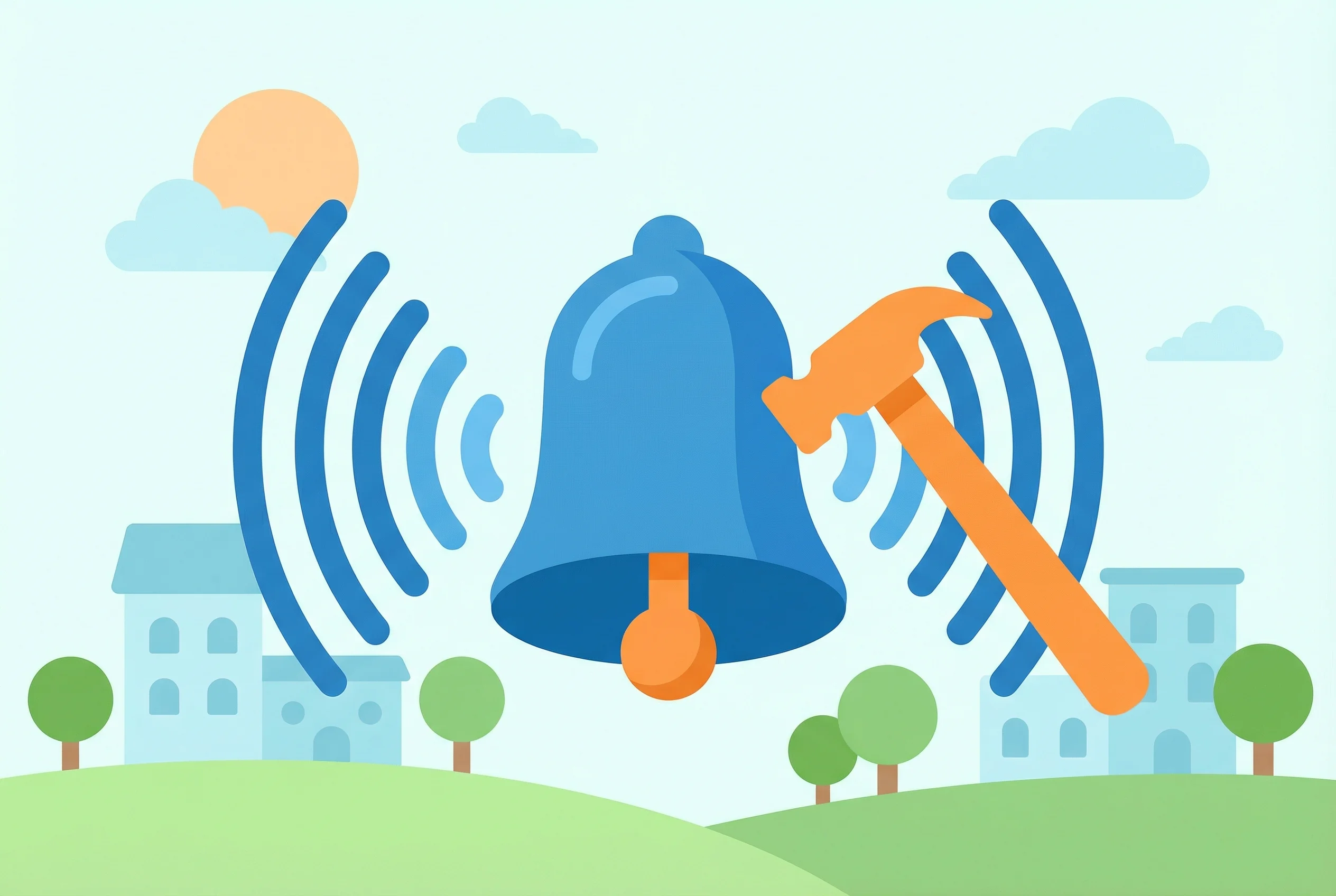
CMetal vibrates after being hit
✓CorrectWhen the clapper strikes a bell, it makes the metal vibrate. The bell's curved shape and metal properties cause it to vibrate at specific frequencies, creating a sustained ringing sound. Larger bells vibrate more slowly, producing lower tones.
Answer this question
Medium
AGas pressure squeezes the throat
✗Not quite - the answer is B. Gas pressure isn't what changes your voice. It's the speed of sound in helium versus air that creates the high-pitched effect.
BSound travels faster in helium
✓CorrectSound travels nearly 3 times faster in helium than in air. This increases the resonant frequencies in your vocal tract, making your voice sound higher-pitched. Your vocal cords vibrate the same, but the sound quality changes.
CHelium chemically changes voice box
✗Not quite - the answer is B. Helium is inert and doesn't react chemically with your body. The effect is purely physical—sound waves move faster through helium.
Answer this question
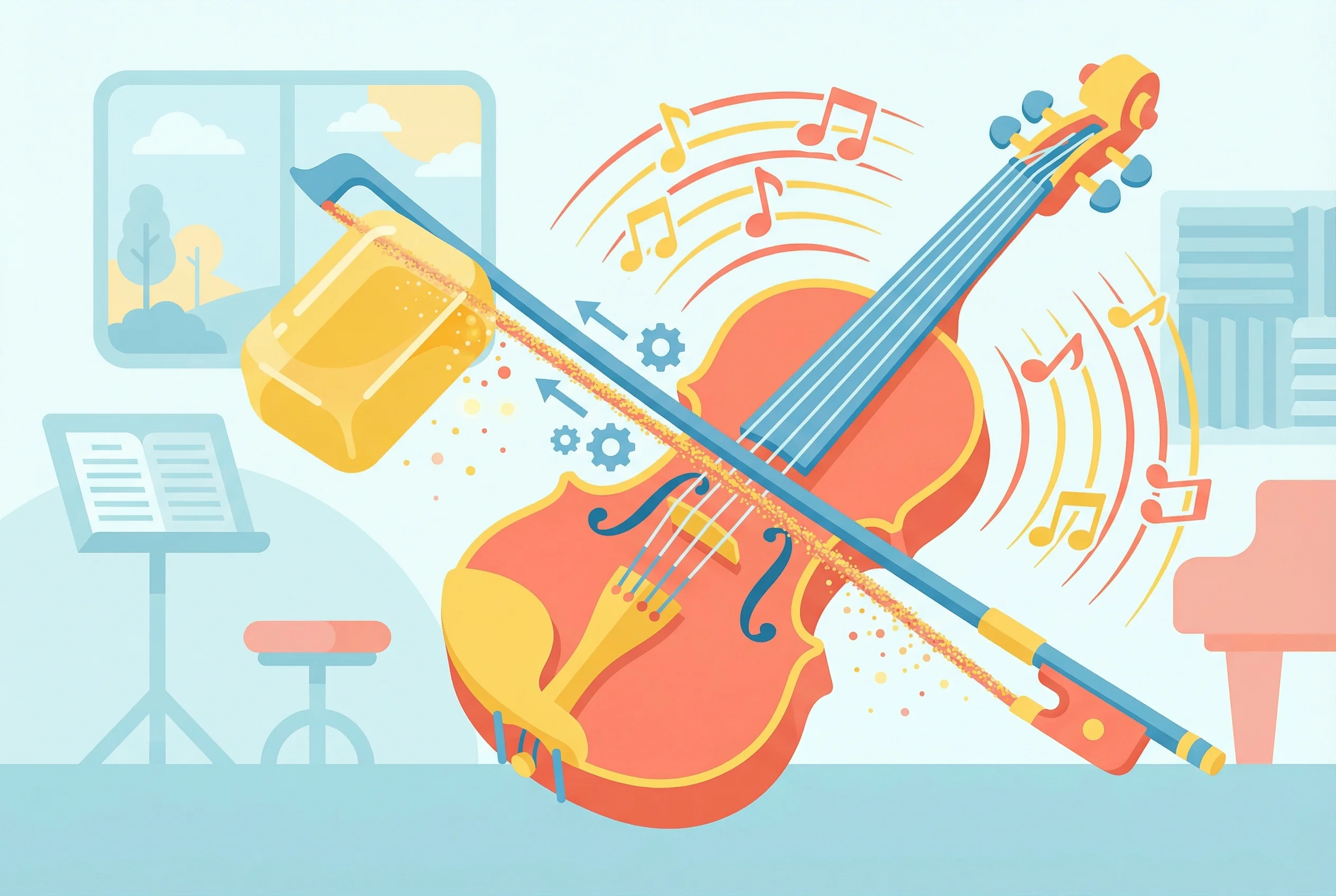
ACreates friction to vibrate strings
✓CorrectRosin is sticky tree resin that creates friction when bow hair rubs across strings. Without rosin, the bow would slide smoothly without making strings vibrate. The friction from rosin causes strings to stick and slip rapidly, creating the vibrations that produce sound.
BProtects strings from damage
✗Not quite - the answer is A. Rosin is for the bow, not string protection. It helps the bow grip strings to make them vibrate and produce sound.
CMakes bow slide more smoothly
✗Not quite - the answer is A. Rosin does the opposite—it makes the bow sticky, creating the friction needed to vibrate strings and produce sound.
Answer this question
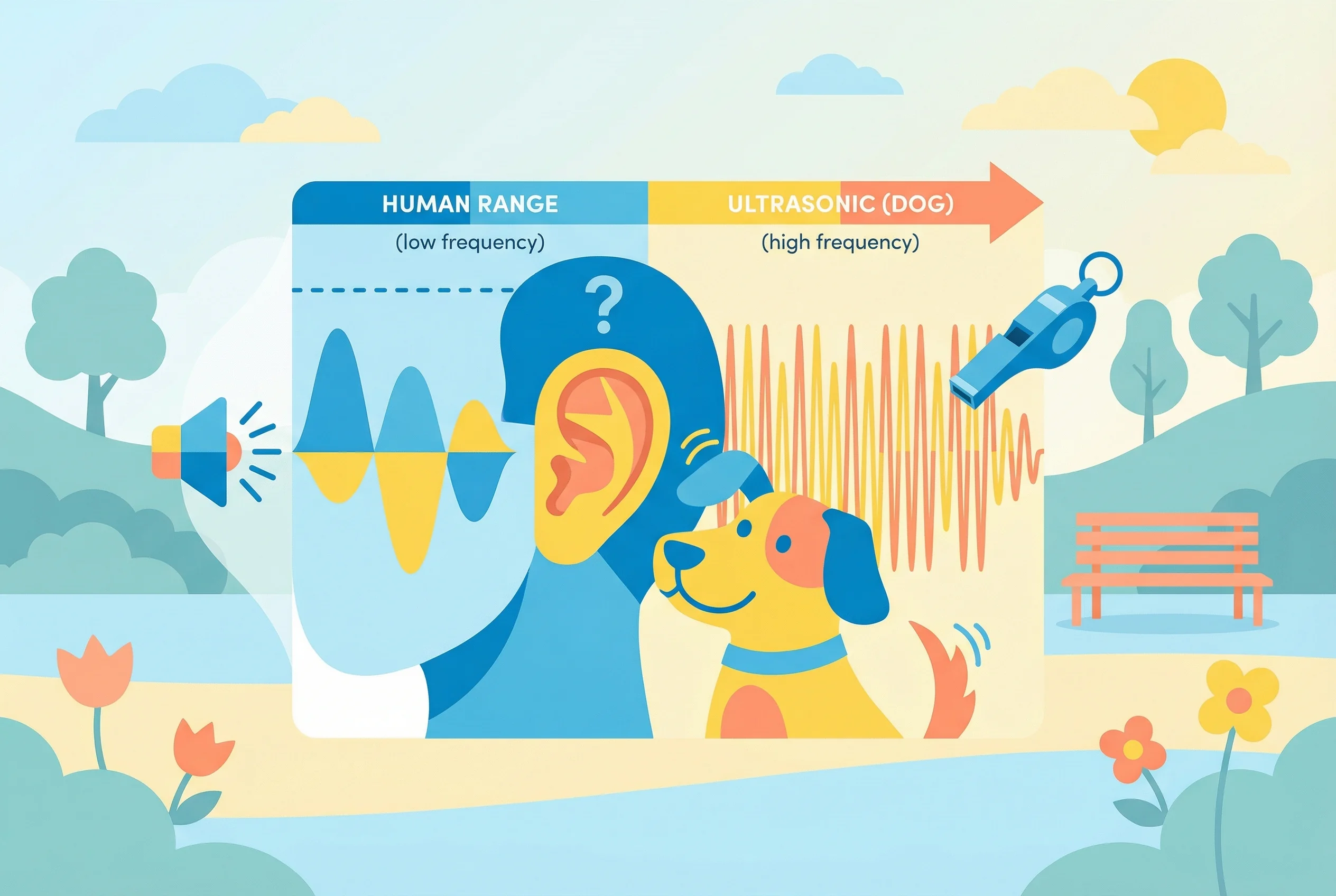
AFrequency too high for human ears
✓CorrectDog whistles produce ultrasonic sounds above 20,000 Hz (20 kHz), higher than the upper limit of human hearing (about 20 kHz). Dogs can hear up to 65 kHz, so they hear the whistle clearly while humans hear nothing. Frequency, not volume, makes it inaudible to us.
BWhistles are designed too quietly
✗Not quite - the answer is A. Dog whistles aren't quiet—they're loud at frequencies humans can't hear. Dogs hear them clearly because they detect higher frequencies.
CDogs have better hearing organs
✗Not quite - the answer is A. Dogs do have better high-frequency hearing, but the specific reason we can't hear dog whistles is that they operate above human hearing range.
Answer this question
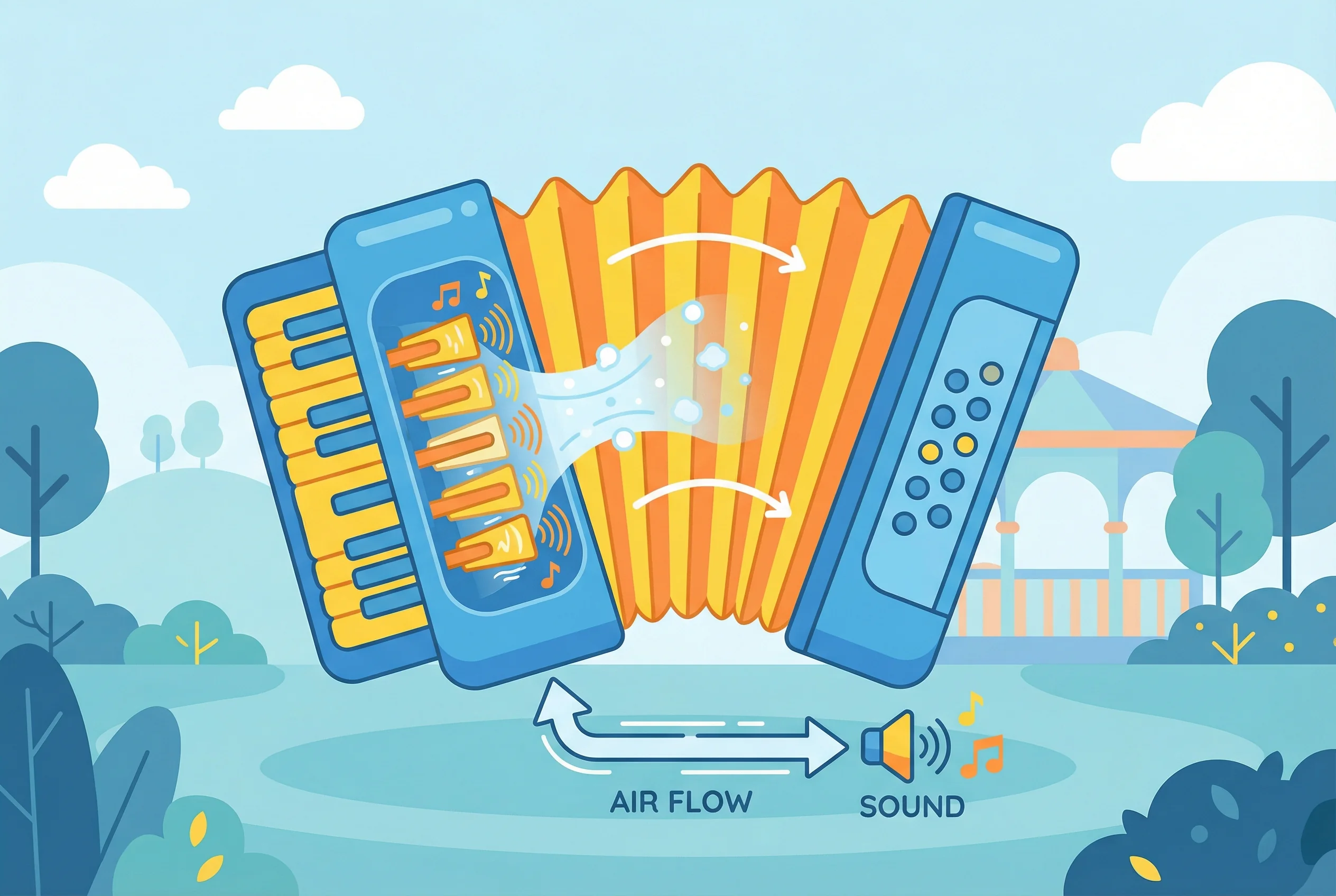
ABellows push air through reeds
✓CorrectAccordions use bellows (the expandable middle section) to push and pull air across metal reeds inside the instrument. When air flows over the reeds, they vibrate at specific frequencies, producing musical notes. Different keys and buttons direct air to different reed sets, creating different pitches.
BButtons compress gas cylinders
✗Not quite - the answer is A. Accordions use simple air pressure from bellows, not gas cylinders. The bellows push air across vibrating reeds.
CFolding creates friction noise
✗Not quite - the answer is A. The folding motion isn't what makes sound. Bellows create air pressure that flows over reeds, causing them to vibrate and produce musical notes.
Answer this question
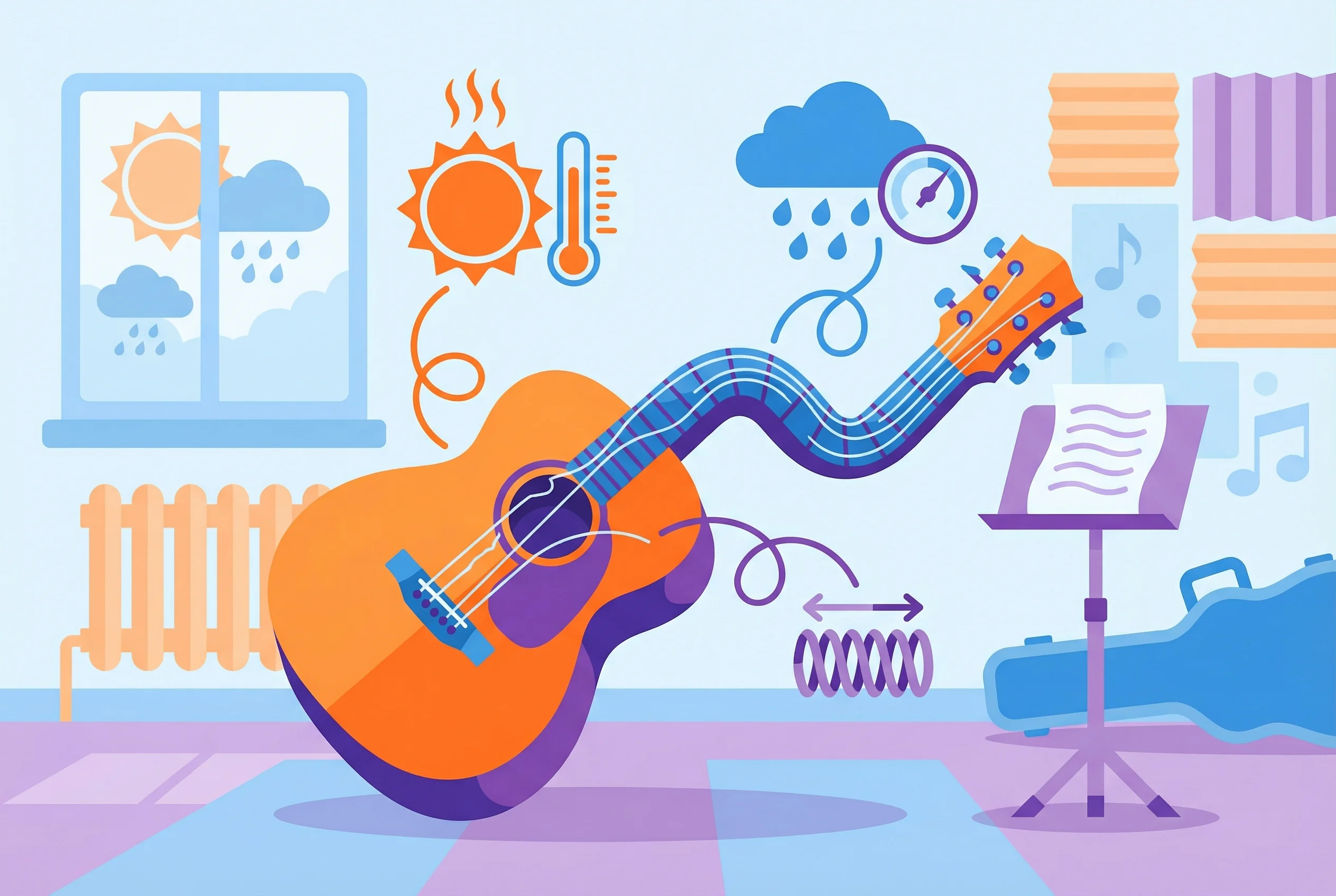
ATemperature changes string tension
✓CorrectString instruments go out of tune as temperature and humidity cause wood to expand/contract and strings to stretch. Wind instruments change pitch with temperature affecting air density and metal expansion. Mechanical stress from playing also gradually changes tension and shape.
BSound waves wear down materials
✗Not quite - the answer is A. Sound waves don't wear materials. Instruments detune from physical changes—wood movement, string stretching, and temperature effects.
CAge weakens the instrument
✗Not quite - the answer is A. Age can affect tuning stability, but the main causes are environmental factors (temperature, humidity) and mechanical stress.
Answer this question
Hard
ACurved walls focus sound waves
✓CorrectWhispering galleries (like in domes) have curved walls that reflect and focus sound waves. When you whisper at one focal point, the sound waves travel along the curved wall to another focal point across the room. This creates the effect of hearing a whisper clearly from far away.
BDome shape filters out noise
✗Not quite - the answer is A. The dome doesn't filter noise—it focuses sound. The curved shape directs sound waves along specific paths to focal points.
CAir pressure carries whispers far
✗Not quite - the answer is A. Air pressure doesn't change significantly in these chambers. The effect comes from sound wave reflection and focusing by curved walls.
Answer this question
Want to play these for real?
Turn tiny music questions into a 10-second curiosity loop: guess, see why, and leave with one more sound-world pattern in your head.
Play live on AIgneous Million Whys →Frequently Asked Questions
What is music trivia?
Music trivia is a set of quick questions about instruments, sound, rhythm, pitch, and listening. The best questions do more than name songs; they explain why sound behaves the way it does.
Are these music trivia questions good for adults?
Yes. These are built for curious adults who want the mechanism behind familiar sounds: vibrating strings, tuned drumheads, bell metal, echoes, reeds, and ultrasonic frequencies.
Can music trivia help me understand music better?
It can. A good trivia question creates a small information gap, then closes it with a clear explanation. After that, a piano, guitar, drum, or tunnel echo becomes easier to read.
What music topics are included here?
This set covers guitars, pianos, violins, drums, bells, accordions, dog whistles, helium voice effects, tuning, and whispering galleries.
What does this have to do with AIgneous Million Whys?
Million Whys turns everyday curiosity into answerable questions. Music is full of tiny "why" moments, and each one can become a fast spark of understanding.