Easy
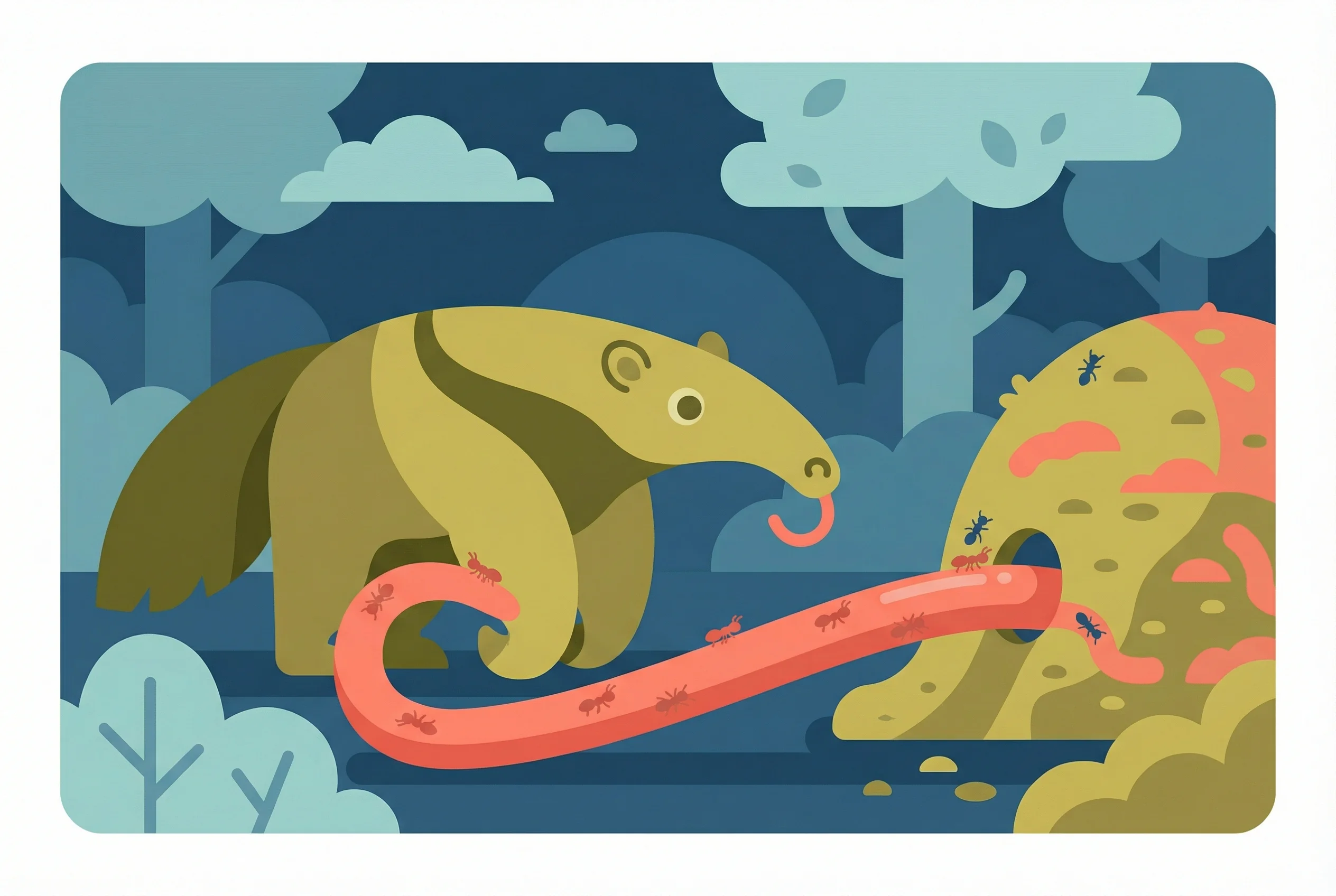
AReaching deep into ant nests
✓Correct — Specialized feeding! Giant anteater tongue: 2ft long! Adaptations: (1) Length—reaches deep into ant/termite tunnels. (2) Sticky saliva—insects adhere to tongue. (3) Rapid flicking—160 times/minute! (4) Attached to sternum—extends far. No teeth—swallows insects whole. Strong stomach grinds food. Eats 30,000 ants/termites daily! Also: powerful claws rip open nests. Narrow snout fits in tunnels. Specialized myrmecophage (ant-eater). Tongue moves so fast it's nearly invisible!
BIt helps regulate body temperature
✗Not quite — the answer is A. Reaching deep into ant nests.
CFighting off predators
✗Not quite — the answer is A. Reaching deep into ant nests.
AEarth rotates 365 times yearly
✗Not quite — the answer is B. Time for Earth to orbit the Sun.
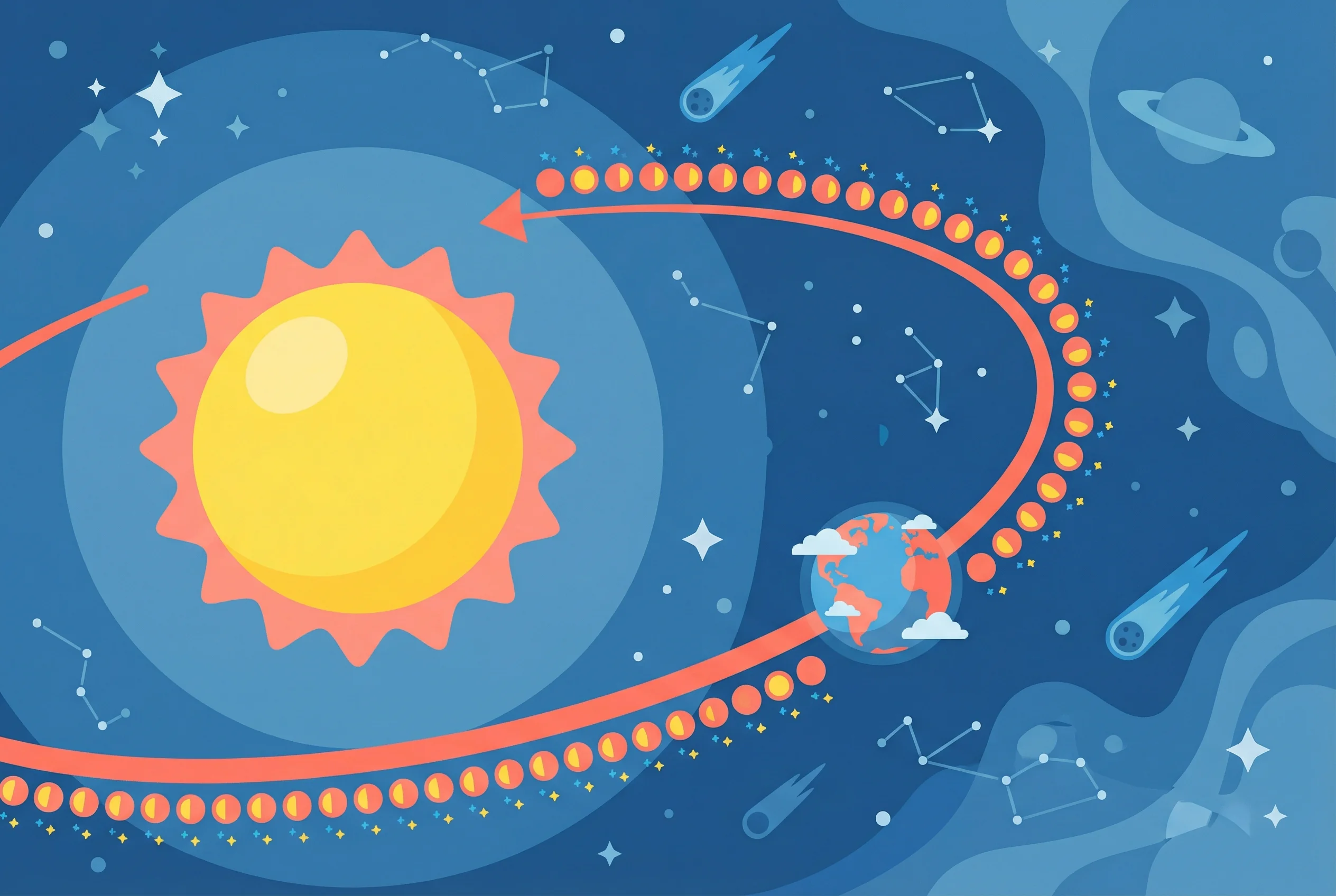
BTime for Earth to orbit the Sun
✓Correct — A year is defined by how long Earth takes to complete one full orbit around the Sun - approximately 365.25 days. This is determined by Earth's orbital distance (93 million miles) and speed (67,000 mph). We round to 365 days for convenience, adding a leap day every 4 years to account for the extra 0.25 days. This orbital period is a natural astronomical fact, not a human invention.
CThe Moon's cycle determines it
✗Not quite — the answer is B. Time for Earth to orbit the Sun.
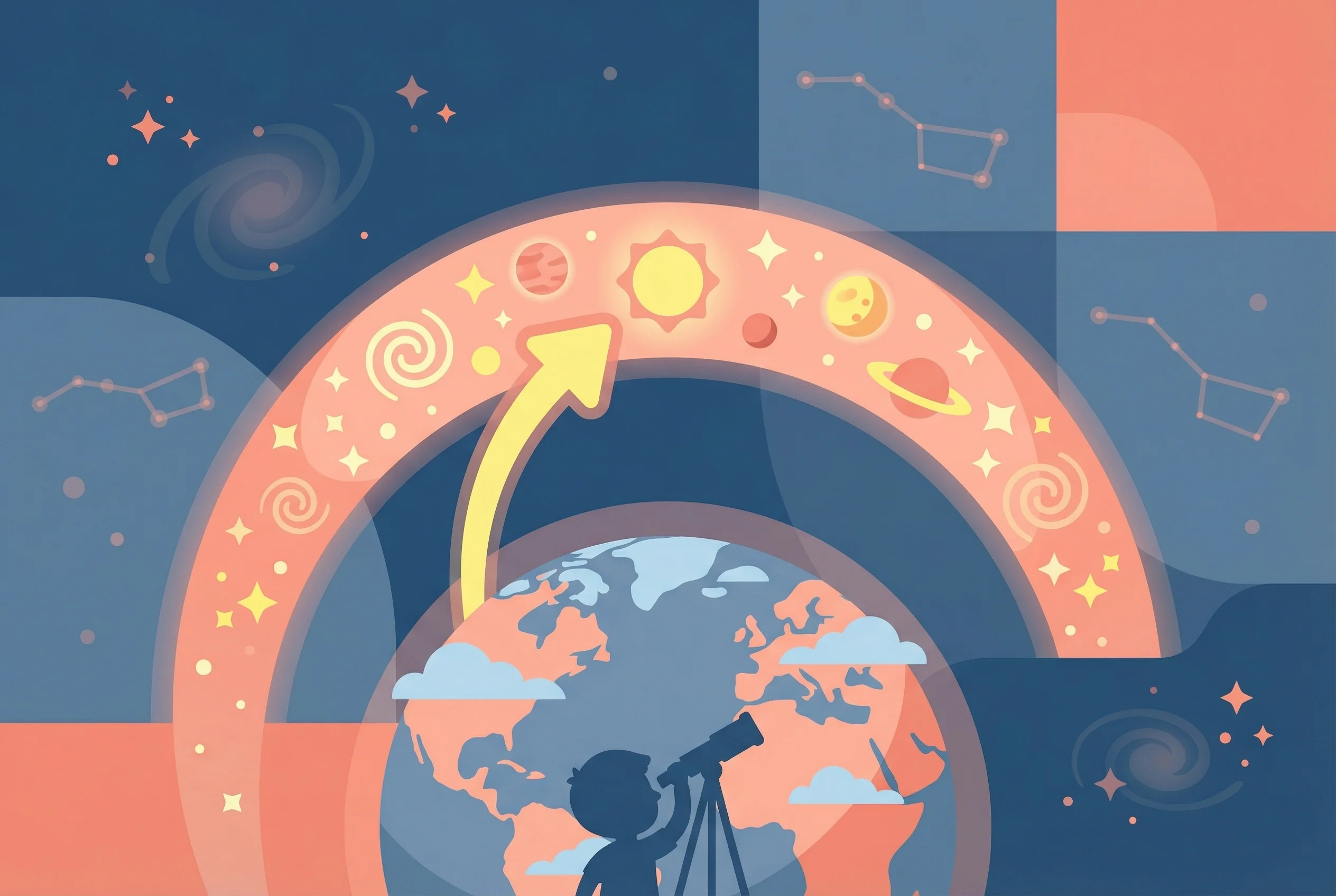
AWe are inside it
✓Correct — The Milky Way is our galaxy—we're inside it! The band of light we see is looking edge-on through the galactic disk (100,000 light-years across). We're in a spiral arm ~26,000 light-years from the center. Dense star concentrations appear as milky band across the night sky. Best viewed from dark locations away from light pollution. Ancient cultures saw it as celestial river!
BIt's brightest galaxy
✗Not quite — the answer is A. We are inside it.
CReflects sunlight to Earth
✗Not quite — the answer is A. We are inside it.
AReciprocity makes people buy
✓Correct — Free samples exploit psychological reciprocity—when someone gives you something, you feel obligated to return the favor. After accepting a free sample, many people feel compelled to make a purchase. Samples also reduce purchase risk (try before buying), create familiarity, and demonstrate product quality. The small sample cost often generates significant sales.
BSamples are better than products
✗Not quite — the answer is A. Reciprocity makes people buy.
CPeople collect free items
✗Not quite — the answer is A. Reciprocity makes people buy.
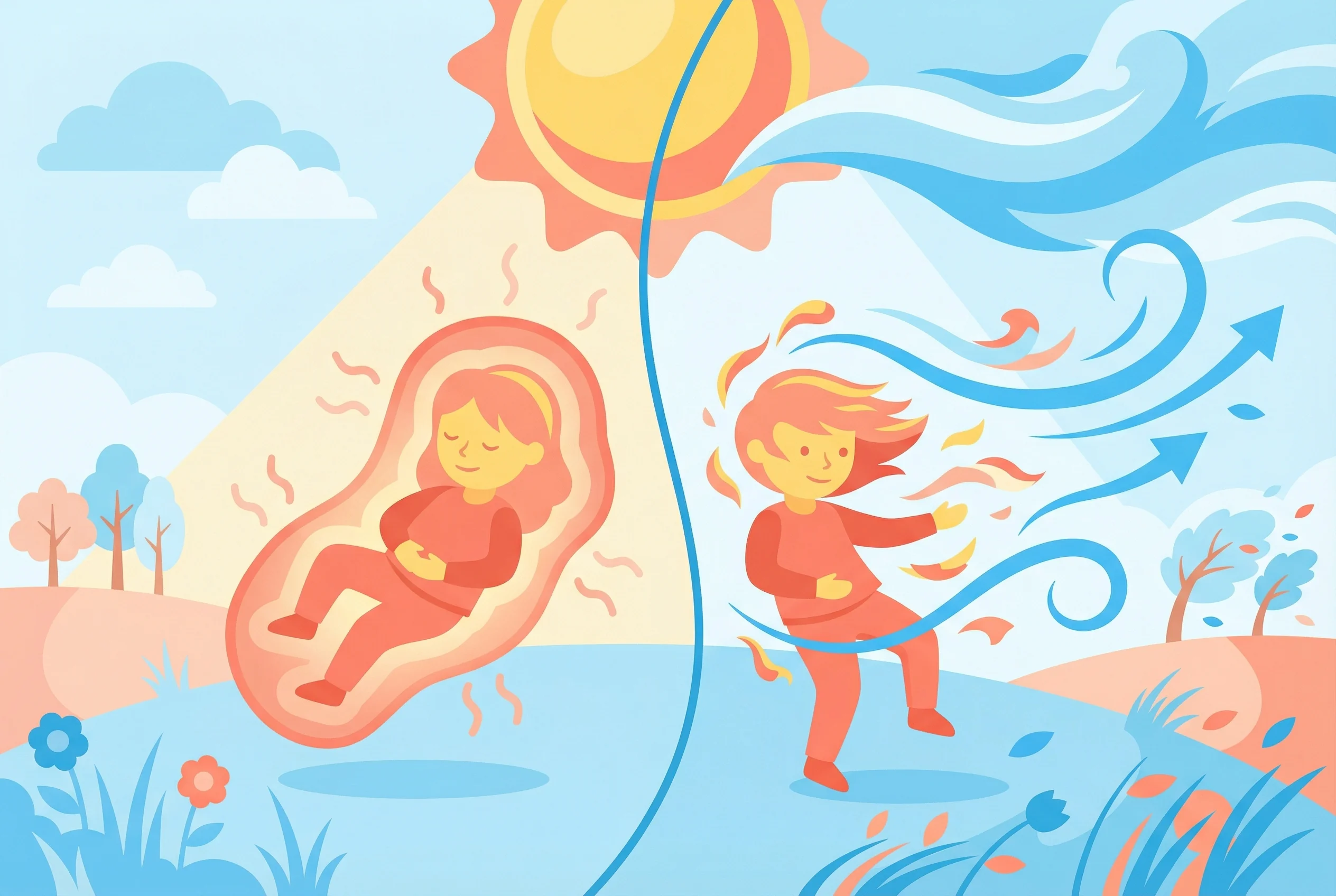
AWind removes warm air near skin
✓Correct — Your body warms a thin layer of air next to your skin. In still air, this warm layer insulates you. But wind constantly blows this warm air away and replaces it with cooler air, forcing your body to work harder to stay warm. This 'wind chill' effect makes 10°C with wind feel much colder than 10°C without wind!
BMoving air has less heat
✗Not quite — the answer is A. Wind removes warm air near skin.
CWind increases air pressure
✗Not quite — the answer is A. Wind removes warm air near skin.
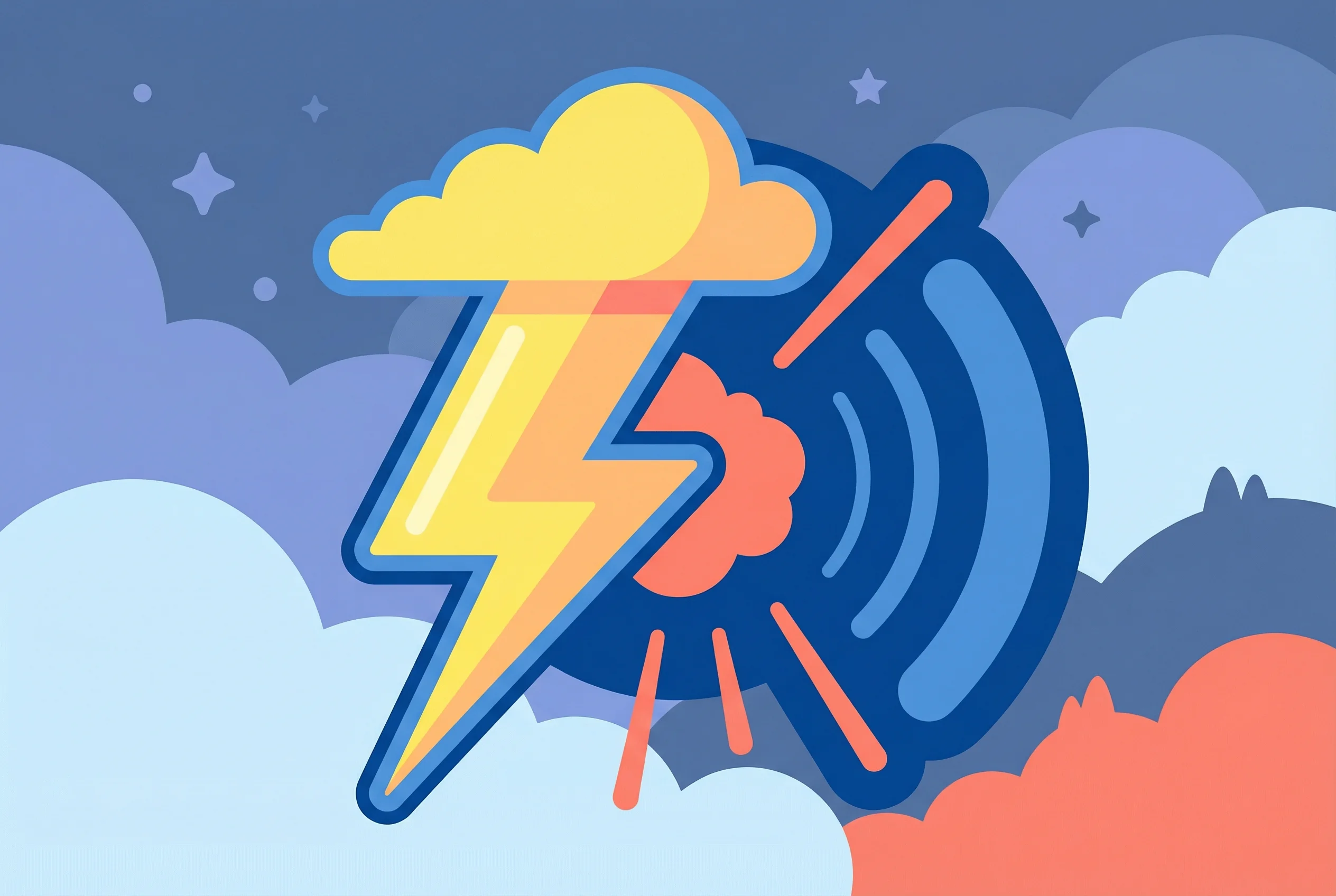
AThunder causes lightning flash
✗Not quite — the answer is B. Light faster than sound waves.
BLight faster than sound waves
✓Correct — Speed difference! Lightning and thunder occur simultaneously, but perceived separately: (1) Lightning—see instantly (light: 300,000 km/s). (2) Thunder—hear delayed (sound: 343 m/s in air). (3) Count seconds between flash and boom—divide by 3 ≈ distance in km (or by 5 for miles). Thunder: rapid air heating from lightning bolt (30,000°C)—explosive expansion creates shockwave. Close lightning: immediate crack. Distant: low rumble (sound waves refract). Can't hear thunder beyond ~25km!
CLightning and thunder are unrelated
✗Not quite — the answer is B. Light faster than sound waves.
Medium
ACooling system in Arctic
✗Not quite — the answer is B. Camouflage in snow and ice.
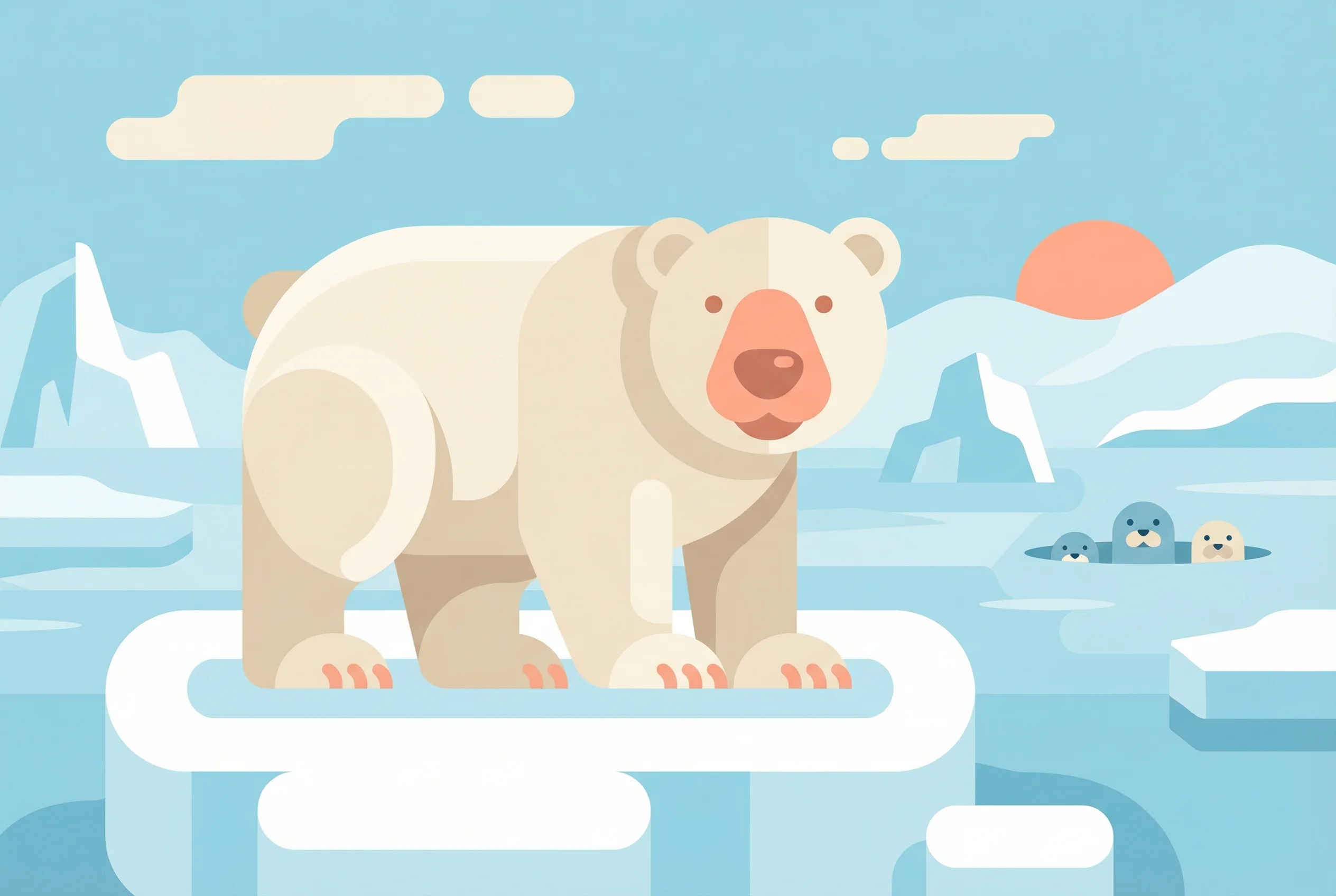
BCamouflage in snow and ice
✓Correct — Arctic camouflage! Polar bear fur appears white: (1) Camouflage—blends with snow/ice during seal hunting (stalking). (2) Individual hairs are transparent, hollow—scatter light (appears white). (3) Skin underneath is black—absorbs heat. Fur isn't actually white—light reflection creates color. Can appear yellow/brown from oxidation/algae. Dense undercoat + guard hairs insulate. Cubs born with white fur. Excellent stealth predator—seals don't see approach!
CWhite attracts prey animals
✗Not quite — the answer is B. Camouflage in snow and ice.
ABypass character limits
✗Not quite — the answer is B. Express emotion in text.
BExpress emotion in text
✓Correct — Text lacks vocal tone and facial expressions. Emojis add emotional context—😊 vs 😂 vs 😢 change meaning. Unicode Consortium standardizes emojis across platforms. Benefits: (1) Convey tone/sarcasm. (2) Cultural expression. (3) Visual communication. (4) Universal (mostly)—transcend language. 3000+ emojis exist! Started in Japan (1990s), now global standard!
CWork across all devices
✗Not quite — the answer is B. Express emotion in text.
AWater droplets refract sunlight
✓Correct — Light refraction and dispersion! Rainbows form when: (1) Sunlight enters raindrop—refracts (bends). (2) Disperses—different wavelengths bend differently (red least, violet most). (3) Reflects off back of droplet. (4) Exits droplet—refracts again. (5) Separated colors reach eyes. Conditions needed: sun behind observer, rain ahead. Rainbow angle: 42° from antisolar point. Double rainbows—second reflection inside droplet (reversed colors). Circular rainbow (from airplane). Moonbows exist! Each person sees unique rainbow—depends on viewing angle. ROYGBIV order!
BClouds reflect colorful light
✗Not quite — the answer is A. Water droplets refract sunlight.
CChemical reaction in rainwater
✗Not quite — the answer is A. Water droplets refract sunlight.
Hard
AEscaping ocean predators
✗Not quite — the answer is B. Spawning in birthplace.
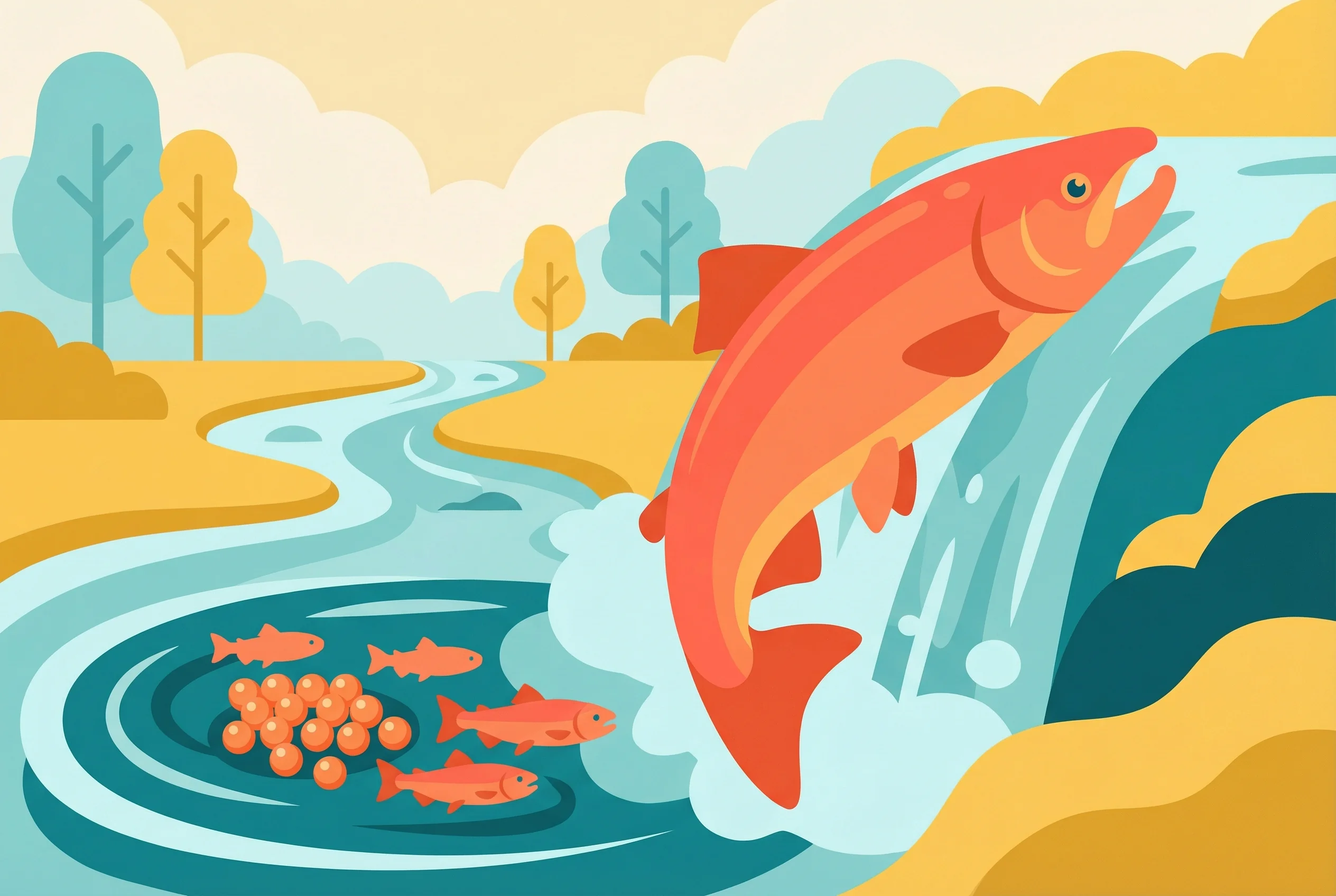
BSpawning in birthplace
✓Correct — Natal homing! Salmon return to birthplace to spawn: (1) Imprinting—remember birth stream's chemical signature. (2) Olfactory navigation—follow scent upstream. (3) best conditions—gravel beds for eggs. Incredible journey: hundreds of miles, swimming against current, jumping waterfalls. Anadromous life cycle—born in freshwater, mature in ocean, return to spawn. Most Pacific salmon die after spawning (semelparous). Exhausting migration—use all energy reserves. Magnetic sense aids ocean navigation!
CSearching for more food
✗Not quite — the answer is B. Spawning in birthplace.
AStars are too far apart
✓Correct — Although there are billions of stars, they're incredibly far apart. Space is about 99.9999999999999% empty vacuum. Light from stars spreads out in all directions, getting dimmer with distance. Most light from distant stars is too faint to see. Also, the universe has a finite age (13.8 billion years), so light from the most distant stars hasn't reached us yet. The vast emptiness between stars makes space appear dark.
BThere aren't enough stars
✗Not quite — the answer is A. Stars are too far apart.
CDark matter blocks light
✗Not quite — the answer is A. Stars are too far apart.
ANeutron stars rotate with beams
✓Correct — Pulsars are rapidly rotating neutron stars (collapsed star cores, ~20km diameter). They have powerful magnetic fields with radiation beams emitted from magnetic poles (not aligned with rotation axis). As the star rotates (milliseconds to seconds per rotation), beams sweep across space like lighthouse. When beam points at Earth, we detect a pulse. Incredibly precise—used for testing relativity, detecting gravitational waves!
BMagnetic fields oscillate naturally
✗Not quite — the answer is A. Neutron stars rotate with beams.
CGravitational waves create pulses
✗Not quite — the answer is A. Neutron stars rotate with beams.
Want to play these for real?
Turn questions like these into a 10-second daily curiosity loop: guess, get closure, and leave with one more thing worth knowing.
Play live on AIgneous Million Whys →Frequently Asked Questions
What makes these fun trivia questions different?
Each question includes the answer and the reason behind it, so the page is not just a score sheet. The small payoff is the closure: you find out why the answer works.
Are these trivia questions good for adults?
Yes. The mix is built for curious adults who like quick facts, not classroom drills. You can scan them casually or open each answer to see the explanation.
Can I use these fun trivia questions for a quiz night?
Yes. Read the question and choices aloud, then use the answer feedback as the quick explanation after people guess.
Where do the questions come from?
They come from the active MillionWhys question bank, with live deep links so each card can be played as a real daily question.
What does this have to do with AIgneous Million Whys?
MillionWhys treats trivia as a tiny curiosity engine: one question, one prediction, one answer with closure, then the next spark.